
About Giovanni Cosimo Bonomo
Lived 1666 – 1696 (aged 29). Giovanni Cosimo Bonomo was a physician, known for Scabies.
Giovanni Cosimo Bonomo (30 November 1666 – 13 January 1696) was an Italian physician, known for discovering the itch mite as the cause of the skin disease scabies. He described and drew them after observing their presence with the aid of a microscope in the fluid expressed from lesions of infected patients. By contradicting contemporary medical opinion and the papal aristocracy, he was harshly criticized and had a hard time finding a job. Eventually he became a personal physician for the German Electress Palatine Anna Maria Luisa de' Medici.
Early life and education Giovanni Cosimo Bonomo was born to French pharmacist Stefano Bonomo and his wife Barbara Boccacci on 30 November 1666. He was born in Livorno, a multicultural city at that time. He studied at the University of Pisa, where he received his doctorate in philosophy and medicine on 22 June 1681. On 18 December 1683, he obtained his license to practice as a freelance physician at the Collegio dei Medici degli Speciali of Florence, the modern-day Università degli Studi di Firenze. His auditors included Francesco Redi, who would become his biggest advocate.
Career and research On 20 June 1687, Bonomo explained his theory of mite infestation causing scabies in a letter to Redi. Upon his pleading, Redi published Bonomo's letter on 18 July 1687 as Osservazioni intorno a' pellicelli del corpo umano in Florence. Amongst contemporary physician-scientists, his publication achieved no positive resonance. This has mainly been attributed to the negative attitude of the Pope's chief physician Giovanni Maria Lancisi. Bonomo wrote to Lancisi, asking him to render his opinion and urging him to submit the publication to the academicians of the Roman medical congress. On 23 August 1687, Lancisi responded, referring to the discussion among academics and their essentially negative reactions both to his observations of the mite and his definition of scabies as its effect. Bonomo replied, and in turn caused ire and resentment among the papal aristocracy. Lancisi answered with a scholarly list of authorities in his defense and a warning to Bonomo that his publications should not contradict the research of other scholars centuries before him. Bonomo apologized to him with "supreme condolence", renouncing any desire to "contradict".
Unlike Cestoni, no known paintings or sketches of Bonomo survive.
Merit Compared to the traditional medical doctrine which considered scabies to be the result of a humoral dyscrasia, or in the view of iatrochemists, a purging of the corrosive salts contained in the lymph, Bonomo supported the mite origin of scabies. His style of discovery was commanding with lucid reasoning: after examining the problem with Cestoni, they proved that the "bacarelli" or "pellicelli" of scabies were the cause and not its effect; after examining "many needy patients" they investigated the presence and shape of the mites with their "poor and weak microscope", observing them in the skin, how they created their "small streets from one place to another with its eating and gnawing".
Moreover, Bonomo helped refute the hypothesis that considered the mites an effect of mange as spontaneously generated by "corrupt humors". They had witnessed how an "egg" came out of a mite during direct observation under a microscope. According to Bonomo, this proved that these mites were produced via procreation like other animals and insects. Based upon his repeated observations and experiences, Bonomo proved that these organisms caused scabies and their effects on the skin. The pathological manifestations of the skin thus became "consequences" of the corrosive action of the mite, and scabies was therefore recognized as an "external" disease. Moreover, the contagious nature and transmission of the disease, through animals "very apprehensive to apply themselves" and to proliferate, was justified.
After Bonomo's death, his pamphlet was discovered by the English physician Richard Mead, who was passing through Italy and included it as an abstract in the Philosophical Transactions of the Royal Society of London (XXIII [1702–03], No. 283, pp. 129–699). A French translation was found in the Collection Académique, part étr., IV, Paris 1757, pp. 574–81.
Don’t just read it —
keep it.
Full-length biographies made to live with: read them, listen on the way to work, watch them tonight.
- E-book
- Audio
- Video
Instant download · yours to keep · every purchase keeps this site free
Important facts
People in Giovanni Cosimo Bonomo's life
Named in this biography and alive at the same time



Related people
Same field, nearest in time

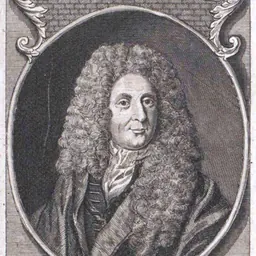

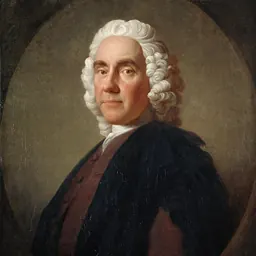
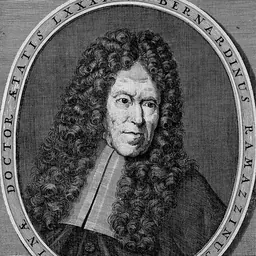
Contemporaries
People whose lives overlapped Giovanni Cosimo Bonomo's



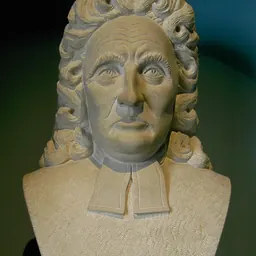

Frequently asked questions
Who was Giovanni Cosimo Bonomo?
Italian physician
When was Giovanni Cosimo Bonomo born?
Giovanni Cosimo Bonomo was born on 30 November 1666 in Livorno.
When did Giovanni Cosimo Bonomo die?
Giovanni Cosimo Bonomo died on 13 January 1696 in Florence.
What was Giovanni Cosimo Bonomo's occupation?
Giovanni Cosimo Bonomo was a physician.
What was Giovanni Cosimo Bonomo known for?
Giovanni Cosimo Bonomo was known for Scabies.
Sources & further reading
· Wikipedia: Giovanni Cosimo Bonomo
· DBpedia: Giovanni Cosimo Bonomo
Cite this page
APA: Biography.guide. (2026). Giovanni Cosimo Bonomo. https://biography.guide/giovanni-cosimo-bonomo/
MLA: "Giovanni Cosimo Bonomo." Biography.guide, https://biography.guide/giovanni-cosimo-bonomo/.
Chicago: "Giovanni Cosimo Bonomo." Biography.guide. https://biography.guide/giovanni-cosimo-bonomo/.
Data last updated: 2026-09-20 · Spot an error? Report a correction.
Page generated 2026-09-27 05:04 UTC