
About Giovanni Canavesio
Lived 1450 – 1500. Giovanni Canavesio was a painter.
Giovanni Canavesio (before 1450 – 1500) was an Italian artist, documented as a "master artist" in 1450 . He was proficient in polyptychs or panels, monumental paintings, and book illuminations. He was active in Liguria and southern France later in his life but documents of his activities before 1450 are missing.
Career
Canavesio was born in Pinerolo, Piedmont. The earliest document about Canavesio dates to 1450, when he was recorded as a "master artist" in the Piedmontese town of Pinerolo. Between the registration in Piedmontese in 1450 and his first documented work in 1472, Canavesio became a priest. Later in his life, Canavesio is referred to as a "presbiter", a priest in Latin, in almost all of the documents and signed works. In Canavesio's career as a painter, Dominicans of Taggia, a major art center, patronized his art works. He completed several wall paintings and polyptychs in their houses and chapels. He was also commissioned wall paintings and polyptychs for chapter houses and refectories in the towns of Albenga, Luceram, La Brigue, Pigna, and Pornassio. Due to the chemical particularities of wall painting, he developed a seasonal schedule: panel painting in colder months and wall paintings in the warmer months, with the exception of places with mild and stable climate. For example, he finished the wall paintings of Virle and Crucifixion in Taggia in Spring. whose signature appears with Canavesio's under the painting. Canavesio had a novel approach to paintings. He borrowed design aspects from artwork in Italy, the southern Netherlands, and northern France. He was influenced by northern Piedmont paintings which often contain vivid hues, an intense light source, and an expressionistic approach to figure drawing. with cruel and horrific realism at times. He developed such style from the influence of Giacomo Jaquerio, the pioneer of an independent Piedmontese school, and shared his expressive beliefs to further consolidate his own conviction in art. His works are also composed of Germanic style which suggests his learning in Schongauer's workshop or from artists in Colmar region. Growing influence of Provençal and Niçois influence Canavesio to take approach with progressive softening of Piedmontese elements of his painting. Works created in the last few years of his career show that he was further influenced by Lombard and became closer to Ligurian art.
Canavesio used distortion of anatomy and perspective for expressive purposes in creating narrative scenes that would be understood by the public, but he was a capable artist, as shown from his tender treatment on depicting the Virgin Mary.
Notre-Dame des Fontaines
Canavesio started his work in the Chapel of Notre-Dame des Fontaines, near La Brigue, with eleven displays of Virgin's life and Christ's childhood: the Nativity of the Virgin, her Presentation in the Temple, her Marriage, the Annunciation, the Visitation, the Nativity of Christ, his Circumcision, the Adoration of the Magi, the Massacre of the Innocents, the Flight into Egypt, and the Presentation in the Temple. For some paintings, he collaborated with Jean Baleison, for example in the ones of the choir that were discovered under a layer of whitewash in the 1950s. The inscription of the paintings on the north wall documented Canavesio's craft and completion in October 1492 but was fallen and covered by a new one that indicated Canavesio's involvement. However, it did not articulate that all the paintings were done by Canavesio, not mentioning workshops or collaborations but the general conception of the Passion Cycle would be done by Canavesio himself. The gold and tinfoil he used now turned black due to oxidation but was restored around 1849. contrasting the sleeping St. John with Judas's abhorrent expression. Judas is the only person portrayed with messy hair and accentuated facial features such as wrinkles, veins, and protruding nose with a mole, all drawing attention to his character as traitor.
In the Arrest of Christ, the serenity of Christ's face poses a dramatic contrast to the fiendish faces of his enemies. Prominent in the crowd are the grimacing action of Judas and the tumbling Malchus with dehiscent wound spouting blood. Other soldiers and villains are also painted with grotesque features such as bared teeth and bold head, alluding to their bestial character. An opening of mouth and displaying of teeth is a feature of Canavasio's painting to indicate Christ's enemy or to show the crudeness of his enemies. Specifically, Caiaphas opens his mouth and exposes his teeth in anger; Annas with only one tooth left; and men from Ecce crowd shouting for Christ's condemnation. His delineation of a dramatic contrast between Christ's resignation and the fierce of his enemies is based on text sources, for example, in Isaiah 53:7 "He shall be led as a sheep to the slaughter, and shall be dumb as a lab before his shearer, and he shall not open his mouth", and in Jeremias 11:19 "And I was a meek lamb, that is carried to be a victim."
Canavesio depicted some figures in iconography profile, which in Christian art often indicates evil characters, accentuating a caricatured meaning and also preventing veneration. For example, in his painting of Last Supper, Pact, kissing Christ at the Arrest, and returning the silver coins at the Temple, Judas is always depicted in a profile view. The same treatment is used for Malchus in the scene of Christ before Annas, and John in the Arrest.
Another characteristic of Canavesio can be identified in the angularity of postures: arms and legs are bent often at right angles, especially in violent scenes. Movement in opposite directions is also frequent, as can be observed in Judas leading the soldiers into the garden and Peter in his Denial, in which his head turned 180-degrees when grabbed by a soldier.
The Entry into Jerusalem The Entry into Jerusalem is the first panel in the cycle. It follows the traditional composition of the theme with apostles on the left and Christ on the colt in the center, and crowds on the right under the gate to Jerusalem. The details of the man on the ground, trees with men, and posture of Christ are as well conventional. Another possible reference is the representations of Moses confronting the Burning Bush, as an expression of the awareness of being in front of God. The interaction of Christ and Judas is signified by Christ extending his right hand and Judas his left. That Peter holding a knife can frequently be interpreted as his combative mood that is often presented in theatrical episode, Canavesio has no intention of showing this motif but is influenced by Savoyard Passion Cycle.
The Washing of the Feet Besides the traditional interaction between Peter and Christ, an additional scene was added to the one in Notre-Dame des Fontaines. Judas was depicted as putting his scandals back on, alluding that he is the first one to have his feet washed. This is rather often displayed in Passion plays such as the fourteenth-century Passion Sainte-Genevieve, the fifteenth-century Passion de Semur, and Arnoul Greban's Passion.
The Agony in the Garden The composition of the Agony in the Garden repeats his first one at Pigna. He applied a traditional approach to put the praying Jesus in the foreground, an angel showing him the cup of sorrow and three disciples sleeping. A richness of narration is added by depicting Judas leading the troops of soldiers into the garden, foreshadowing the following scene of arrest. This appears rarely in Savoyard Passion cycles. An inspiration from Gospel simile (Luke 22:44), details of Jesus's blood sweat can be observed in both his paintings at Pigna and at Peillon.
The Arrest of Christ Canavesio combined different events into this single depiction: the kissing of Judas, the arrest, and the struggle between Peter and Malchus. The combination can be found in many pictorial sources but Canavesio added episodes like Christ heals Malchus right after his ear is cut off by Peter, St. John tries to escape but seized by a soldier. This modulation further stresses on the intensity of torture inflicted on Christ.
The Denial of Peter
Since there are three times of denial in Caiaphas's courtyard according to the Gospels, most pictorial cycles combined three into one with preference to the maid who first recognized the apostles. The other two denials that do not agree in Gospels are often omitted, but Canavesio encompasses all four versions by introducing enough figures in his painting.
Canavesio closely followed the Gospels of Matthew and Luke in this second part of the panel of depicting Peter went out after the Denial. The independent depiction of this scene is rare but a combination of two is unique for the Notre-Dame des Fontaines. The first one alludes to the contorted posture of their holders and their position in the foreground. The latter one is rare for the depiction of first appearance before Pilate and the only two similar compositions are found in Canavesio's painting at Pigna and the work of Pietro Guidi at Montegrazie, who was influenced by Canavesio.
Christ Tormented The tormented scene depicted in Notre-Dame is the one during the night when Christ was tortured after his arrest. The inclusion of diversity and intensity stresses the severity and extent of Christ's suffering. The soldiers are engaged in various motions, one moving clockwise from the lower left, one blowing a horn and making an insulting gesture, and the others torturing Christ by pulling his beard and hair, hitting and insulting him. One man who sits in front of Christ one the right is depicted as choking himself on the neck to stimulate more spittle to spit on Christ.
The left to right movement not only applies to Judas's movement, but also to Christ, parallel to the edge of the painting, as he proceeds in the Entry into Jerusalem, the Way to Calvary, and the Descent into Limbo. In Jesus's trials, soldiers also lead Christ from left and advance to the authority on the right. The judges are arranged diagonally with a three-quarters depiction that features on more comprehensive view than profile drawings, deeper space illusion, and an open end on the right that allows the continuation to the next panel. This technique is used to emphasize the contiguity of successive events; on the other hand, the discontinuity of settings is stressed by a man standing at the extreme right side who was but by the frame.
Another technique that Canaveso employs to emphasize continuity is to depict same character in different settings with same costumes. A man recognized by his clothes with a yellow hat and a hammer tucked in his belt leads Christ before Herod, before Pilate Washing His Hands, and on the Way to Calvary, and finally nails Christ's feet to the Cross using his hammer.
1477, he did a heraldic painting on the facade of Palazzo Vescovile. This is his first dated and existing work without his signature but unanimously attributed to him.
1482 April, he painted a Crucifixion in the chapter house of Dominican convent in Taggia, but the work is also not signed yet attributed to him with no doubt.
1500 January, he finished the polyptych dedicated to St.Michael in the parish church of Pigna.
Don’t just read it —
keep it.
Full-length biographies made to live with: read them, listen on the way to work, watch them tonight.
- E-book
- Audio
- Video
Instant download · yours to keep · every purchase keeps this site free
Important facts
People in Giovanni Canavesio's life
Named in this biography and alive at the same time

Related people
Same field, nearest in time
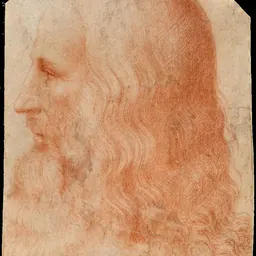
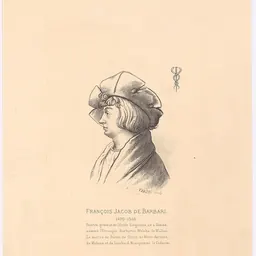

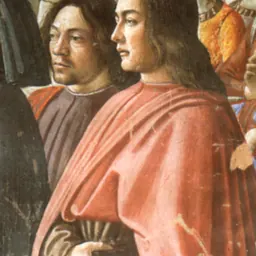
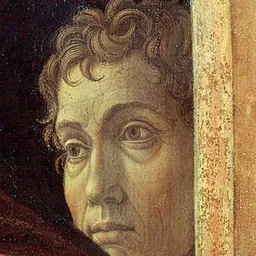

Contemporaries
People whose lives overlapped Giovanni Canavesio's


Frequently asked questions
Who was Giovanni Canavesio?
Italian painter (1450-1500)
When was Giovanni Canavesio born?
Giovanni Canavesio was born in 1450 in Pinerolo.
When did Giovanni Canavesio die?
Giovanni Canavesio died in 1500.
What was Giovanni Canavesio's occupation?
Giovanni Canavesio was a painter.
Sources & further reading
· Wikipedia: Giovanni Canavesio
Cite this page
APA: Biography.guide. (2026). Giovanni Canavesio. https://biography.guide/giovanni-canavesio/
MLA: "Giovanni Canavesio." Biography.guide, https://biography.guide/giovanni-canavesio/.
Chicago: "Giovanni Canavesio." Biography.guide. https://biography.guide/giovanni-canavesio/.
Data last updated: 2026-09-26 · Spot an error? Report a correction.
Page generated 2026-09-27 05:13 UTC