
About Giovanni Battista Fasolo
Lived 1598 – 1664 (aged 65–66). Giovanni Battista Fasolo was a composer and organist.
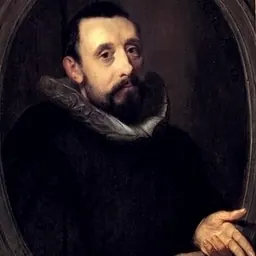
Giovanni Battista Fasolo, O.F.M.Conv (Asti, ca. 1598 Palermo after 1664), was a Franciscan friar, organist and composer.
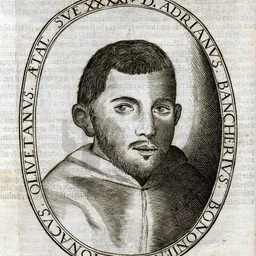
In his middle years Fasolo was primarily known for his 1645 organ annual, which, like L'organo suonarino of Adriano Banchieri, from the generation before him, was intended for use in small parish churches, and are much simpler than those used in Venice. In 1659 Fasolo became maestro di cappella to the Archbishop of Monreale.
Until recently many of G.B. Fasolo's secular works were attributed to other composers, particularly the Venetian Francesco Manelli, the composer of the first commercial operas in music history, or to a third unknown composer known as "Il Fasolo?".
However following the work of Francesco Luisi, Mariangela Donà, and Claudio Bacciagaluppi the attribution of the major works under the heading "Il Fasolo?" to G.B. Fasolo is now reasonably secure, and listed under his own entry, by Eleanor Selfridge-Field, in the current New Grove.
Extant works Op. 3 "Misticanza di Vigna alla Bergamasca; il Canto della Barchetta et altre cantate et ariette per Voce et Chitarra." Robletti Rome, 1627. Sole surviving copy was in the possession of Dr. Oscar Chilesotti in 1886. A facsimile of a single song "I bei guardi" from this collection is included in an article by Chilesotti- "Notes sur les tablatures de luth et de guitare" originally published in "Encyclopedie de la musique"; edited by Albert Lavignac (1925). Part 1, vol. 2 : Italie - Allemagne, p. 636-684. This is particularly interesting because figures have been added to the guitar alfabeto symbols to indicate how the accompaniment should be strummed. Il carro di Madama Lucia. Rome, 1628 (*attributed). Aria - Se desiate, o bella, 1629 (*attributed). Op. 6 Second Book of Motets for 2-3 voices, with a mass for 3 voices, Naples, 1635. Op. 8 Annuale che contiene tutto quello, che deve far un Organista per risponder al Choro tutto l'Anno; for organ, Venice, 1645. (263 pages of organ music!) Magnificat, Beatus vir, a 5. ca. 1645.(*attributed) Op. 9 Arie spirituali morali, e indifferenti, 2-3 vv, with dialogues 3vv and two arias for solo voice. Palermo, 1659.
Recordings Aria Cangia, cangia tue voglie. Aria from Op. 3 La barchetta passaggiera. Rome, 1627. Recorded by Beniamino Gigli London, 1947. Il Fásolo? Le Poème Harmonique, dir. Vincent Dumestre Alpha-23 (CD) 2004
Don’t just read it —
keep it.
Full-length biographies made to live with: read them, listen on the way to work, watch them tonight.
- E-book
- Audio
- Video
Instant download · yours to keep · every purchase keeps this site free
Important facts
People in Giovanni Battista Fasolo's life
Named in this biography and alive at the same time
Related people
Same field, nearest in time



Contemporaries
People whose lives overlapped Giovanni Battista Fasolo's






Frequently asked questions
Who was Giovanni Battista Fasolo?
Franciscan friar, organist and composer
When was Giovanni Battista Fasolo born?
Giovanni Battista Fasolo was born in 1598 in Asti.
When did Giovanni Battista Fasolo die?
Giovanni Battista Fasolo died in 1664 in Monreale.
What was Giovanni Battista Fasolo's occupation?
Giovanni Battista Fasolo was a composer and organist.
Sources & further reading
· Wikipedia: Giovanni Battista Fasolo
· DBpedia: Giovanni Battista Fasolo
Cite this page
APA: Biography.guide. (2026). Giovanni Battista Fasolo. https://biography.guide/giovanni-battista-fasolo/
MLA: "Giovanni Battista Fasolo." Biography.guide, https://biography.guide/giovanni-battista-fasolo/.
Chicago: "Giovanni Battista Fasolo." Biography.guide. https://biography.guide/giovanni-battista-fasolo/.
Data last updated: 2026-09-20 · Spot an error? Report a correction.
Page generated 2026-09-27 05:06 UTC