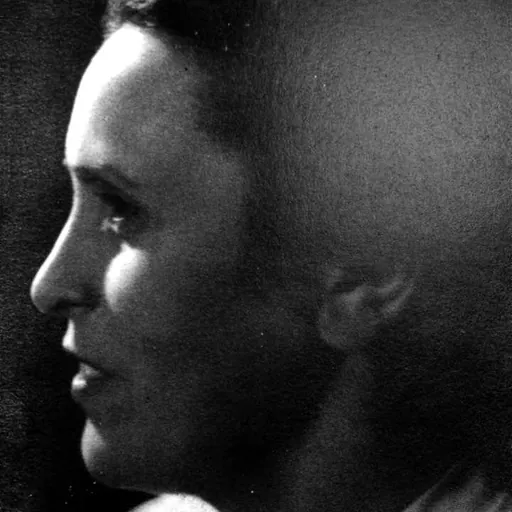
Giovanna Caleffi
Italian educationalist and anarchist
About Giovanna Caleffi
Lived 1897 – 1962 (aged 64). Giovanna Caleffi was an Italian women's rights activist, journalist and anarchism.
Giovanna Berneri (born Giovannina Caleffi: 5 May 1897 – 14 March 1962) was an educationalist and militant libertarian anarchist. She was born and died in Italy, but, largely for political reasons, spent much of her life in other countries: some of her most productive years were lived in France. After the war, between 1946 and 1962 she edited the Italian language magazine Volontà.
She was born Giovannina Caleffi, but most sources give her forename / Christian name as Giovanna.
Early life Giovannina Caleffi was born into a peasant family in Gualtieri, a small town set in the intensively cultivated countryside between Mantua and Parma. She was one of five recorded children of Giuseppe and Caterina Simonazzi Caleffi. While she was still young her father emigrated with his eldest son to the United States. Giovanna attended junior school in Gualtieri and senior school in Reggio Emilia, a half hour train ride to the south. She emerged from her education in 1915 with a teaching diploma. While at school in Reggio Emilia, she come into contact with the socialist currents circulating at the time, taking a great interest in the political seminars conducted by . At the age of fifteen she renounced her catholicism which led to major ructions within the family. already established as a writer and activist member of socialist feminist circles, and later Giovanna's mother in law.
On receiving her teaching diploma in 1915 Giovanna started to work as an elementary school teacher at Santa Vittoria, a quarter of Gualtierei. The next year she obtained a permanent teaching post nearby at Montecchio Emilia, a short distance to the south-east of Parma. It was in 1916 than she met Camillo Berneri, the son of her former teacher, Adalgisa Fochi. Camillo was a high school student and activist member of the Socialist Youth Federation ("Federazione Giovanile Socialista"), an organisation which shortly after this formally abandoned its anarchist ideology. Around this time Camillo relocated to Arezzo, where he was joined by his mother and by Giovanna a year or so later. Camillo and Giovanna fell in love and married on 3 January 1917
As manifestations of political fascism became a daily reality in northern Italy, the Berneri-Caleffi home became a place of discussion and refuge for intellectual opponents of fascism such as Gaetano Salvemini and Piero Calamandrei. Others included the brothers Carlo and Nello Rosselli, Ernesto Rossi and Piero Jahier. With two small children to bring up, Giovanna Berneri was more preoccupied with surviving the economic hardship resulting from her husband's activism than with political activism of her own, although as Camillo wrote about this time to Salvemini, she accepted and broadly shared his ideas. Increasingly the family faced harassment and repression from the Fascists, who had taken power nationally in 1922. Camillo refused to swear allegiance to the new régime and lost his teaching post. He fled secretly to Paris in March or April 1926. The little shop at Rue de Terre-Neuve 20 soon became a meeting point for people who would later become prominent in the anarchist movement. They were kept under strict surveillance by the French police and security services, none more so than the wife of the high-profile anarchist philosopher Camillo Berneri. Giovanna and her elder daughter Maria Luisa attended his funeral, which marked the point from which Giovanna herself took up the anarchist cause more actively, building up contacts internationally, notably in the United States. She started writing for "Controcorrente", an Italian language anarchist newspaper based in Boston. In 1938 she published a collection of her late husband's work under the title "Pensieri e Battaglie" ("Thoughts and Fights") in a volume which included an introduction by Emma Goldman. based in New York, although her contributions at this stage were anonymized for security reasons.
Second World War: arrest, imprisonment, lengthy deportation, trial and more imprisonment War was declared by France at the end of the summer in 1939, and in May 1940 the German army invaded France. The north and the west of the country came under direct military control while in the south of France a collaborationist puppet régime was installed. On 18 October 1940 Giovanna Berneri was arrested, like other Italian political refugees, at the behest of the Italian government and held at the prison of La Santé for three months. Her younger daughter Giliana Berneri spent time in a French internment camp for enemy aliens, and may have spent the later war years in the United States.
In February 1941 Giovanna Berneri was transferred to Austria and from there to Germany, where she spent approximately five months in detention in a succession of prisons, before being returned to Austria, and from there to Italy.
Epilogue to war: prologue to peace The fall of fascism triggered a period of resistance, including anarchist resistance. With Armido Abbate, Pio Turroni and others, Giovanna Caleffi and Cesare Zaccaria determined to rebuild the movement. In 1944 they launched the clandestinely produced "La Rivoluzione libertaria" and "Volontà" which, after the Congress at Carrara, developed from a single page news-sheet to a newspaper, with contributors including Ignazio Silone, Albert Camus and Gaetano Salvemini. Giovanna believed that the anarchist movement needed to adapt to the new energies of the times, and to the new internationalist dynamic emerging with the victory of the allied powers in the Second World War. Of particular significance is the letter she wrote in April 1945 to a group of anarchists taking their lead from the Federation of Libertarian Communists ("Federazione Comunista Libertaria") in Livorno in which she expresses her opposition to the idea of the Federation joining up with the National Liberation Committee in Livorno, recalling the events in Spain in the 1930s, and especially the fights in Barcelona in 1937 against the Stalinist communists. Those experiences had convinced Caleffi that the Communist Party line, which was also the dominating voice in the Livorno National Liberation Committee, could never avoid being pro-Stalinist, especially given the total power exercised, in Italy, by Palmiro Togliatti over the party.
Democracy in Italy Together with Cesare Zaccaria, Giovanna was committed to distributing information on methods of birth control. In 1948 they published a booklet entitled "Birth control" ("Il controllo delle nascite"). The booklet comprised a collection of writings that had already appeared during 1947 in "Volontà", intended to demonstrate that a baby boom in a country such as Italy could only lead to increases in poverty and social inequality. The booklet was seized by police: Caleffi and Zaccaria faced prosecution for "propaganda against procreation". To commemorate an ideology which both mother and daughter had made their own, Caleffi launched an ambitious new project: to create a permanent community at Cesenatico that would carry her daughter's name, open to the children of anarchists from round the world.
Genoa years In 1956 Giovanna Caleffi relocated to Nervi, which by this time had been subsumed into the long coastal Genoa conurbation. During the resistance years Nervi had been the operational base of a force of anarchist partisans which had included Lorenzo Parodi, and it was to Nervi that she had just transferred the management of "Volontà" in order to facilitate national distribution. The publication was in a period of crisis, since the personal break-up between Caleffi and Zaccaria had coincided with the latter's withdrawal from the anarchist movement. There are suggestions that his somewhat cerebral quasi-liberal approach had always presented a slightly awkward fit with the more passionate radicalism of Italian anarchism.
Don’t just read it —
keep it.
Full-length biographies made to live with: read them, listen on the way to work, watch them tonight.
- E-book
- Audio
- Video
Instant download · yours to keep · every purchase keeps this site free
Important facts
Family & relationships
People in Giovanna Caleffi's life
Named in this biography and alive at the same time

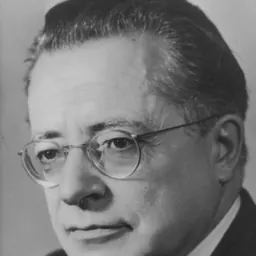
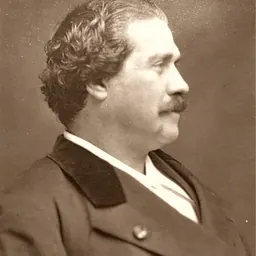
Related people
Same field, nearest in time



Contemporaries
People whose lives overlapped Giovanna Caleffi's


Frequently asked questions
Who was Giovanna Caleffi?
Italian educationalist and anarchist (1897–1962)
When was Giovanna Caleffi born?
Giovanna Caleffi was born on 5 May 1897 in Gualtieri.
When did Giovanna Caleffi die?
Giovanna Caleffi died on 24 March 1962 in Nervi.
What was Giovanna Caleffi's occupation?
Giovanna Caleffi was a women's rights activist, journalist and anarchism.
What nationality was Giovanna Caleffi?
Giovanna Caleffi was Italian.
Sources & further reading
Cite this page
APA: Biography.guide. (2026). Giovanna Caleffi. https://biography.guide/giovanna-caleffi/
MLA: "Giovanna Caleffi." Biography.guide, https://biography.guide/giovanna-caleffi/.
Chicago: "Giovanna Caleffi." Biography.guide. https://biography.guide/giovanna-caleffi/.
Data last updated: 2026-09-22 · Spot an error? Report a correction.
Portrait: Wikimedia Commons · author & licence
Page generated 2026-09-27 05:00 UTC