
Giorgio Pallavicino Trivulzio
Italian politician
About Giorgio Pallavicino Trivulzio
Lived 1796 – 1878 (aged 82). Giorgio Pallavicino Trivulzio was an Italian politician and senate of the Kingdom of Italy.
Giorgio Pallavicino Trivulzio (24 April 1796 – 4 August 1878) was a Lombard aristocrat who became a long-standing patriot activist-politician. He was consistent in his backing of Italian unification between 1820 and its accomplishment.
Early life
Giorgio Guido Pallavicino Trivulzio was born into an aristocratic family in Milan approximately one year before the incorporation of northern and central Italy into the growing body of territories that would be reconfigured and rebranded a few years later as parts of the First French Empire. His father was the Marquis Giorgio Pio; his mother was the Countess Anna Besozzi. Pallavicino Trivulzio inherited further titles as he grew up. Little is known of his early years. His father died when he was just seven, leaving his mother to attend to his upbringing. After he died Sebastiano Tecchio, the president of the senate in which he had served, delivered an affectionate oration in which he spoke of Pallavicino Trivulzio's childhood in a privileged single parent family. His mother, Anna, was an educated woman who saw to it that her son was well taught. Contemporary literature reflected Italy's condition of disunity and subservience to the Napoleonic empire: she took care to see that his reading concentrated on the classical authors and orators of ancient Greece and Rome. She forbad the servants from addressing the child by his title as "Marquis" or stepping in to help him to undertake tasks that he should be perfectly well able to undertake for himself, and she inculcated in him the virtues of "severe frugality". For some time he was sent to a boarding school, on which he would look back without pleasure. Aside from the sense of rejection and what he perceived as an excess of religious practices, he found the quality of the actual teaching "superficial and pedantic".
Uprising against Austrian hegemony Starting in 1814, he was able to undertake a succession of lengthy trips away from home, taking in the Italian peninsula and several other European countries. After 1815, there was a backlash on the part of European governments against all the changes that had taken place during the quarter century following the French Revolution, which for the Italian territories now under Austrian hegemony involved strenuous efforts by the authorities to thwart any signs of liberalism or Italian nationalism. A series of anti-Austrian riots broke out during 1820/21 in which Pallavicino Trivulzio participated. During or before January 1821, he joined the secret conspiratorial society being formed by Federico Confalonieri who was recruiting supporters from across Lombardy in preparation for some sort of military insurrection. During March 1821, as rioting broke out in the neighbouring Piedmont-Sardinia (which was not formally under Austrian control), Pallavicino Trivulzio and Gaetano De Castillia together visited Turin on behalf of Confalonieri and secured an interview with the regent, whom they tried to persuade to send Piedmontese troops across the border into Lombardy and take on the Austrians. According to one version of the interview, he subsequently confessed to interrogators that he had secured the assurance of Charles Albert that the Lombard cause was "sacred" to the government of Piedmont, although Pallavicino Trivulzio's own recollection of the meeting seems later to have changed. The trial that followed was conducted with "customary [Austrian] rigour and secrecy". His trial and other processes were lengthy and, in the view of his most high-profile obituarist, dependent on false confessions drawn from the mouths of the unwary and uninformed. Prison He spent the first and greater part of his incarceration in the Fortress of Spielberg (as it was known at the time) at Brno in Moravia, to which he was delivered on 24 February 1824. The northern wing of the prison had been newly adapted to incorporate a series of specially constructed cells for "state prisoners" (identified in Italian sources as Italian patriots). During the nineteenth century, helped in part by Pallavicino Trivulzio's own compelling written reports of his long incarceration there, Spielberg Castle acquired a level of infamy among the Italian public that twentieth century English speakers would impute to Alcatraz. During his time imprisoned in Moravia he is reported to have suffered from a serious form of neurosis. His cellmates at Spielberg included Pietro Borsieri and Gaetano De Castillia. His attitude to at least some of his former revolutionary comrades became somewhat equivocal, to the extent that he undertook to provide fresh revelations against Confalonieri on condition that conditions governing his own life sentence might be ameliorated. By 1835, he had been transferred again, this time to Laibach (Lubiana / Ljubljana), and where his physical and mental condition are understood to have become "Precarious". "Amnesty in America" or "Confinement in Prague" In Vienna the emperor died in March 1835 and his son, the well-intentioned "Ferdinand der Gütige", came to the throne. It was a time for new beginnings, and Pallavicino Trivulzio, whose sentence still had more than five years to run, was offered early release. The imperial authorities made arrangements for him to be deported to America as part of a larger group of political detainees. However, it turned out that their illustrious prisoner did not wish to start a new life in America. There could, at this stage, be no question of returning him to Italy, where he might resume his former habit of fomenting separatism, so alternative arrangements were made for him to be "confined in Prague". The intensity of his confinement is unclear, but during his five years in Prague he took the opportunity, in 1839, to marry Anna Koppmann, the daughter of the prison governor. The couple returned to Lombardy in 1840. Their daughter, another Anna, was born later that same year.
They now settled at the family home in San Fiorano (Lodi) near Piacenza: for a few years little more was heard of Pallavicino Trivulzio. There is mention of his having been kept under low-level surveillance by the regional police department. 1848 quickly became a year of revolutions in many of the Italian territories and states (and more widely across Europe), and in view of his earlier experiences following the (far more limited) anti-Austrian insurgencies of 1820/21 it is understandable that Pallavicino Trivulzio's first move involved escaping (again) to Switzerland, from where he very soon moved on to Paris, where he sought to solicit support for the Risorgimento vision. Following the restoration of the Austrian order in August 1848 he moved to Turin, the capital of Piedmont-Sardinia which is positioned directly to the west of Lombardy. During the months when it seemed possible that Austria might capitulate or withdraw and that Italian unification might prove achievable in 1848, Pallavicino Trivulzio emerged as a "sincere and unqualified" advocate of a merger between Piedmont, Lombardy, and Veneto even though integration into the Kingdom of Sardinia would confound his long-standing republican convictions. Turin exile After 1848, as the Austrians sought to strengthen political and social control in the Kingdom of Lombardy–Venetia, Pallavicino Trivulzio remained in Turin, resolved to use his still substantial fortune and his expanding network of contacts with French politicians and Italian exiles in Paris to progress the cause of unification. There were frequent trips to Paris to where, among others, Daniele Manin had escaped and now lived on in exile till his death in 1857. "Spilbergo e Gradisca", the first volume of his prison memoirs, was published a couple of years later. He was strongly critical of Giuseppe Mazzini, the long-winded leading prophet of Italian liberation and unification. Pallavicino Trivulzio was very far from being alone, among the more impetuous of the risorgimento activists, in finding Mazzini's strategy for achieving the shared goal of unification lacking in practicality. Pallavicino Trivulzio continued to insist that taking the Kingdom of Sardinia-Piedmont as the starting point for achieving unity was the only realistic option, because the kingdom was already equipped with constitutional arrangements and a formidable - if relatively small - army which, under the right circumstances, might be able to confront the Austrian military machine. There was also, in Turin, an available young king, already with a record of (cautious) supportiveness for the national cause. There were nevertheless a number of potential obstacles including, not leastly, powerful "municipal opposition" in Piedmont itself. With this in mind, he set up a meeting with Vincenzo Gioberti whose 1850 publication "Il Rinnovamento civile d’Italia" resonated closely with his own views in respect of the perceived timidity of the Piedmontese monarchy when it came to addressing what the two men saw as its risorgimento leadership role. Pallavicino Trivulzio and Manin continued to share an acute appreciation of the need to focus constantly on listening to and influencing public opinion across Italy and internationally when it came to their risorgimento goals. Pallavicino Trivulzio was conspicuously public in his defence of Manin after his political comrade drew criticism for an article he had published in The Times of London on 25 May 1856 in which he had accused Mazzini of providing a rationale for political murder ("... teorizzare l’omicidio politico").
During the 1850s, and especially during the first part of the decade, Pallavicino Trivulzio's relations with the political establishment in Piedmont (and with the government) were far from easy. As a member of parliament throughout the period, he was often to be found siding with the opposition. He spoke out against Piedmontese military intervention alongside the Ottoman Empire, the French, and the British in the 1855 Crimean War, though after the Congress of Paris he did grudgingly admit to having at least partially modified his opinion of Cavour whom he had hitherto condemned icily as "piemontesissimo" (loosely, "too Piedmontese"). It was the kingdom's first minister Cavour who introduced him in 1856 to Giuseppe La Farina, an exceptionally able organiser, who tried to give structure to the "National Party" which Pallavicino Trivulzio was setting up with Manin, and which was transformed, rebranded, and relaunched formally at Turin in August 1857 as "Società nazionale italiana" (Italian National Society), apparently in response to a casual "suggestion" the previous year from Cavour. La Farina became the first secretary of the "Società nazionale italiana" while Pallavicino Trivulzio, following Manin's death, took his place as "president" (leader). In reality this enabled Pallavicino Trivulzio to serve as the organisation's indefatigable propagandist-networker, also financing La Farina's newspaper, "Piccolo Corriere d’Italia". Meanwhile, La Farina's involvement as its secretary enabled the "Società nazionale" to retain an underlying air of moderation which may very well have been what Cavour had been hoping to achieve when he had introduced the two men in the first place. When it came to networking, Pallavicino Trivulzio's most important achievement was his success in making an ally of Garibaldi, who became a member of the "Società nazionale", thereby greatly broadening its popular appeal. Shortly after first meeting Cavour at the end of 1858, Garibaldi indeed became an honorary vice-president of the "Società nazionale". 1859 During 1858/59 the "Società nazionale italiana" gained traction across the states and territories of Italy, helped by a more focused organisational structure implemented by La Farina, supportive endorsement from Garibaldi, a more collaborative approach from Cavour (and the government in Piedmont), and a period of internal crisis within the Mazzinian Action Party. Nevertheless, once the Second War of Independence broke out during the early summer of 1859, Pallavicino Trivulzio concluded that the "Società"'s work was done, and he declared it dissolved. Taking a slightly longer view, he may have been right. Nevertheless, after three months of brutish fighting the Armistice of Vilafranca was concluded towards the end of July 1859 and La Farina brought the "Società" back to life in defiance of the views of its former president. La Farina himself, following its reconstitution, took on its presidency on 20 October 1859. Pallavicino Trivulzio was irritated by these developments, but he had, in his own mind, already moved on: for him the "Società nazionale italiana" had become nothing more than a tool firmly in the hands of Cavour. He had nothing more to do with the "Società", which was definitively dissolved in 1862. Senator Pallavicino Trivulzio's relationship with Cavour had never become an entirely easy one, and he saw his nomination to the Senate of the Kingdom of Italy on 29 February 1860 as a shamelessly "piemontesissimo" move to distance him from the political mainstream. Pallavicino Trivulzio nevertheless took his senatorial oath on 2 April 1860 and his senatorial membership was confirmed on 11 April 1860. One of his first moves as a senator was to speak out in savage condemnation of the transfer of what had been left after 1792 of the old County of Nice and Duchy of Savoy to France in 1860. (These concessions were necessary to fulfil the terms of a highly secret - at the time - agreement concluded in 1858 under which Cavour had secured a guarantee of military support from the French emperor in what became known as the Second Italian War of Independence.) Turin's man and Garibaldi's friend in Naples Although the war that secured independence and unification was abruptly terminated in July 1859 by means of the Armistice of Vilafranca, there was at that point much more negotiation to be concluded, and it would only be in March 1861 that Italian unification would be formally proclaimed. Much of the unfinished business involved Giuseppe Garibaldi who, despite being a staunch ally in respect of the twin goals of liberation and unification, had his own strategy and indeed his own preconceptions on what sort of a united Italy would and should result from the military phase of the campaign. In September 1860 Giorgio Pallavicino was summoned by Garibaldi to Naples, where he was appointed as one of two "prodittatore" (loosely, but in some ways misleadingly, "pro-dictator") by Garibaldi through means of a decree issued in the name of His Majesty King Victor Emmanuel. The appointment of his friend Giorgio Pallavicino to this position does indeed appear to have been implemented by Garibaldi in order to strengthen his standing with King Victor Emmanuel of Piedmont, with whom it would be necessary to collaborate if unification was to move ahead. Almost as soon as he had been appointed, Giorgio Pallavicino was sent back on a mission to Piedmont with instructions to persuade the king to secure the resignation of the Cavour government. It seems unlikely that Pallavicino Trivulzio himself was entirely convinced as to the wisdom of the mission. The king, in any event, was not persuaded.
Pallavicino Trivulzio formulated the referendum question himself: "Do the people want a single indivisible Italy with Victor Emmanuel and his legitimate descendants as their constitutional king?" ("Il popolo vuole l’Italia una e indivisibile con Vittorio Emmanuele Re costituzionale e suoi legittimi discendenti?" Despite his enforced resignation from the Palermo prefecture, Pallavicino Trivulzio held on to the vice-presidency of the senate, to which he had been appointed on 3 February 1861, till 21 May 1863.)
Although senators were appointed for life, after the end of 1864 Pallavicino Trivulzio ceased to be an active parliamentarian, while remaining among the supporters of the incorporation of the Papal States surrounding and including Rome into the Italian kingdom. The outcome of the Battle of Mentana, in which a volunteer army led by Garibaldi was defeated by an army of French-Papal troops in November 1867, appeared to put an end to that dream for the foreseeable future. Just three years later, however, with the French military machine otherwise engaged, the Italian army seized the opportunity. Rome was over-run and became the capital of Italy, leaving just the Vatican City unconquered. For more than a generation, till 1929, the "Roman Question", involving some sort of agreement as to the division of powers and lands between the papacy and the Italian government, remained unresolved, and the Popes remained effectively trapped inside the confines of their residual city centre territory. For Giorgio Pallavicino Trivulzio, and for many other traditionalist risorgimento patriots who had given over their lives to the unification project, 1870 would be seen as something of a missed opportunity.
Giorgio Pallavicino Trivulzio lived out his final years out of the public spotlight, increasingly detained at his home by the infirmities of old age. As an old man he returned to the republican idealism of his youth, becoming disenchanted with the monarchy and its apparently bottomless appetite for money and privilege. However, his republicanism remained something defined more by his classicists' rhetoric, rather than a concrete political aspiration backed by a cogent strategy. He became preoccupied by the advance of socialism, especially after Garibaldi came out in support of "the international" as the inevitable way of the future. For Pallavicino Trivulzio that was something which negated the very concept of a homeland. He did not deny the existence of social problems, much exacerbated by industrialisation and galloping urbanisation during the second half of the nineteenth century. But he believed that the solutions were to be found in education and charitable activities, backed by the urgent need to extend voting rights.
He died at Genestrelle (Casteggio) near Pavia on 4 August 1878.
Public recognition (selection)
Don’t just read it —
keep it.
Full-length biographies made to live with: read them, listen on the way to work, watch them tonight.
- E-book
- Audio
- Video
Instant download · yours to keep · every purchase keeps this site free
Important facts
People in Giorgio Pallavicino Trivulzio's life
Named in this biography and alive at the same time

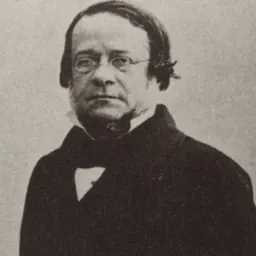
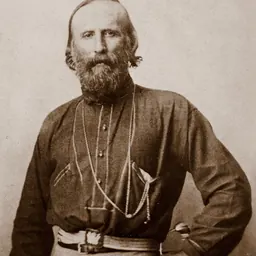
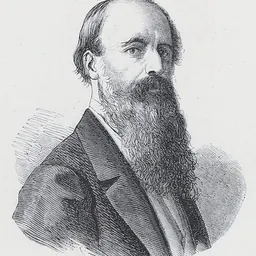

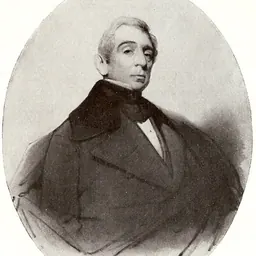
Related people
Same field, nearest in time



Contemporaries
People whose lives overlapped Giorgio Pallavicino Trivulzio's






Frequently asked questions
Who was Giorgio Pallavicino Trivulzio?
Italian politician (1796-1878)
When was Giorgio Pallavicino Trivulzio born?
Giorgio Pallavicino Trivulzio was born on 24 April 1796 in Milan.
When did Giorgio Pallavicino Trivulzio die?
Giorgio Pallavicino Trivulzio died on 4 August 1878 in Casteggio.
What was Giorgio Pallavicino Trivulzio's occupation?
Giorgio Pallavicino Trivulzio was a politician and senate of the Kingdom of Italy.
What nationality was Giorgio Pallavicino Trivulzio?
Giorgio Pallavicino Trivulzio was Italian.
Sources & further reading
· Wikipedia: Giorgio Pallavicino Trivulzio
· DBpedia: Giorgio Pallavicino Trivulzio
Cite this page
APA: Biography.guide. (2026). Giorgio Pallavicino Trivulzio. https://biography.guide/giorgio-pallavicino-trivulzio/
MLA: "Giorgio Pallavicino Trivulzio." Biography.guide, https://biography.guide/giorgio-pallavicino-trivulzio/.
Chicago: "Giorgio Pallavicino Trivulzio." Biography.guide. https://biography.guide/giorgio-pallavicino-trivulzio/.
Data last updated: 2026-09-24 · Spot an error? Report a correction.
Page generated 2026-09-27 05:03 UTC