
About Gioacchino Volpe
Lived 1876 – 1971 (aged 95). Gioacchino Volpe was an Italian historian and politician.
Gioacchino Volpe (16 February 1876 – 1 October 1971) was an Italian historian and politician. He was general secretary of the Royal Academy of Italy from 1929 to 1934, and a member of the Accademia dei Lincei from 1935 to 1946. Between 1924 and 1940 he was professor of modern history at the Sapienza University of Rome.
Biography
Early life and education Volpe was born in Paganica, L'Aquila, on 16 February 1876. In 1895, he entered the University of Pisa, where he graduated in Letters in 1899. While in Pisa, he befriended Giovanni Gentile and Giuseppe Lombardo Radice. In 1906 onwards, he was appointed professor of modern history at the .
A nationalist, he served as an officer in World War I, and was awarded the Silver Medal of Military Valor. Before, during and after the war, he played an active role in Italian political and cultural debates.
In 1919, Volpe was one of the signatories of the manifesto of the Gruppo Nazionale Liberale Romano, alongside Gentile and Luigi Einaudi. The manifesto called for a strong central government with broad powers capable of radically reforming the state, and rejected the democratic reforms proposed by the Italian Prime Minister, Francesco Saverio Nitti, defined as 'unfit to protect the supreme interests of the nation'.
Fascism Volpe became associated with Fascism during the immediate post-war period. He was elected to the Italian parliament on the National List in 1924, and the following year he signed the Manifesto of the Fascist Intellectuals. During the Fascist regime, he played a leading role. From 1924 to 1940, he was a professor of modern history at the Sapienza University of Rome. He directed the School of Modern and Contemporary History until 1943, and was director of the medieval and modern history section of the Enciclopedia Italiana from 1925 to 1937. He was general secretary of the Royal Academy of Italy from 1929 to 1934, and a member of the Accademia dei Lincei from 1935 to 1946.
Post-war period After the Greco-Italian War, Volpe's attitude towards fascism gradually became critical and distant. After the Armistice of Cassibile, he did not join the Italian Social Republic, remaining loyal to King Victor Emmanuel III. He withdrew from public life and settled in Santarcangelo di Romagna, where he remained until the end of World War II. After the war, he was dismissed from his position at the university due to his role during the Fascist period. His ostracism from academic culture caused him considerable frustration and forced him into silence. However, he did not abandon his historical research, instead focusing on completing his magnum opus on the history of modern Italy. From exile, Umberto II of Italy awarded him the Civil Order of Savoy for his scientific achievements.
Volpe died in Santarcangelo di Romagna on 1 October 1971.
Historical work At the beginning of his career, Volpe's historiographical interests were primarily focused on the medieval commune and the social conflicts within it. Influenced by the thought of Antonio Labriola and Gaetano Salvemini, he was one of the first historians to incorporate economic and social factors into the study of the Middle Ages. After World War I, his focus shifted from socio-economic issues to political ones. His attention gradually shifted from the Middle Ages, on which he continued to write, to contemporary history. His magnum opus is widely regarded as the monumental three-volume work L'Italia moderna (Modern Italy), published between 1949 and 1952.
Don’t just read it —
keep it.
Full-length biographies made to live with: read them, listen on the way to work, watch them tonight.
- E-book
- Audio
- Video
Instant download · yours to keep · every purchase keeps this site free
Important facts
People in Gioacchino Volpe's life
Named in this biography and alive at the same time


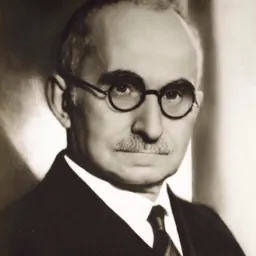
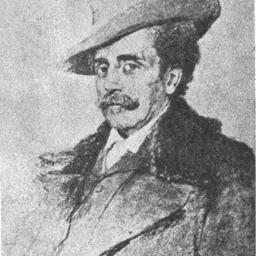
Related people
Same field, nearest in time

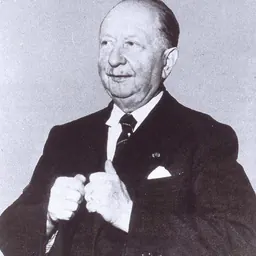
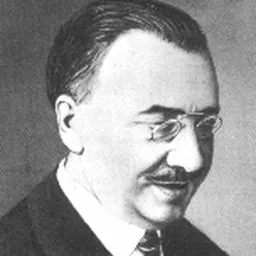
Contemporaries
People whose lives overlapped Gioacchino Volpe's

Frequently asked questions
Who was Gioacchino Volpe?
Italian historian and politician (1876–1971)
When was Gioacchino Volpe born?
Gioacchino Volpe was born on 16 February 1876 in Paganica.
When did Gioacchino Volpe die?
Gioacchino Volpe died on 1 October 1971 in Santarcangelo di Romagna.
What was Gioacchino Volpe's occupation?
Gioacchino Volpe was a historian and politician.
What nationality was Gioacchino Volpe?
Gioacchino Volpe was Italian.
Sources & further reading
Cite this page
APA: Biography.guide. (2026). Gioacchino Volpe. https://biography.guide/gioacchino-volpe/
MLA: "Gioacchino Volpe." Biography.guide, https://biography.guide/gioacchino-volpe/.
Chicago: "Gioacchino Volpe." Biography.guide. https://biography.guide/gioacchino-volpe/.
Data last updated: 2026-09-22 · Spot an error? Report a correction.
Page generated 2026-09-27 05:32 UTC