
Gilbert Baker
American artist and gay rights activist
About Gilbert Baker
Lived 1951 – 2017 (aged 65). Gilbert Baker was an American lGBTQ rights activist, designer, artist and list of LGBT rights activists, known for Rainbow flag (LGBT movement).
Gilbert Baker (June 2, 1951 – March 31, 2017) was an American artist, designer, activist, and vexillographer, best known as the creator of the rainbow flag.
Biography Baker was born on June 2, 1951, in Chanute, Kansas. He grew up in Parsons, Kansas, where his grandmother owned a women's clothing store. His father was a judge and his mother was a teacher.
Baker served in the United States Army from 1970 to 1972. He was stationed as a medic in San Francisco at the beginning of the gay rights movement and lived there as an openly gay man. After his honorable discharge from the military, he worked on the first marijuana legalization initiative, California Proposition 19 (1972), and was taught to sew by his fellow activist, Mary Dunn. He used his skill to create banners for gay-rights and anti-war protest marches. It was during this time that he met and became friends with Harvey Milk. He also joined the gay drag activist group Sisters of Perpetual Indulgence stating, "At first it was glamorous and political, but when the Sisters became more organized, it became a tool of the right wing and raised money for Jerry Falwell", referring to video and images of the group that were used for right-wing Christian efforts, "so I stopped."
Baker first created the Rainbow Flag with a collective in 1978.
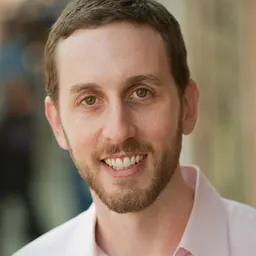
In 1994, Baker moved to New York City, where he lived for the rest of his life. Due to his creation of the rainbow flag, Baker often used the drag queen name "Busty Ross", alluding to Betsy Ross. The New York City medical examiner's office determined cause of death was hypertensive and atherosclerotic cardiovascular disease. Upon Baker's death, California state senator Scott Wiener said Baker "helped define the modern LGBT movement".
Rainbow flag
The six-color version of the pride flag is most common. The original version from 1978 featured two additional stripes—hot pink and turquoise—which were removed for manufacturing and practical reasons. The colors on the Rainbow Flag reflect the diversity of the LGBTQ community. When Baker raised the first rainbow flags at San Francisco Pride (his group raised two flags at the Civic Center) on June 25, 1978, it comprised eight symbolic colors:
Hot pink Sex Red Life Orange Healing Yellow Sunlight Green Nature Turquoise Magic/Art Indigo Serenity Violet Spirit
Thirty volunteers had helped Baker hand-dye and stitch the first two flags in the top-floor attic gallery of the Gay Community Center at 330 Grove Street in San Francisco. Because using dye in public washing machines was not allowed, they waited until late at night to rinse the dye from their clothes, running a cycle with bleach in the washing machines after leaving. As of 2021, the most common variant consists of six stripes, with the colors red, orange, yellow, green, blue, and violet. Baker referred to this version of the flag as the "commercial version", because it came about due to practical considerations of mass production. Specifically, the rainbow flag lost its hot pink stripe when Baker approached the Paramount Flag Company to begin mass-producing them, and the hot pink fabric was too rare and expensive to include.
Baker stated that he created the Rainbow Flag as an alternative to the pink triangle, which had originated as a Nazi concentration camp badge. He noted the community needed "something beautiful, something from us" to replace a symbol of oppression with one of pride.
Legacy French memorial to Gilbert Baker, Place des Émeutes-de-Stonewall in Le Marais district of Paris. In 2003, Baker and his Key West project were the subject of Rainbow Pride, a feature-length documentary by Marie Jo Ferron, bought by PBS National and debuting in New York on WNET. Baker recreated his original Rainbow Flag for the academy-award-winning 2008 film Milk, and is shown being interviewed on one of the featurettes of the DVD release.
The Museum of Modern Art ranked the rainbow flag as an internationally recognized symbol as important as the recycling symbol in 2015.
In February and early March 2017, Baker was portrayed in Dustin Lance Black's When We Rise by Jack Plotnick, and by Dylan Arnold as young Gilbert Baker. In the second part of the miniseries Baker's character is shown sewing the flag and, later on, explaining to Cleve Jones the reasoning for the colors he had chosen.
On June 2, 2017, the 66th anniversary of his birth, Google released a Google Doodle honoring Baker.
The children's book Pride: The Story of Harvey Milk and the Rainbow Flag was released by Penguin Random House in April 2018.
Baker was one of the inaugural fifty American "pioneers, trailblazers, and heroes" inducted on the National LGBTQ Wall of Honor within the Stonewall National Monument (SNM) in June 2019. The SNM is the first U.S. national monument dedicated to LGBTQ rights and history, while the Wall's unveiling at the Stonewall Inn coincided with the 50th anniversary of the Stonewall riots.
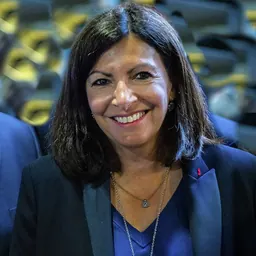
In June 2019, a square in Paris, France was officially renamed Place des Émeutes-de-Stonewall (Stonewall Riots Square), and a plaque commemorating Baker was installed at the location. The plaque was unveiled by the Paris mayor Anne Hidalgo, French officials, Stuart Milk, and activists of Stonewall riots.
In 2019, the non-profit Gilbert Baker Foundation incorporated "To protect and extend the legacy of Gilbert Baker, the creator of the LGBTQ Rainbow Flag, as an activist, artist and educator."
In 2025, the minor planet 429733 Gilbertbaker was named in his honor.
Museums and archives
Baker's work and related historical artifacts are represented in several major museum and archival collections. The GLBT Historical Society in San Francisco owns one of the sewing machines Baker used to produce the original rainbow flags in 1978, along with one of the limited-edition recreations of the eight-stripe design he produced to mark the 25th anniversary of the flag. In 2012, the society displayed both objects in an exhibition on the history of the flag at the GLBT History Museum which it sponsors in San Francisco's Castro District.
In 2015, the Museum of Modern Art in New York City acquired examples of the rainbow flag for its design collection, where curators ranked it as an internationally recognized symbol similar in importance to the Creative Commons logo and the recycling symbol.
Don’t just read it —
keep it.
Full-length biographies made to live with: read them, listen on the way to work, watch them tonight.
- E-book
- Audio
- Video
Instant download · yours to keep · every purchase keeps this site free
Important facts
People in Gilbert Baker's life
Named in this biography and alive at the same time





Related people
Same field, nearest in time

Contemporaries
People whose lives overlapped Gilbert Baker's


Frequently asked questions
Who was Gilbert Baker?
American artist and gay rights activist (1951–2017)
When was Gilbert Baker born?
Gilbert Baker was born on 2 June 1951 in Chanute.
When did Gilbert Baker die?
Gilbert Baker died on 31 March 2017 in New York City.
What was Gilbert Baker's occupation?
Gilbert Baker was a lGBTQ rights activist, designer, artist and list of LGBT rights activists.
What was Gilbert Baker known for?
Gilbert Baker was known for Rainbow flag (LGBT movement).
What nationality was Gilbert Baker?
Gilbert Baker was American.
Sources & further reading
· DBpedia: Gilbert Baker (artist)
Cite this page
APA: Biography.guide. (2026). Gilbert Baker. https://biography.guide/gilbert-baker-lgbtq-rights-activist/
MLA: "Gilbert Baker." Biography.guide, https://biography.guide/gilbert-baker-lgbtq-rights-activist/.
Chicago: "Gilbert Baker." Biography.guide. https://biography.guide/gilbert-baker-lgbtq-rights-activist/.
Data last updated: 2026-09-22 · Spot an error? Report a correction.
Page generated 2026-09-27 05:19 UTC