
Gigi Riva
Italian association football player
About Gigi Riva
Lived 1944 – 2024 (aged 79). Gigi Riva was an Italian association football player, screenwriter, sporting director and athlete.
Early life
Riva was born into a poor family in Leggiuno, a small town in the northern Italian province of Varese, Lombardy, near the Swiss border, on 7 November 1944. His mother, Edis, was a housewife, while his father, Ugo, worked several jobs, firstly as a hairdresser, then as a tailor, and subsequently in a factory, where he died in a work-related accident on 10 February 1953, when Luigi was nine. Edis began working as a maid, while Luigi was sent to a strict religious boarding school, where he remained for three years, before finding a job in a lift-factory and beginning to play football; his mother died soon afterwards.
Club career
1962–1964: early years, debut with Legnano, and promotion with Cagliari Riva started playing amateur football for the Laveno Mombello youth side in Lombardy, scoring 30 goals in 1961 and 33 the following season. He began his professional career in 1962, at the age of 18, when he joined Serie C side Legnano-Ivrea, scoring 6 goals in 22 appearances in his debut season. The youngster's promising performances attracted the attention of Cagliari president Enrico Rocca, and he was acquired by the Serie B side the following year for a notable sum of 37 million Lire, at the age of 19; Riva remained with the Sardinian team for the rest of his career. In his first season with the club, he scored 8 goals in 26 appearances and helped Cagliari to a second-place finish in the league behind Varese, which enabled the team to achieve promotion to the top-flight for the first time in their 40-year history.
1964–1970: Serie A debut with Cagliari and road to the Serie A title
The following season, Riva made his Serie A debut for Cagliari on 13 September 1964, in a 2–1 loss against Roma, and also helped the club avoid relegation, leading the team to a comfortable sixth-place finish in the table, scoring an encouraging 9 goals in 32 appearances at the age of 20. Between 1965 and 1968, Cagliari secured mid-table finishes, placing eleventh, sixth, and ninth. Despite the team's mixed form, Riva's individual profile grew as he claimed his first capocannoniere title as league top scorer during the 1966–67 season, netting 18 goals, as the club began to build a potential title winning side around their star striker: Riva attracted several notable footballers to Cagliari, and the team during this period featured players such as Enrico Albertosi, Roberto Boninsegna, Ricciotti Greatti, Comunardo Niccolai, Mario Martiradonna, Mario Brugnera, Pierluigi Cera, and Nené. Riva scored 248 goals for club and country throughout his career in 439 appearances, His international career was off to a difficult start, with his performance in his second appearance for Italy, a 0–0 friendly draw against France in Paris on 19 March 1966, criticised by noted journalist Gianni Brera, who initially described Riva as a "one-footed" and "incomplete player". After breaking both his left tibia and fibula in his third international appearance, a 1–1 friendly home draw against Portugal on 27 March 1967, Riva returned to the national team as a starter seven months later, and finally scored his first goal for Italy in his fourth international appearance, a 5–0 home win over Cyprus on 1 November 1967, in a UEFA Euro 1968 qualifying match, later completing a hat-trick in the same game. Riva was named to the Team of the Tournament for his performance during the match. Following his disappointing and goalless performances in the group stage, and much media criticism and scrutiny, Riva finally opened his account in the World Cup in the second round. On 14 June, he helped Italy defeat the hosts Mexico 4–1 in the quarter-finals, scoring two goals, both from Gianni Rivera assists, forming a notable offensive partnership with the Milan playmaker in the knock-out rounds of the competition. Riva subsequently netted a crucial extra-time goal – his 22nd in 21 international appearances – against West Germany in Italy's 4–3 semi-final victory on 17 June, which is colloquially known as the "Game of the Century". The Italian team finished runners up in the tournament after losing 4–1 to Brazil in the final. Riva finished the competition as Italy's top-scorer, with three goals.
Later years, Italy's all-time goalscorer and 1974 World Cup On 31 March 1973, Riva scored four goals in a 5–0 home win over Luxembourg, in a World Cup qualifying match, becoming one of only six players to accomplish this feat with the Italy national side. On 9 June, he became Italy's all-time leading goalscorer, equalling the record of 33 goals held by Giuseppe Meazza, scoring in a 2–0 friendly against Brazil in Rome; Meazza reportedly stated after the match "That Riva is good, he scored a lot of goals against Cyprus and Turkey. Surely my goals were much more important."
Riva later surpassed Meazza's record with his 34th international goal in a 2–0 home win in a friendly against Sweden on 29 September 1973, and scored his final and 35th goal for Italy later that year, on 20 October, in a 2–0 home win over Switzerland in a World Cup qualifying match. Riva is currently still Italy's top-goalscorer of all time, with 35 goals in just 42 matches, with an average of 0.83 goals per game. In addition to being Italy's all-time leading goalscorer, Riva is also the highest goalscorer in combined goals scored at the FIFA World Cup and FIFA World Cup qualifier matches with 17 goals, and Italy's highest goalscorer in FIFA World Cup qualifiers, with 14 goals. Furthermore, alongside Silvio Piola, he co-holds the national team's record for most goals on opposition soil with 13.
After retirement and death quote="Riva is eternal for Sardinia, he is a mythical ... almost a religious figure." — Vito Biolchini. He later served as a director and subsequently as a team managing staff member for the Italy national football team from 1988 until 2013, and was also a member of the technical staff for the Italy national team that won the 2006 FIFA World Cup under his supervision; he drew praise from captain Fabio Cannavaro for his role in Italy's fourth World Cup title victory. In the evening of the following day, however, Riva's health condition suddenly deteriorated, and he eventually died of a heart attack, at the age of 79.
Style of play
Regarded as one of Italy's greatest players, and one of the best strikers of his generation, Riva was a prolific forward known for his clinical finishing and physical presence. He was initially deployed as a winger on the left flank early in his career, although he would often cut into the centre of the pitch in order to strike on goal; as a result, he was later played in a more offensive and central role, as a main striker. A naturally left footed player, he had a very powerful and accurate shot from both inside and outside the area, which led Gianni Brera to nickname him "Rombo di Tuono" (Roar of Thunder); although he was predominantly left-footed, he was also capable of scoring with his right foot on occasion.
Due to his height, physique, elevation, and his heading accuracy, Riva excelled in the air, and he also had a penchant for scoring acrobatic goals from bicycle kicks, courtesy of his athleticism and volleying ability. He also possessed technical ability, creativity, and dribbling skills, as well as a notable elegance on the ball. In addition to his goalscoring prowess and technique, he was also a hard-working and fast player, who excelled during sprints and at making attacking runs. He was also an accurate free-kick and penalty kick taker. Despite his ability, his career was often marked by injuries, which later affected his mobility, continuity, and fitness, and eventually forced him to retire prematurely. He was Catholic.
Career statistics
Club +Appearances and goals by club, season and competition Ballon d'Or: runner-up: 1969; third place: 1970 UEFA European Championship Team of the Tournament: 1968 FUWO European Team of the Season: 1969, 1970 World XI: 1971 Sport Ideal European XI: 1973 World Soccer's 100 Greatest Footballers of All Time: 1999 UEFA Jubilee Poll (2004): #100 Golden Foot "Football Legends": 2005 Inducted into the Italian Football Hall of Fame: 2011 Inducted into the Walk of Fame of Italian sport: 2015 Inducted into the Cagliari Hall of Fame Cagliari Greatest All-time Starting XI
Orders
Don’t just read it —
keep it.
Full-length biographies made to live with: read them, listen on the way to work, watch them tonight.
- E-book
- Audio
- Video
Instant download · yours to keep · every purchase keeps this site free
Important facts
People in Gigi Riva's life
Named in this biography and alive at the same time



Related people
Same field, nearest in time

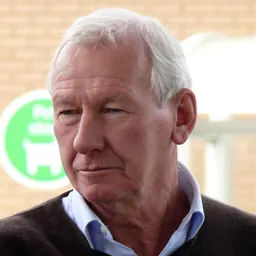


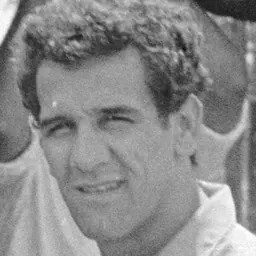

Contemporaries
People whose lives overlapped Gigi Riva's
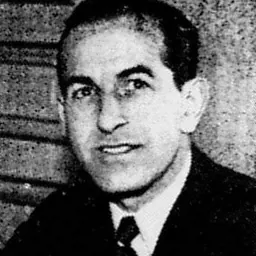


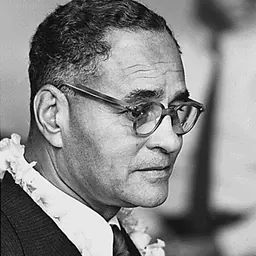

Frequently asked questions
Who was Gigi Riva?
Italian association football player (1944–2024)
When was Gigi Riva born?
Gigi Riva was born on 7 November 1944 in Leggiuno.
When did Gigi Riva die?
Gigi Riva died on 22 January 2024 in Cagliari.
What was Gigi Riva's occupation?
Gigi Riva was an association football player, screenwriter, sporting director and athlete.
What nationality was Gigi Riva?
Gigi Riva was Italian.
Sources & further reading
Cite this page
APA: Biography.guide. (2026). Gigi Riva. https://biography.guide/gigi-riva/
MLA: "Gigi Riva." Biography.guide, https://biography.guide/gigi-riva/.
Chicago: "Gigi Riva." Biography.guide. https://biography.guide/gigi-riva/.
Data last updated: 2026-09-20 · Spot an error? Report a correction.
Page generated 2026-09-27 05:33 UTC