
Giammaria Biemmi
Italian priest and local historian
About Giammaria Biemmi
Lived 1708 – 1778 (aged 69–70). Giammaria Biemmi was a catholic priest, local historian and historian.
Giammaria Biemmi was an Italian priest who published a work on Skanderbeg titled Istoria di Giorgio Castrioto Scanderbeg-Begh. His work was published in Brescia, Italy in 1742.
His work claimed to be derived from sources older than Marin Barleti's, generally considered the main primary source on Skanderbeg. He made use of contemporary Italian humanists and historians who wrote on Skanderbeg such as Francescus Philephus (1389–1481), Johanes Jovianus Pontanus (1423–1503), Raffaele Maffei Volaterranus (1434–1516), while also using two Byzantine chroniclers, Laonikos Chalkokondyles (1423–1464) and George Sphrantzes (1401–1478). He furthermore made use of archival documents compiled by Odorico Raynaldi (1595–1671) and G. Sagredo (1616–1696).
The passages given by Antivarino come out as being more neutral than Barleti's panegyric work. There is no rhetoric and both Skanderbeg's failures and successes are mentioned without leaning towards either side. Using Antivarino as his main work, Biemmi drew harsh criticism against Barleti; however, he criticizes Antivarino on certain points and still agrees with Barleti's major points. Fan Noli in his first work on Skanderbeg, Historia e Skënderbeut, mbretit të shqiptarëve, holds that Antivarino is an authentic source which Biemmi used. Athanas Gegaj, in his dissertation prepared for the University of Paris, defends Biemmi, saying that he gives us, through Antivarino, valuable information about Albanian society and its princes at the time. Several years later, however, Franz Babinger, in his work dealing with the foundation of Elbasan, asserted that Antivarino never existed. He furthermore stated in Eine Gefälschte Radolt inkunabel that Biemmi aimed to raise interest in his work so he falsified a source. American historian Kenneth M. Setton states that Noli had not discovered that Biemmi invented the Anonymous of Antivari and that Antvarino was a fraud. He also says that the two "early" chronicles of Brescia were also forged by Biemmi. Noli argues, however, that Luccari, a Ragusan annalist, knew of a History of Scanderbeg by the Archbishop of Durrës who was from Antivari. Rinaldina Russell of Queens College who holds PhD in Italian literature, states that Antivarino's work, provided by Biemmi, is more reliable than Barleti's.
Don’t just read it —
keep it.
Full-length biographies made to live with: read them, listen on the way to work, watch them tonight.
- E-book
- Audio
- Video
Instant download · yours to keep · every purchase keeps this site free
Important facts
Related people
Same field, nearest in time
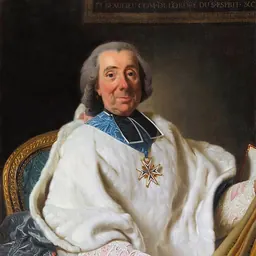
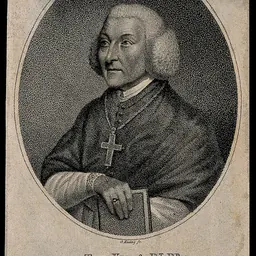

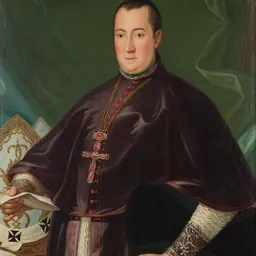

Contemporaries
People whose lives overlapped Giammaria Biemmi's





Frequently asked questions
Who was Giammaria Biemmi?
Italian priest and local historian (1708-1784)
When was Giammaria Biemmi born?
Giammaria Biemmi was born on 2 February 1708 in Brescia.
When did Giammaria Biemmi die?
Giammaria Biemmi died in 1778 in Brescia.
What was Giammaria Biemmi's occupation?
Giammaria Biemmi was a catholic priest, local historian and historian.
Sources & further reading
Cite this page
APA: Biography.guide. (2026). Giammaria Biemmi. https://biography.guide/giammaria-biemmi/
MLA: "Giammaria Biemmi." Biography.guide, https://biography.guide/giammaria-biemmi/.
Chicago: "Giammaria Biemmi." Biography.guide. https://biography.guide/giammaria-biemmi/.
Data last updated: 2026-09-20 · Spot an error? Report a correction.
Page generated 2026-09-27 05:30 UTC