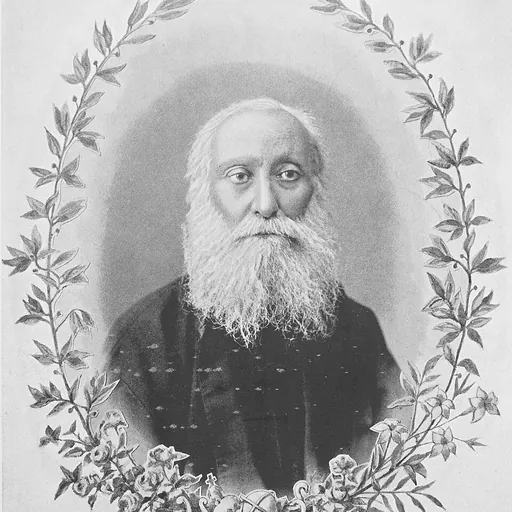
About Ghevont Alishan
Lived 1820 – 1901 (aged 81). Ghevont Alishan was an Italian and Armenian poet, historian, cleric, armenologist, translator and philologist.
Ghevont Alishan (; , 1820 – , 1901) was an Armenian Catholic priest, historian, educator and poet. He was a prolific author throughout his long career and gained recognition from Armenians and European academic circles for his contributions to Armenian literature and scholarship.
Born to an Armenian Catholic family in Constantinople, he received his education at the academy of the Armenian Catholic Mekhitarist Congregation on Saint Lazarus Island in Venice and joined the order in 1840. Between 1840 and 1872, he held a number of teaching and administrative positions in his order's educational institutions in Venice and Paris. During this period, he gained renown as a poet, writing mainly in Classical Armenian on both patriotic and religious themes. He is regarded as one of the first Armenian Romantic poets.
After 1872, Alishan devoted himself completely to his scholarly work. He notably wrote a number of long works on the historical provinces of Armenia and prepared for publication many old Armenian texts. Most of his works are in Armenian, but he also wrote in, and was translated into, French, English and Italian.
Biography Alishan, born Kerovpe Alishanian, was born on , 1820, in Constantinople, to numismatist and archaeologist Bedros-Markar Alishanian. His family was Armenian Catholic. After receiving his primary education at the local Chalikhian School (1830–1832), he continued his studies at the Mekhitarist school in Venice (1832–1841). He became a member of the order in 1838 From 1841 to 1850, he worked as a teacher and, from 1848, principal at the Raphael College (the Mekhitarist-run Armenian boarding school) in Venice. From 1849 to 1851, he was the editor of the Mekhitarists' scholarly journal Bazmavēp. From 1852 to 1853, he toured Europe, traveling to England, Austria, Germany, France, Belgium and Italy.
Literary activities Alishan was a prolific author who wrote across different genres over the course of his more than sixty-year-long career․
Translations into Armenian Alishan translated works in prose and verse from English, French, Persian and Italian into Armenian. His translations include Canto IV of Lord Byron's Childe Harold's Pilgrimage, Friedrich Schiller's "Die Glocke", and works by François de Malherbe, Alphonse de Lamartine, and François-René de Chateaubriand. Some of his uncompleted geographical studies have remained in manuscript form. In 1988–91, Bazmavēp published Alishan's hitherto unpublished studies of the provinces of Artsakh and Utik; the former was also published as a separate book in Yerevan in 1993.
Most of Alishan's works are in Armenian, but he also wrote in, and was translated into, French, English and Italian. These include a collection of Armenian folk songs translated into English (1852), a collection of primary sources in Italian regarding Armeno-Venetian relations in the medieval period (, 1893), and several French adaptations of his Armenian studies, such as (1861), (1881), and (1899). Publishing in European languages made Alishan's work more accessible and earned him the admiration of several European academics; later in his life, he received several honors from European academic institutions (see above). In 1895, Alishan published , a dictionary of the flora of Armenia, and (The old faith or the pagan religion of the Armenians), a study of pre-Christian Armenian religion. According to Bardakjian, "Any search [in Alishan's work] for dissension from Christian tenets on the Creator, the Creation, and human behavior would be a futile attempt."
Selected publications
Armenian popular Songs: translated into English by the R. Leo M. Alishan DD. of the Mechitaristic Society, Venice, S. Lazarus, 1852. Etude de la patrie: physiographie de l'Arménie: discours prononcé le 12 août 1861 à la distribution annuelle des prix au collège arménien Samuel Moorat, Venise, S. Lazar, 1861. «Յուշիկք հայրենեաց հայոց» (Memories of the Armenian Homeland) 1869. «Շնորհալի եւ պարագայ իւր» ('Shnorhali ew paragay iwr', Armenian History). 1873, Venice. «Շիրակ» (Shirak) 1881. Deux descriptions arméniennes des lieux Saints de Palestine, Gènes, 1883. «Սիսուան» (Sisouan) 1885. «Այրարատ» (Ayrarat) 1890. «Սիսական» (Sisakan) 1893. «Հայապատում» ('Hayapatum', Armenian History). 1901, Venice.
Don’t just read it —
keep it.
Full-length biographies made to live with: read them, listen on the way to work, watch them tonight.
- E-book
- Audio
- Video
Instant download · yours to keep · every purchase keeps this site free
Important facts
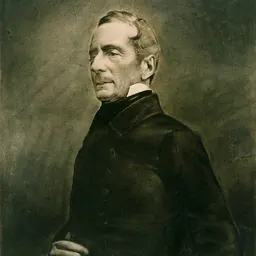
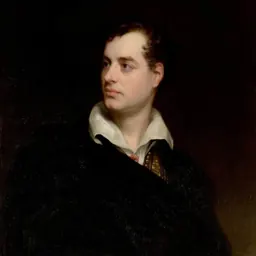
People in Ghevont Alishan's life
Named in this biography and alive at the same time
Related people
Same field, nearest in time

Contemporaries
People whose lives overlapped Ghevont Alishan's




Frequently asked questions
Who was Ghevont Alishan?
Armenian Catholic priest, historian, and poet (1820–1901)
When was Ghevont Alishan born?
Ghevont Alishan was born on 6 July 1820 in Constantinople.
When did Ghevont Alishan die?
Ghevont Alishan died on 9 November 1901 in San Lazzaro degli Armeni.
What was Ghevont Alishan's occupation?
Ghevont Alishan was a poet, historian, cleric, armenologist, translator and philologist.
What nationality was Ghevont Alishan?
Ghevont Alishan was Italian and Armenian.
Sources & further reading
Cite this page
APA: Biography.guide. (2026). Ghevont Alishan. https://biography.guide/ghevont-alishan/
MLA: "Ghevont Alishan." Biography.guide, https://biography.guide/ghevont-alishan/.
Chicago: "Ghevont Alishan." Biography.guide. https://biography.guide/ghevont-alishan/.
Data last updated: 2026-09-21 · Spot an error? Report a correction.
Portrait: Wikimedia Commons · author & licence
Page generated 2026-09-27 05:01 UTC