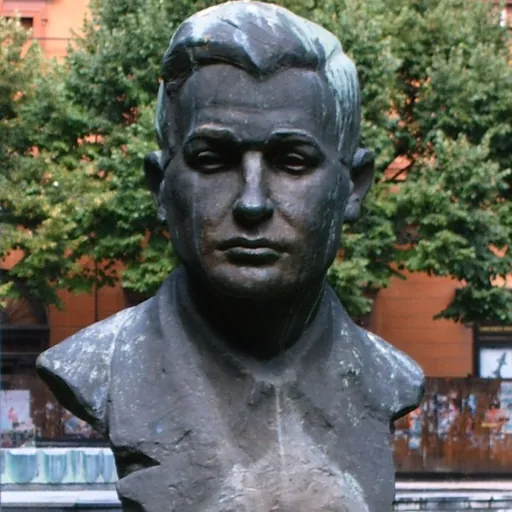
Géza Csáth
Hungarian writer, playwright, musician, music critic and psychiatrist
About Géza Csáth
Lived 1887 – 1919 (aged 32). Géza Csáth was a Hungarian psychiatrist, writer, music critic, composer and physician.
Géza Csáth (; born József Brenner; February 13, 1887 – September 11, 1919) was a Hungarian writer, playwright, musician, music critic, psychiatrist, and physician. He was the cousin of Dezső Kosztolányi.
Life Géza Csáth (pen name of József Brenner) was a writer, critic, music theoretician and medical doctor. A competent violinist even as a child, he originally wanted to be a painter, but his teachers criticised his drawing, so he turned to writing. He was barely fourteen years old when his first writings on music criticism were published. After grammar school he moved from his native Szabadka (now Subotica in Serbia) to Budapest in order to study medicine. While at college he wrote short sketches and reviews for newspapers and magazines. He was among the first to laud the work of Bartók and Kodály.
After earning his degree as a medical doctor in 1909 he worked for a short time as a junior doctor at the Psychiatric and Nerve Clinic (also known as Moravcsik Psychiatric Hospital). He wrote his great novel Diary of a mentally ill woman based on his experiences as a psychiatric doctor (his other main work is his Diary). He became interested in the effects of narcotics from a medical point of view and also as a creative artist. Out of this curiosity, he started taking morphine in 1910 and soon became addicted.
Csáth also changed his job and worked at various spas as a doctor, and had ample time for writing. Most of his emblematic "dark" short stories were written during this period, often featuring utter physical or mental violence (such as fratricide, rape or seduction and abandonment of adolescent girls). Csáth often described these acts in first person, with powerful insight into the workings of the perpetrators' disturbed minds. His collected short stories were published under the title Tales which end unhappy (Mesék, amelyek rosszul végződnek).
He married Olga Jónás in 1913. In 1914 he was drafted into the army, and at the front his drug problem worsened so much that he was often sent to medical leave and was finally discharged in 1917. He tried to quit and become a village doctor. His condition further worsened, he became paranoid and by this time his addiction was the central problem of his life, significantly deteriorating his personal relations. In 1919 he was treated at a psychiatric clinic in a provincial hospital, but he fled and returned to his home. On July 22 he shot and killed his wife with a revolver, poisoned himself and slit his arteries. He was rushed to hospital at Szabadka, but later managed to escape again. He wanted to go to the Moravcsik Psychiatric Hospital, but upon being stopped by Yugoslavian border guards he killed himself by taking poison.
Inspired by Csáth's writings are the ballet "Comedia Tempio" of the dancer-choreographer Josef Nadj and the opera "A Varázsló Halála" ("The Magician's Death") by the composer Alessio Elia (first performance Nyitott Műhely Auditorium - Budapest, 14 June 2006). Janos Szaz's 2007 film "Opium: Diary of a Madwoman" features a doctor named Josef Brenner who is to some degree based on Csáth.
Don’t just read it —
keep it.
Full-length biographies made to live with: read them, listen on the way to work, watch them tonight.
- E-book
- Audio
- Video
Instant download · yours to keep · every purchase keeps this site free
Important facts
People in Géza Csáth's life
Named in this biography and alive at the same time


Related people
Same field, nearest in time



Contemporaries
People whose lives overlapped Géza Csáth's






Frequently asked questions
Who was Géza Csáth?
Hungarian writer, playwright, musician, music critic and psychiatrist (1887–1919)
When was Géza Csáth born?
Géza Csáth was born on 13 February 1887 in Subotica.
When did Géza Csáth die?
Géza Csáth died on 11 September 1919 in Subotica.
What was Géza Csáth's occupation?
Géza Csáth was a psychiatrist, writer, music critic, composer and physician.
What nationality was Géza Csáth?
Géza Csáth was Hungarian.
Sources & further reading
Cite this page
APA: Biography.guide. (2026). Géza Csáth. https://biography.guide/geza-csath/
MLA: "Géza Csáth." Biography.guide, https://biography.guide/geza-csath/.
Chicago: "Géza Csáth." Biography.guide. https://biography.guide/geza-csath/.
Data last updated: 2026-09-23 · Spot an error? Report a correction.
Portrait: Wikimedia Commons · author & licence
Page generated 2026-09-27 05:07 UTC