
About Gertrud Kornfeld
Lived 1891 – 1955 (aged 63). Gertrud Kornfeld was a German and American chemist, known for Photochemistry.
Gertrud Kornfeld (July 25, 1891, in Prague – July 4, 1955, in Rochester, New York) was a German chemist. She was the first and only woman to become a Privatdozent in chemistry in the Weimar Republic.
Education Gertrud Kornfeld grew up in a middle-class German-speaking Jewish household in Prague, which was at that time part of the Austro-Hungarian Empire. She studied chemistry from 1910 to 1915, at the German school of the Karl-Ferdinands-Universität in Prague. She received her doctorate in 1915 and was employed as an assistant to her advisor Victor Rothmund.
Germany In October 1918, at the end of World War I, Czechoslovakia was formed as one of the countries succeeding the Austro-Hungarian Empire. Kornfeld left Prague in 1919 and got a job as a trainee assistant to Max Bodenstein at the Königliche Technische Hochschule in Hannover, (later the Technical University of Hanover).
In 1923, Kornfeld moved with Bodenstein to the Institute of Physical Chemistry at Friedrich-Wilhelms-Universität (later the Humboldt University of Berlin). In 1928 Gertrud Kornfeld habilitated in chemistry in Berlin. She was the first and only woman to become a Privatdozent in chemistry at a university in the Weimar Republic. Along with nearly one-third of the University of Berlin's teaching staff and nearly half of its private lecturers, Kornfeld was deprived of her teaching license and any further possibility of employment in German academia.
England Kornfeld was able to emigrate to England in 1933. Kornfeld was on the List of Displaced German Scholars compiled by the SPSL and published in 1936.
She also received support from the British Federation of University Women (BFUW) in London to teach at the University of Nottingham. In 1934 she received an emergency German Scholar Residential Fellowship for a year, from a fund raised by the BFUW specifically for German exiles. This allowed her to do research at the Imperial College London in South Kensington. In 1936, she received an International Fellowship from the American Association of University Women (AAUW), enabling her to study in Vienna.
United States Relocation, for younger women, was perhaps easier. Kornfeld was older and better established in her field in 1933. it was difficult for her to find a new position at her level and in her specialization. She initially resisted the idea of teaching at a women's college, or going into industrial research.
Don’t just read it —
keep it.
Full-length biographies made to live with: read them, listen on the way to work, watch them tonight.
- E-book
- Audio
- Video
Instant download · yours to keep · every purchase keeps this site free
Important facts
People in Gertrud Kornfeld's life
Named in this biography and alive at the same time

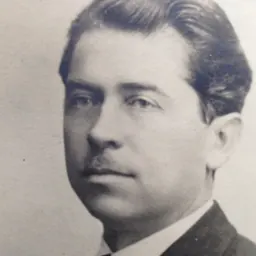
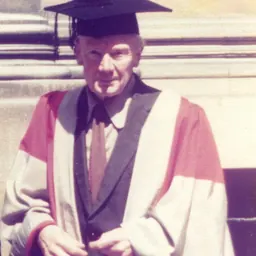
Related people
Same field, nearest in time




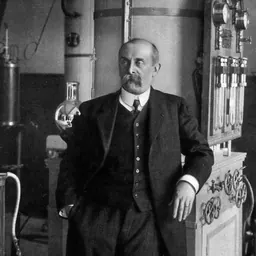
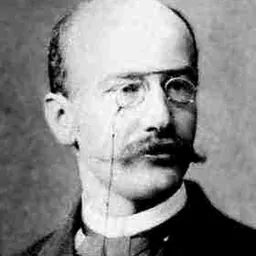
Contemporaries
People whose lives overlapped Gertrud Kornfeld's



Frequently asked questions
Who was Gertrud Kornfeld?
German chemist (1891–1955)
When was Gertrud Kornfeld born?
Gertrud Kornfeld was born on 25 July 1891 in Prague.
When did Gertrud Kornfeld die?
Gertrud Kornfeld died on 4 July 1955 in Rochester.
What was Gertrud Kornfeld's occupation?
Gertrud Kornfeld was a chemist.
What was Gertrud Kornfeld known for?
Gertrud Kornfeld was known for Photochemistry.
What nationality was Gertrud Kornfeld?
Gertrud Kornfeld was German and American.
Sources & further reading
Cite this page
APA: Biography.guide. (2026). Gertrud Kornfeld. https://biography.guide/gertrud-kornfeld/
MLA: "Gertrud Kornfeld." Biography.guide, https://biography.guide/gertrud-kornfeld/.
Chicago: "Gertrud Kornfeld." Biography.guide. https://biography.guide/gertrud-kornfeld/.
Data last updated: 2026-09-20 · Spot an error? Report a correction.
Page generated 2026-09-27 05:00 UTC