
About Germaine Lubin
Lived 1890 – 1979 (aged 89). Germaine Lubin was a French opera singer.
Germaine Léontine Angélique Lubin (1 February 1890 – 27 October 1979) was a French dramatic soprano, best known for her association with the music of Richard Wagner. She possessed a brilliant voice but her later career was tainted with accusations of Nazi sympathies.
Biography
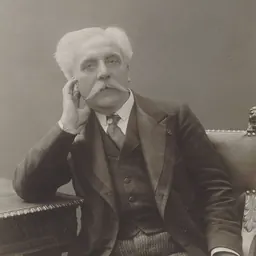
Training Born in Paris, Germaine Lubin was soon taken to Cayenne in French Guiana where her father was a doctor, and from him she received her first piano lessons. She returned to live in Paris at the age of eight, and attended the Collège Sévigné with the intent of studying to become a doctor. Instead, in 1908 she entered the Paris Conservatory, where Gabriel Fauré was then the director. Fauré formed a high opinion of her voice —and her statuesque beauty— and would accompany her personally in performances of his songs. She left the Conservatory in 1912 after winning three first prizes for her singing, and she was immediately in demand for performances. Throughout most of her career however she continued to take voice lessons, studying for 10 years from 1912 with the Franco-Russian soprano Félia Litvinne. She would later work on roles with Lilli Lehmann and Marie Gutheil-Schoder. She also studied with Jean de Reszke, although she felt that he taught her little.
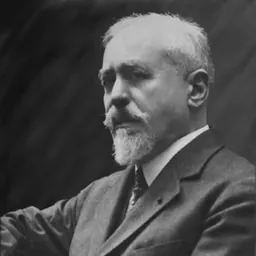
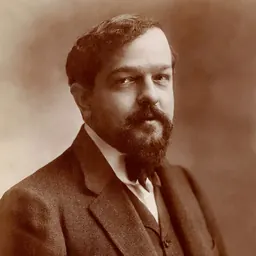
Career In 1912 she made her debut at the Opéra-Comique, singing Antonia in The Tales of Hoffmann, to an audience which included Claude Debussy and Paul Dukas, and she enjoyed a great success. At the Opéra-Comique, Albert Carré gave her the chance to appear in several contemporary operas, including Gabriel Fauré's Pénélope (title role). )
Lubin made her first appearance at the Paris Opéra in 1915, in Vincent d'Indy's Le Chant de la cloche, and continued to sing there for nearly 30 years. In addition to standard French works, she also found success in the operas of Christoph Willibald Gluck and Richard Strauss, singing the first French performances of Elektra in 1932. She also created roles for d'Indy, Darius Milhaud, and Henri Sauguet (La chartreuse de Parme) and sang the title role in the 1935 revival of Ariane et Barbe-bleue by Dukas, with which she made her debut at Covent Garden, returning for Isolde and Kundry in 1939. and Ariadne auf Naxos at the Opéra-Comique in 1943.
In 1930 she sang the role of Isolde (Tristan und Isolde) at the Paris Opéra for the first time and met with an ecstatic reception. Her physical beauty —she was tall, slim and blonde— and her strong, even voice made her ideal for the part. She went on to sing it again in Paris in 1938 (this time in German, conducted by Wilhelm Furtwängler), and in London in 1939 (at the invitation of Sir Thomas Beecham). In July 1939 she became the first Frenchwoman to sing Isolde at Bayreuth (under the baton of Victor de Sabata). At Bayreuth, she established friendships with members of the Wagner family. She was even complimented by Adolf Hitler, who said she was the finest Isolde that he had heard.
Lubin hoped to sing also at the Metropolitan Opera in New York City, having been recommended to the Met's management by Kirsten Flagstad. However, she terminated her contract weeks before arrival, and never sang in the United States.
World War II
After the German occupation of Paris in 1940, Jacques Rouché sought to re-open the Opéra and invited Lubin to return to sing Alceste. This was followed by performances of Fidelio and Der Rosenkavalier, and in 1941 she again sang Isolde, this time with the visiting company of the Staatsoper from Berlin under the direction of Herbert von Karajan. She continued to associate with German acquaintances, and in 1942 she performed at a concert to mark an exhibition by Arno Breker, the sculptor who was closely associated with the Nazi leadership. (She later said that she had agreed to this performance as part of a deal to secure the release of Maurice Franck, the Jewish "chef de chant", or music staff/vocal coach, at the Opéra.
Later years In 1950 Germaine Lubin had returned to Paris and sought to resume her career with a recital. Although she met with some sympathy and gave a few further performances, it was a difficult transition, and when in 1953 her son committed suicide she abandoned public performance entirely. For the remainder of her life she became a voice teacher, giving lessons at her home on the Quai Voltaire in Paris. Among her notable pupils was the leading soprano Régine Crespin. Lubin died in Paris in 1979 at the age of 89.
Lubin had a powerful voice of gleaming tonal splendour. By her own admission she was a forceful and demanding personality, often haughty and distant with other people, and she responded to the heroic dimension of the characters that she portrayed on the operatic stage. "I do not like to sing the role of victims", she said in an interview.
Recordings Although Germaine Lubin became the foremost French dramatic soprano during the 1920s and '30s, and indeed one of the finest opera singers to be heard anywhere during the inter-war period, her performances are not particularly well represented on disc. She recorded in 1929–30 a number of excerpts from her central repertoire, notably her Wagnerian roles as well as Tosca, Der Freischütz and Sigurd. She also recorded a few songs by Schubert, Schumann and her erstwhile admirer Fauré. Among her later recordings from 1944 are two of the earliest featuring the young Gérard Souzay in which they perform duets by Leguerney and Blangini. In the 1950s, she also recorded a couple of songs by Hugo Wolf. In total her recorded legacy amounts to about two dozen items, many of which are available on CD reissues.
Don’t just read it —
keep it.
Full-length biographies made to live with: read them, listen on the way to work, watch them tonight.
- E-book
- Audio
- Video
Instant download · yours to keep · every purchase keeps this site free
Important facts
People in Germaine Lubin's life
Named in this biography and alive at the same time




Related people
Same field, nearest in time

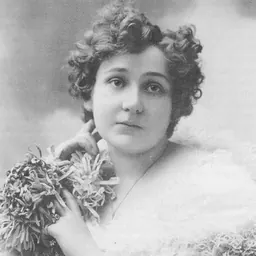
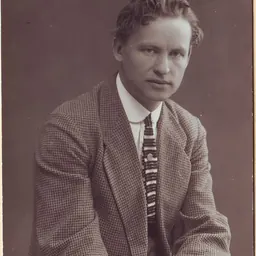
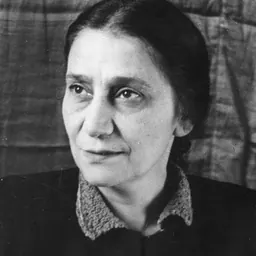
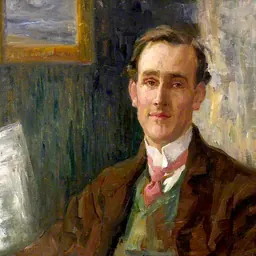
Contemporaries
People whose lives overlapped Germaine Lubin's



Frequently asked questions
Who was Germaine Lubin?
singer (1890–1979)
When was Germaine Lubin born?
Germaine Lubin was born on 1 February 1890 in 8th arrondissement of Paris.
When did Germaine Lubin die?
Germaine Lubin died on 27 October 1979 in 7th arrondissement of Paris.
What was Germaine Lubin's occupation?
Germaine Lubin was an opera singer.
What nationality was Germaine Lubin?
Germaine Lubin was French.
Sources & further reading
Cite this page
APA: Biography.guide. (2026). Germaine Lubin. https://biography.guide/germaine-lubin/
MLA: "Germaine Lubin." Biography.guide, https://biography.guide/germaine-lubin/.
Chicago: "Germaine Lubin." Biography.guide. https://biography.guide/germaine-lubin/.
Data last updated: 2026-09-20 · Spot an error? Report a correction.
Page generated 2026-09-27 05:29 UTC