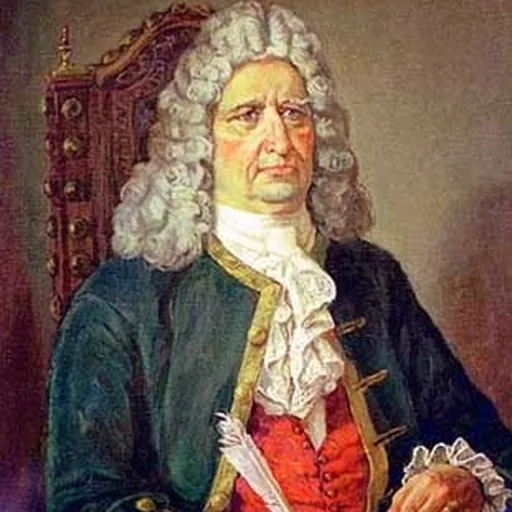
Gerhard Friedrich Müller
German historian and ethnologist
About Gerhard Friedrich Müller
Lived 1705 – 1783 (aged 77). Gerhard Friedrich Müller was a Russian explorer, historian, university teacher, geographer, scientist and traveler.
Gerhard Friedrich Müller (; 29 October 1705 – ) was a Russian-German historian and pioneer ethnologist.
Early life Müller was born in Herford and educated at Leipzig. In 1725, he was invited to St. Petersburg to co-found the Imperial Academy of Sciences.
Career Müller participated in the second Kamchatka expedition, which reported on life and nature of the further (eastern) side of the Ural mountain range. From 1733 until 1743, nineteen scientists and artists traveled through Siberia to study people, cultures and collected data for the creation of maps. Müller, who described and categorized clothing, religions and rituals of the Siberian ethnic groups, is considered to be the father of ethnography.
On his return from Siberia, he became historiographer to the Russian Empire. He was one of the first historians to bring out a general account of Russian history based on an extensive examination of the documentary sources. By the 1750s, the secretary of the Imperial Academy of Sciences, Johann Daniel Schumacher, was delegating a significant portion of his managerial responsibilities to Müller, in which capacity he frequently corresponded with Leonhard Euler about scientific news and potential candidates for appointments at the academy. Müller's accentuation of the role of Scandinavians and Germans in the history of that country – a germ of the so-called Normanist theory – earned him enmity of Mikhail Lomonosov, who had previously supported his work, and dented his Russian career.
In the early 1760s, he rediscovered the 14th–15th century List of Russian Cities, Near and Far, after which his colleague August Ludwig von Schlözer published in Russian in 1816.
In 1766, after many attacks by his colleagues, Müller was appointed keeper of the national archives. He drew up for the government a collection of its treatises.
Later life In 1761, Müller was elected a foreign member of the Royal Swedish Academy of Sciences. He died, aged 77, in Moscow.
Works
Don’t just read it —
keep it.
Full-length biographies made to live with: read them, listen on the way to work, watch them tonight.
- E-book
- Audio
- Video
Instant download · yours to keep · every purchase keeps this site free
Important facts
People in Gerhard Friedrich Müller's life
Named in this biography and alive at the same time



Related people
Same field, nearest in time

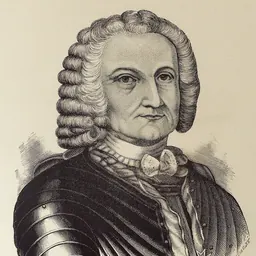
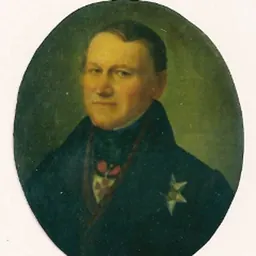
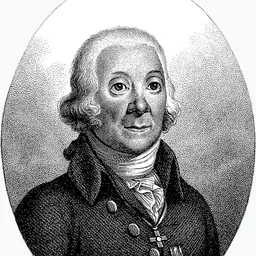
Contemporaries
People whose lives overlapped Gerhard Friedrich Müller's

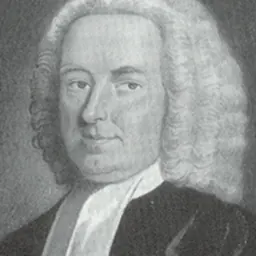



Frequently asked questions
Who was Gerhard Friedrich Müller?
German historian and ethnologist
When was Gerhard Friedrich Müller born?
Gerhard Friedrich Müller was born on 29 October 1705 in Herford.
When did Gerhard Friedrich Müller die?
Gerhard Friedrich Müller died on 11 October 1783 in Moscow, Saint Petersburg.
What was Gerhard Friedrich Müller's occupation?
Gerhard Friedrich Müller was an explorer, historian, university teacher, geographer, scientist and traveler.
What nationality was Gerhard Friedrich Müller?
Gerhard Friedrich Müller was Russian.
Sources & further reading
· Wikipedia: Gerhard Friedrich Müller
· DBpedia: Gerhard Friedrich Müller
Cite this page
APA: Biography.guide. (2026). Gerhard Friedrich Müller. https://biography.guide/gerhard-friedrich-muller/
MLA: "Gerhard Friedrich Müller." Biography.guide, https://biography.guide/gerhard-friedrich-muller/.
Chicago: "Gerhard Friedrich Müller." Biography.guide. https://biography.guide/gerhard-friedrich-muller/.
Data last updated: 2026-09-23 · Spot an error? Report a correction.
Portrait: Wikimedia Commons · author & licence
Page generated 2026-09-27 05:05 UTC