
About Gerhard Bassenge
Lived 1897 – 1977 (aged 79). Gerhard Bassenge was a German soldier and engineer.
Gerhard Bassenge was a general in the Luftwaffe of Nazi Germany during World War II. In the inter-war period, he worked at the Reich Air Ministry and was one of the German officers most responsible for training the first German paratroopers.
Bassenge was Chief of Staff of Luftflotte 2 as it was part of the Blitzkrieg into the Netherlands, Belgium, and France in 1940. He became Chief of Staff of Luftflotte 5 in Norway while it flew into the northern British isles in the Battle of Britain. After being part of a Luftwaffe mission to Romania, he took part in the North African Campaign in 1941 – 1943. He was captured there on 9 May 1943, and was held prisoner of war until 2 October 1947.
From birth through World War I Gerhard Bassenge was born in Ettlingen, the Grand Duchy of Baden in the German Empire on 18 November 1897.
Bassenge began his military career in the early days of World War I, on 4 October 1914, just shy of his 17th birthday. He became an Unteroffizier or noncommissioned officer; he was also a Fahnenjunker or officer candidate. He was assigned as a platoon leader in the Imperial German Army's 29th Infantry Regiment. He was then ranked as a Fahnrich or ensign, the most junior officer rank in the German Army. On 27 January 1915, while still only 17 years of age, he received a field promotion to Leutnant. While in the infantry, he served on both the Western Front and the Eastern Front.
Entry into aviation He transferred to the Luftstreitkräfte and began pilot training on 1 April 1916. After training, he was assigned to Kampfstaffel 39. After serving with Kampfstaffel 39 for some months, Bassenge was remanded for further training.
On 17 January 1917 he began training as a fighter pilot. He was successful and was posted to a fighter squadron, Jagdstaffel 5. On 13 April, he put in his first claim for an aerial victory, over a British pusher fighter; the claim went unconfirmed because he only forced it to land. On 2 May, he was transferred to another fighter unit, the famed Jagdstaffel 2. He was confirmed as a leutnant on 28 June 1917; his commission granted him over two years seniority in rank, back to 18 June 1915. This Albatros, as was the German custom, had been embellished beyond its factory finish of umber and two tones of green. As had all the Jasta 2 aircraft, its tail had been painted white. Its nose, cowling, struts, and wheel covers were painted gray. Bassenge's personal markings were superimposed–a black and white strip that ran back down the sides of the plane to where a wide black band edged in white encircled the fuselage.
Bassenge used this plane to score his first aerial victory on 20 October 1917. At 1220 hours, he shot down Sopwith Camel serial number B2370 from No. 70 Squadron RFC south of Saint Quentin, France. On 6 November, it was followed by Sopwith Camel s/n B2441 from No. 65 Squadron RFC, destroyed over Staden, Belgium. However, Bassenge was severely wounded. The wound would sideline him until July 1918. to demolish another Camel, number D8197, over Fere-en-Tardenois, France in the afternoon of 25 July 1918. There was a lull in his wins after that. He did not destroy another British plane until 27 September; this time, it was another first-line fighter that fell, a Royal Aircraft Factory SE.5a from No. 32 Squadron RAF that went down over Noyelles at 1735 hours. The following morning, at 0835 hours, it was Camel number F3220 from No. 203 Squadron RAF, destroyed between Ham and Lengelet. Less than a week later, he repeated his feat of back to back victories. On 4 October 1918, a SE.5a from No. 85 Squadron RAF fell over Joncourt, France; the next day, it was a Camel over Crèvecœur. Bassenge would not win again before the armistice, and would end the war with seven victories.
On 1 August 1940, Bassenge was transferred to be Chief of Staff of Luftflotte 5 in Oslo, Norway under Generaloberst Hans-Jürgen Stumpff. On 15 August, Luftflotte 5 became involved in the Battle of Britain, the first battle in history waged solely between opposing air forces. While serving in this post, he was promoted to Generalmajor on 1 January 1943. One month later, he was appointed to command Fortress Area Tunis-Bizerte, Tunisia Gerhard Bassenge at Trent Park.back row from left to right: Otto Elfeldt, Ferdinand Heim, Gerhard Bassengefront row from left to right: Friedrich Freiherr von Broich, Heinrich Eberbach, Georg Neuffer, Hans Reimann.
Bassenge was captured 9 May 1943 at Metline, North Africa by the British. He was hastily transported to Britain, arriving at Camp 11, Trent Park, on 16 May 1943. He was logged into this luxurious camp for high-ranking prisoners as POW 18809. His intake papers note him as having brown hair and blue eyes, being 5' 7 1/2" tall, and weighing 162 lbs. His next of kin was listed as Lotte Bassenge. It is not known if Bassenge was previously unaware of the atrocities, or if the conversation caught on the wiretap influenced him, but while in captivity, Bassenge became an advocate of Wilhelm Ritter von Thoma's views. General der Panzertruppe von Thoma, who was held prisoner along with Bassenge, believed that Hitler had gone insane and that the Nazi war effort was doomed. As the majority of German officers held prisoner were fervent Nazis, the views of Bassenge and Thoma caused considerable dissension with the Hitlerites. This schism among the German officers may have been responsible for Bassenge's transfer to Camp 300; he would be returned from there to Camp 11 on 23 July 1946. On 1 October 1947, he was transferred to Camp 186; he was repatriated the next day. Bassenge died in Lübeck, Germany on 13 March 1977.
Awards 1914 Iron Cross First Class with 1939 Bar Romanian Order of Michael the Brave, Third Class on 19 September 1941 (per Royal Decree No. 2628)
Don’t just read it —
keep it.
Full-length biographies made to live with: read them, listen on the way to work, watch them tonight.
- E-book
- Audio
- Video
Instant download · yours to keep · every purchase keeps this site free
Important facts
People in Gerhard Bassenge's life
Named in this biography and alive at the same time

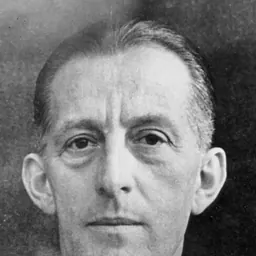



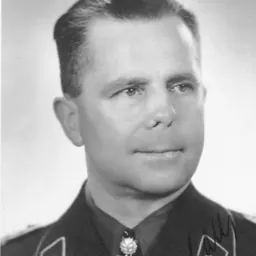
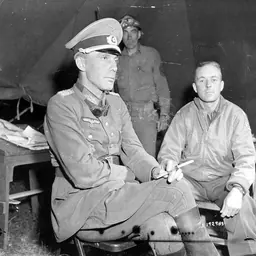
Related people
Same field, nearest in time

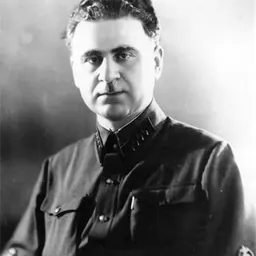



Contemporaries
People whose lives overlapped Gerhard Bassenge's

Frequently asked questions
Who was Gerhard Bassenge?
German flying ace (1897-1977)
When was Gerhard Bassenge born?
Gerhard Bassenge was born on 18 November 1897 in Ettlingen.
When did Gerhard Bassenge die?
Gerhard Bassenge died on 13 March 1977 in Lübeck.
What was Gerhard Bassenge's occupation?
Gerhard Bassenge was a soldier and engineer.
What nationality was Gerhard Bassenge?
Gerhard Bassenge was German.
Sources & further reading
Cite this page
APA: Biography.guide. (2026). Gerhard Bassenge. https://biography.guide/gerhard-bassenge/
MLA: "Gerhard Bassenge." Biography.guide, https://biography.guide/gerhard-bassenge/.
Chicago: "Gerhard Bassenge." Biography.guide. https://biography.guide/gerhard-bassenge/.
Data last updated: 2026-09-20 · Spot an error? Report a correction.
Page generated 2026-09-27 05:02 UTC