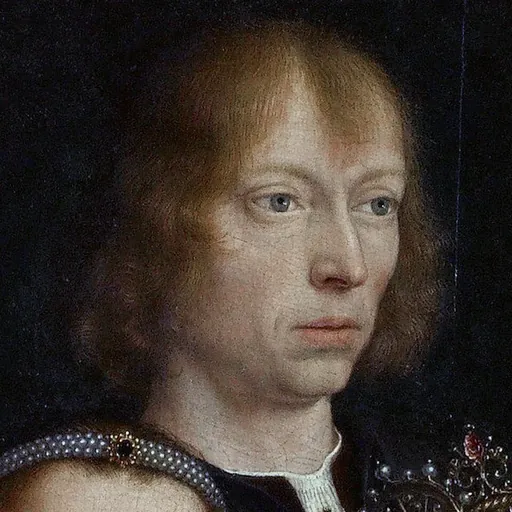
About Gerard David
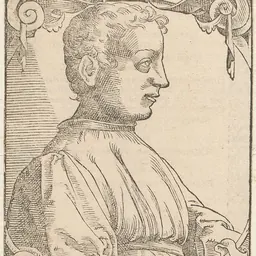
Lived 1450 – 1523 (aged 72–73). Gerard David was a Dutch painter, illuminator, artist and draftsperson.
Gerard David ( – 13 August 1523) was an Early Netherlandish painter and manuscript illuminator known for his brilliant use of color. Only a bare outline of his life survives, although some facts are known. He may have been the Meester gheraet van brugghe who became a master of the Antwerp guild in 1515. He was very successful in his lifetime and probably ran two workshops, in Antwerp and Bruges. Like many painters of his period, his reputation diminished in the 17th century until he was rediscovered in the 19th century.
Life He was born in Oudewater, now located in the province of Utrecht. His year of birth is approximated as c. 1450–1460 on the basis that he looks to be around 50 years in the 1509 self-portrait found in his Virgin among the Virgins. He is believed to have spent time in Italy from 1470 to 1480, where he was influenced by the Italian Renaissance.
Erwin Panofsky identifies David as a student of Geertgen tot Sint Jans. Upon the death of Hans Memling in 1494, David became Bruges' leading painter. He became dean of the guild in 1501, and in 1496 married Cornelia Cnoop, daughter of the dean of the goldsmiths' guild. David was one of the town's leading citizens. Ambrosius Benson served his apprenticeship with David. Around 1519 they had a dispute over a number of paintings and drawings which Benson had collected from other artists. David refused to return the materials because Benson owed him a large debt. Benson sought legal recourse in court and after he won, David was condemned to a prison term.
He died on 13 August 1523 and was buried in the Church of Our Lady in Bruges.
Style
David's surviving work mainly consists of religious scenes. They are characterised by an atmospheric, timeless, and almost dream-like serenity, achieved through soft, warm and subtle colourisation, and masterful handling of light and shadow. He is innovative in his recasting of traditional themes and in his approach to landscape, which was then only an emerging genre in northern European painting.
In his early work David followed Haarlem artists such as Dirk Bouts, Albert van Oudewater, and which is now in the Rouen museum.
Only a few of his works have remained in Bruges: The Judgment of Cambyses, The Flaying of Sisamnes and the Baptism of Christ in the Groeningemuseum, and the Transfiguration in the Church of Our Lady.
The rest were scattered around the world, and to this may be due the oblivion into which his very name had fallen; this, and the fact that, some believed that for all the beauty and the soulfulness of his work, he had nothing innovative to add to the history of art. and a portrait of the Emperor Maximilian in Vienna. Several of his drawings also survive, and elements from these appear in the works of other painters and illuminators for several decades after his death.
Lesser-known but also of high quality are the works of David found in Spanish public collections. The Prado Museum in Madrid owns a table "Rest on the flight into Egypt" resembling the one in the Royal Museum of Fine Arts in Antwerp. The Prado also holds another two Works by the painter, one of them only attributed. Another of the Spanish capital's Museums, The Thyssen-Bornemisza holds a "Crucifixión" from 1475.
Legacy At the time of David's death, the glory of Bruges and its painters was on the wane: Antwerp had become the leader in art as well as in political and commercial importance. Of David's pupils in Bruges, only Adriaen Isenbrandt,
David's name had been completely forgotten when in 1866 William Henry James Weale discovered documents about him in the archives of Bruges; these brought to light the main facts of the painter's life and led to the reconstruction of David's artistic personality,
Gallery
Don’t just read it —
keep it.
Full-length biographies made to live with: read them, listen on the way to work, watch them tonight.
- E-book
- Audio
- Video
Instant download · yours to keep · every purchase keeps this site free
Important facts
more
Gheeraedt Davit, Gherat Davidt, Gherat David, Gheeraert Davit, Gheeraedt David, Gheeraert Davidt, David, Gérard David d'Oudewater, Gérard de Bruges, Gérard Jansz David, Gerard van Brugge, David OudewaterPeople in Gerard David's life
Named in this biography and alive at the same time



Related people
Same field, nearest in time

Contemporaries
People whose lives overlapped Gerard David's

Frequently asked questions
Who was Gerard David?
early Netherlandish painter (c. 1460–1523)
When was Gerard David born?
Gerard David was born in 1450 in Oudewater.
When did Gerard David die?
Gerard David died on 13 August 1523 in Bruges.
What was Gerard David's occupation?
Gerard David was a painter, illuminator, artist and draftsperson.
What nationality was Gerard David?
Gerard David was Dutch.
Sources & further reading
Cite this page
APA: Biography.guide. (2026). Gerard David. https://biography.guide/gerard-david/
MLA: "Gerard David." Biography.guide, https://biography.guide/gerard-david/.
Chicago: "Gerard David." Biography.guide. https://biography.guide/gerard-david/.
Data last updated: 2026-09-23 · Spot an error? Report a correction.
Portrait: Wikimedia Commons · author & licence
Page generated 2026-09-27 05:07 UTC