
About Georges Rouquier
Lived 1909 – 1989 (aged 80). Georges Rouquier was a French film director, screenwriter, actor, film actor and director.
Georges Rouquier (23 June 1909 – 19 December 1989) was a French film director, screenwriter and actor. He worked principally on documentary films, and his best-known work is Farrebique a lyrical evocation of farming life in Aveyron.
Biography Georges Rouquier was born in Lunel-Viel, Hérault into a family of modest means. He trained as a typographer and then a Linotype operator in Montpellier, and in the latter role he took a job in Paris in 1926. He developed an enthusiasm for the cinema and the works of Chaplin, DeMille, Eisenstein, Dovzhenko, and especially the documentarist Robert Flaherty. He met the documentary film-maker Eugène Deslaw who was impressed by his enthusiasm and agreed to teach him the basic techniques of film. Rouquier bought a second-hand camera and made his first (silent) film, Vendanges (1929; now lost), about grape-harvesting in his native region. He continued working in the printing business while further familiarising himself with filming methods, including sound, and it was in the 1940s during the German Occupation of France that he got the opportunity to make some short commissioned films. Le Tonnelier (1942) demonstrated the craftsmanship of a cooper as he makes a barrel, and Le Charron (1943) examined the work of another traditional artisan, a wheelwright. These and other short films which followed affirmed Rouquier's interest in showing men who expressed themselves in their accumulated traditional skills, drawn from an integrated rural way of life.
In 1944 Rouquier embarked on his first feature-length film, Farrebique, and spent 18 months living with a peasant farming family at Goutrens in Aveyron to document their way of life and their surroundings. He declared that he was interested in everything - their habits, customs, and religion, their family relationships, but also the life of insects, plants and the natural world around them. He produced from this a lyrical chronicle of rural life, structured around the four seasons, at a time when the traditional vision of agriculture was about to vanish with the introduction of mechanised production methods. When the film was released in 1947, it made considerable impact (despite some dissenters) and it was seen by 1,200,000 spectators in cinemas around France, as well as receiving the International Critics Prize at the Cannes film festival.
Rouquier wanted to make a second film which would show the changes brought to the farm by the introduction of electricity and other modernisations, but he was unable to get funding for it. However, 38 years later when he was 74, Rouquier finally had the chance to film his contrasting look at the same location in Biquefarre (1983), in which he applied the same detailed attention to a transformed way of life.
Georges Rouquier died in Paris in 1989 and was buried in Montparnasse Cemetery.
Selected filmography As director Feature films 1946: Farrebique 1954: Sang et Lumières / Sangre y luces 1955: Lourdes et ses miracles (trilogy of documentaries) 1957: S.O.S. Noronha 1983: Biquefarre
Short/Medium length films 1929: Vendanges (about grape-harversting) 1942: Le Tonnelier (about a cooper) 1944: Le Charron (about a wheelwright) 1944: La Part de l'enfant 1944: L'Économie des métaux (on the recovery of used metals) 1948: L'Œuvre scientifique de Pasteur (in collaboration with Jean Painlevé) 1949: Le Chaudronnier 1951: Le Sel de la terre (on extracting salt in the Camargue) 1952: Un jour comme les autres (on the prevention of accidents at work)l 1952: Le Lycée sur la colline 1952: Malgovert (on the threat of flooding in a small mountain village) 1955: La Bête noire (on hunting a wild boar) 1955: Arthur Honegger (awarded a prize at the Venice Film Festival 1957) 1958: Une Belle Peur 1959: Le Notaire de Trois-Pistoles 1960: Le Bouclier (on health and safety) 1965: Sire, le Roy n'a plus rien dit (on French-Canadian furniture makers in the 17th and 18th centuries) 1976: Le Maréchal-ferrant (on the life of a blacksmith; won César for best documentary short of 1977)
As actor 1955: Le Sabotier du Val de Loire (narrator) directed by Jacques Demy 1957: Lettre de Sibérie (narrator) directed by Chris Marker 1962: Mandrin (as Voltaire) directed by Jean-Paul Le Chanois 1969: Jeff (as Jeff) directed by Jean Herman 1969: Z directed by Costa-Gavras 1970: Nous n'irons plus aux bois (as doctor) directed by Georges Dumoulin 1971: Primer año directed by Patricio Guzmán 1972: Beau Masque (as Vizille) directed by Bernard Paul 1981: L'Amour nu (as Jean Lafaye) directed by Yannick Bellon
Don’t just read it —
keep it.
Full-length biographies made to live with: read them, listen on the way to work, watch them tonight.
- E-book
- Audio
- Video
Instant download · yours to keep · every purchase keeps this site free
Important facts
People in Georges Rouquier's life
Named in this biography and alive at the same time





Related people
Same field, nearest in time

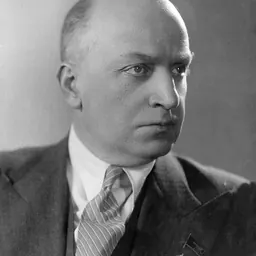

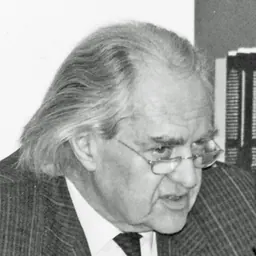
Contemporaries
People whose lives overlapped Georges Rouquier's
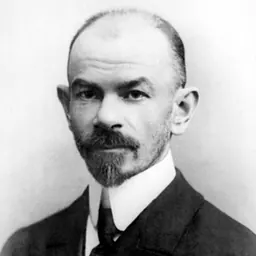


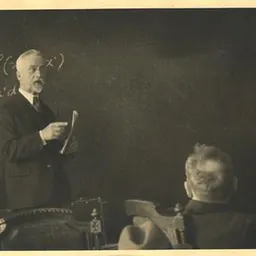
Frequently asked questions
Who was Georges Rouquier?
French actor (1909–1989)
When was Georges Rouquier born?
Georges Rouquier was born on 23 June 1909 in Lunel-Viel.
When did Georges Rouquier die?
Georges Rouquier died on 19 December 1989 in Paris.
What was Georges Rouquier's occupation?
Georges Rouquier was a film director, screenwriter, actor, film actor and director.
What nationality was Georges Rouquier?
Georges Rouquier was French.
Sources & further reading
Cite this page
APA: Biography.guide. (2026). Georges Rouquier. https://biography.guide/georges-rouquier/
MLA: "Georges Rouquier." Biography.guide, https://biography.guide/georges-rouquier/.
Chicago: "Georges Rouquier." Biography.guide. https://biography.guide/georges-rouquier/.
Data last updated: 2026-09-26 · Spot an error? Report a correction.
Page generated 2026-09-27 05:16 UTC