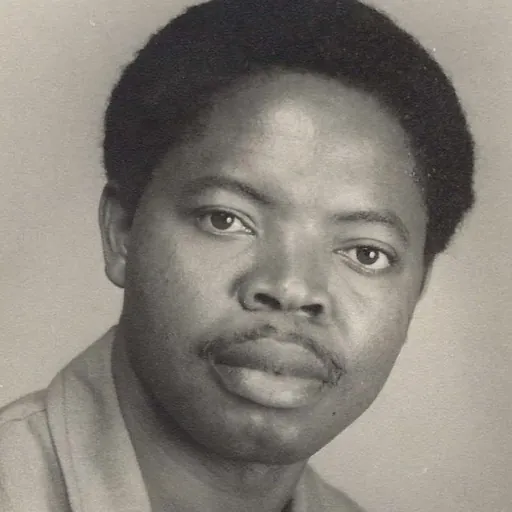
Georges Nzongola-Ntalaja
Congolese academic, author, and diplomat (born 1944)
About Georges Nzongola-Ntalaja
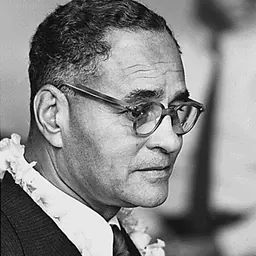
Born 1944. Georges Nzongola-Ntalaja is a Congolese political scientist, university teacher and diplomat.
Georges Nzongola-Ntalaja (born 3 February 1944) is a Congolese academic, author, and diplomat. He is a professor of African and Afro-American Studies at the University of North Carolina at Chapel Hill, where he specialises in African and global studies. He was also the Permanent Representative of the Democratic Republic of the Congo to the United Nations from 2022 until 2023.
Biography Georges Nzongola-Ntalaja was born on 3 February 1944 in Kasha, South Kivu in the Belgian Congo. Nzongola-Ntalaja grew up at an American Presbyterian Congo Mission (APCM) station in Kasha, near the state post of Luputa. Nzongola-Ntalaja's involvement in activism began during his teenage years when he participated in protests that demanded Congolese independence from Belgium.
During the 1960s civil rights movement in the United States, there were calls for Davidson College to admit Black students, and Nzongola-Ntalaja was an exchange student in Minnesota at the time with plans to attend Macalester College. However, Davidson College's president, Grier Martin, contacted his host family and offered him a full scholarship. This made Nzongola-Ntalaja the second Black student to attend Davidson during its early attempts to promote diversity. He quickly became involved in American activism, participating in civil rights movement in the United States, pushing for the college to end discrimination against Black employees, and advocating for a more comprehensive curriculum.
Nzongola-Ntalaja graduated with a Bachelor of Arts degree in philosophy in 1967, before completing a Master of Arts in diplomacy and international commerce in 1968 from the University of Kentucky. Nzongola-Ntalaja has been a professor in the Department of African-American and Diaspora Studies at the University of North Carolina at Chapel Hill since 2007.
Nzongola-Ntalaja served as President of the African Studies Association (ASA) of the United States in 1988, as a member of the executive committee of the International Political Science Association (IPSA) from 1994 to 1997, and as President of the African Association of Political Science (AAPS) from 1995 to 1997. and has authored several books and numerous articles on these topics. One of his most notable works is The Congo from Leopold to Kabila: A People's History, which provides a comprehensive history of the Democratic Republic of the Congo from the colonial period to the present day. and was featured on The Guardian's Top 10 books on neocolonialism. He has also written extensively about abuses under the Congo Free State, and given a TED-Ed talk on the topic. He was elected a Fellow of the African Academy of Sciences in 1988.
Political career Nzongola-Ntalaja's open opposition to the dictator Mobutu Sese Seko and his regime in Zaire made him a target of intimidation and even death threats. He was subjected to lengthy interrogations by the Security Police. In response, he chose to return to the US and live in voluntary exile for a period of 17 years.
Nzongola-Ntalaja has been involved in politics and contributed to his country's shift away from Mobutu's authoritarian rule. In 1992, he participated as a representative in the Sovereign National Conference of Congo/Zaire, In 2005, he led a team of experts tasked with developing a peace and security framework for the Great Lakes Region. In June 2022, Nzongola-Ntalaja asked the Security Council to demand an unconditional withdrawal of the M23 from Bunagana and parts of Rutshuru territory in eastern Congo during the United Nations Security Council meeting. The M23 is a rebel group that was defeated by the Congolese Armed Forces and the United Nations in 2013, but reemerged in November 2021. Congolese officials blame neighbouring Rwanda for supporting the M23, while Rwanda denies any links to the group. However, he dismissed Rwandan concerns about the existence of Democratic Forces for the Liberation of Rwanda in DRC. On 26 October 2022, Nzongola-Ntalaja accused Rwanda of occupying the DRC between 1998 and 2003 and committing atrocities, including plundering the Congolese economy and stealing chimpanzees and other animals. On 9 January 2023, Nzongola-Ntalaja was replaced by Zenon Mukongo Ngay.
Books
Don’t just read it —
keep it.
Full-length biographies made to live with: read them, listen on the way to work, watch them tonight.
- E-book
- Audio
- Video
Instant download · yours to keep · every purchase keeps this site free
Important facts
People in Georges Nzongola-Ntalaja's life
Named in this biography and alive at the same time



Related people
Same field, nearest in time




Contemporaries
People whose lives overlapped Georges Nzongola-Ntalaja's



Frequently asked questions
Who is Georges Nzongola-Ntalaja?
Congolese academic, author, and diplomat (born 1944)
When was Georges Nzongola-Ntalaja born?
Georges Nzongola-Ntalaja was born on 3 February 1944 in Bukavu.
What is Georges Nzongola-Ntalaja's occupation?
Georges Nzongola-Ntalaja is a political scientist, university teacher and diplomat.
What nationality is Georges Nzongola-Ntalaja?
Georges Nzongola-Ntalaja is Congolese.
Sources & further reading
· Wikipedia: Georges Nzongola-Ntalaja
· DBpedia: Georges Nzongola-Ntalaja
Cite this page
APA: Biography.guide. (2026). Georges Nzongola-Ntalaja. https://biography.guide/georges-nzongola-ntalaja/
MLA: "Georges Nzongola-Ntalaja." Biography.guide, https://biography.guide/georges-nzongola-ntalaja/.
Chicago: "Georges Nzongola-Ntalaja." Biography.guide. https://biography.guide/georges-nzongola-ntalaja/.
Data last updated: 2026-09-21 · Spot an error? Report a correction.
Portrait: Wikimedia Commons · author & licence
Page generated 2026-09-27 04:59 UTC