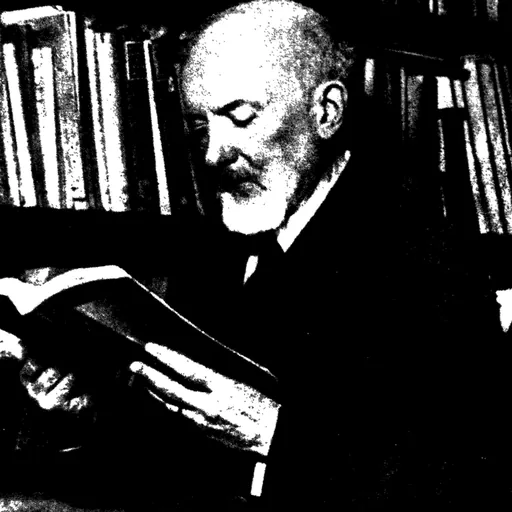
Georges Lefebvre
French historian
About Georges Lefebvre
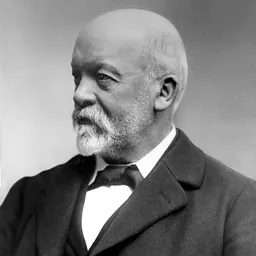
Lived 1874 – 1959 (aged 85). Georges Lefebvre was a French historian, professeur des universités and historian of the French Revolution.
Georges Lefebvre (; 6 August 1874 – 28 August 1959) was a French historian, best known for his work on the French Revolution and peasant life. He is considered one of the pioneers of "history from below". He coined the phrase the "death certificate of the old order" to describe the Great Fear of 1789. Among his most significant works was the 1924 book Les Paysans du Nord pendant la Révolution française ("The Peasants of the North During the French Revolution"), which was the result of 20 years of research into the role of the peasantry during the revolutionary period. He attended public school, obtaining his secondary and university training with the help of scholarships. Lefebvre attended the University of Lille, and it was here that he followed the "special curriculum", which emphasized modern languages, mathematics, and economics instead of the classical languages. It was as a result of his schooling that Georges Lefebvre was able to teach in a series of secondary schools for more than twenty years after his graduation in 1898.
He became more and more influenced by Marxism about the time of the Second World War, especially by the Marxist idea that history should be concerned with economic structures and class relations.
He was married twice.
He died in Paris in 1959.
The French Revolution
Lefebvre began writing in 1904, but it was not until 1924, at the age of fifty, that he was finally at the point in his career - no longer preoccupied with supporting his family - that he was able to finish his doctoral thesis: Les Paysans du Nord pendant la Révolution française.
Fellow historians tend to examine the last 35 years of Lefebvre's writings (1924–1959). This period is chosen because it is when he wrote his most influential and "much more complex interpretation of the Revolution than had hitherto prevailed amongst historians". Peter Jones elaborates that Lefebvre's take on the Revolution has three major emphases: the idea that the countryside peasantry actively participated in the Revolution, the idea that this participation was not significantly influenced by the bourgeoisie, and the idea that the peasants largely agreed on an anticapitalist way of thinking in the 1790s. Throughout the work, Davis stressed the notion that Lefebvre used this concept of mentalité of the peasantry to explain the Revolution.
Recognition
In 1935 Georges Lefebvre became the president of the Societé des Études Robespierristes and the director of the Annales historiques de la Révolution française. In 1937 Lefebvre was named the Chair of the History of the French Revolution at the Sorbonne.
By 1914 he had already published a collection of documents, entitled Documents relatifs à l’histoire des subsistances dans le district de Bergues pendant la Révolution (1788-An V). Lefebvre continued to engrave all that he could on the French Revolution and all that dealt with it, well into his old age and beyond his retirement from the position of chair at the Sorbonne in 1945. The Thermidorians and the Directory: Two Phases of the French Revolution, translated by Robert Baldick (Random House, 1964). Quatre-vingt-neuf (1939) (published under the auspices of the Institute for the History of the French Revolution, University of Paris, in conjunction with the National Committee for the Celebration of the 150th Anniversary of the French Revolution), translated by R. R. Palmer as The Coming of the French Revolution (Princeton University Press, 1947; bicentennial edition, 1989). Napoléon (1935); Volume I translated by Henry F. Stockhold as Napoleon: From 18 Brumaire to Tilsit, 1799-1807 and Volume II translated by J. E. Anderson as Napoleon: From Tilsit to Waterloo, 1807-1815 (Columbia University Press, 1969); those translations published in one volume as Napoleon (Routledge, 2011). La Révolution Française (Volume I, 1951), translated by Elizabeth Moss Evanson as The French Revolution: From Its Origins to 1793 (Columbia University Press, 1962). La Révolution Française (Volume II, 1957), translated by John Hall Stewart and James Friguglietti as The French Revolution: From 1793 to 1799 (Columbia University Press, 1964).
Don’t just read it —
keep it.
Full-length biographies made to live with: read them, listen on the way to work, watch them tonight.
- E-book
- Audio
- Video
Instant download · yours to keep · every purchase keeps this site free
Important facts
People in Georges Lefebvre's life
Named in this biography and alive at the same time



Related people
Same field, nearest in time

Contemporaries
People whose lives overlapped Georges Lefebvre's

Frequently asked questions
Who was Georges Lefebvre?
French historian (1874–1959)
When was Georges Lefebvre born?
Georges Lefebvre was born on 6 August 1874 in Lille.
When did Georges Lefebvre die?
Georges Lefebvre died on 28 August 1959 in Boulogne-Billancourt.
What was Georges Lefebvre's occupation?
Georges Lefebvre was a historian, professeur des universités and historian of the French Revolution.
What nationality was Georges Lefebvre?
Georges Lefebvre was French.
Sources & further reading
Cite this page
APA: Biography.guide. (2026). Georges Lefebvre. https://biography.guide/georges-lefebvre/
MLA: "Georges Lefebvre." Biography.guide, https://biography.guide/georges-lefebvre/.
Chicago: "Georges Lefebvre." Biography.guide. https://biography.guide/georges-lefebvre/.
Data last updated: 2026-09-20 · Spot an error? Report a correction.
Portrait: Wikimedia Commons · author & licence
Page generated 2026-09-27 04:57 UTC