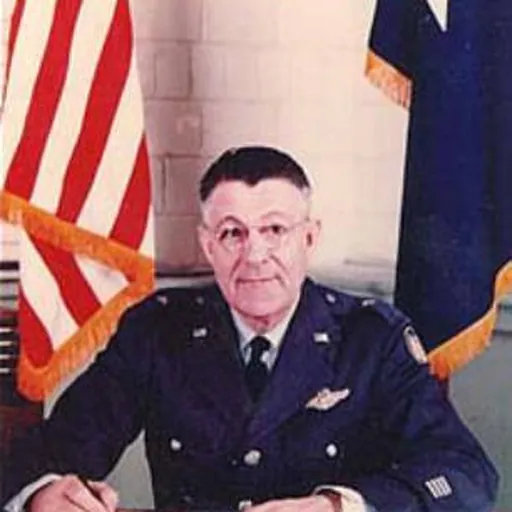
About George William Goddard
Lived 1889 – 1987 (aged 98). George William Goddard was an American military officer.
George William Goddard (June 15, 1889 – September 20, 1987) was a United States Air Force brigadier general and a pioneer in aerial photography.
Early life and education George William Goddard was born in London, England, in 1889. He moved to Rochester, New York, in June 1904 to live with his aunt and uncle. He was naturalized on April 27, 1918.
Goddard graduated from Washing Irving Preparatory School in New York in 1910 and attended Keuka Institute, now Keuka College in Keuka Park, New York, for two years. On December 14, 1917, Goddard enlisted in the Aviation Section of the U.S. Army Signal Corps and entered the aerial photography course at the School of Military Aeronautics at Cornell University.
Between the world wars When the Armistice was declared, ending World War I, Goddard was transferred to Carlstrom Field, Arcadia, Florida, where he finally graduated from flying school and was rated a pilot in May 1919. At the personal urging of General Billy Mitchell, who was impressed with Goddard's camera experimentation, he was assigned to McCook Field, Ohio, as officer in charge of aerial photographic research. In that capacity, he started developments in the infra-red and long-range photography, special aerial cameras, photographic aircraft and portable field laboratory equipment and formed the nucleus of the Photographic Laboratory at Wright-Patterson Air Force Base, Ohio.
On a trip to the Philippines, Goddard mapped unexplored areas, and subsequently became Director of the photographic school at Chanute Field, Illinois.
Goddard also directed the design of reconnaissance aircraft and equipment. At Wright Field, Goddard and his staff were preoccupied with preparing hitherto much-neglected reconnaissance aircraft types for the coming war. The biggest job was in modifying 100 P-38 Lightnings to F-4 standard. In 1941, Goddard got into a fierce bureaucratic and personal dispute with the then USAAC Director of Photography, Lieutenant Colonel Minton Kaye. It was exacerbated by Goddard's single-minded promotion of the continuously open-shutter strip-camera, which he revealed to the public in an extensive photo coverage in Life magazine. In punishment, for a time, the USAAC relegated Goddard to combat venereal disease at a base in Charlotte, NC. Using his connections, he was then detached to work on naval tasks, since the Navy thought the strip camera would be useful for amphibious operations in the Pacific.
In February 1944, Assistant Secretary of War for Air Robert Lovell sent Colonel Goddard to England to assist friend Colonel Elliott Roosevelt, the son of the president, in setting up the reconnaissance program for the 325th Reconnaissance Wing. Goddard helped modify F-8 Mosquitos for radar photography, and assisted in the development of night photography using the Edgerton D-2 skyflash. He also successfully interested the RAF in the strip camera, which Roosevelt had initially refused because it required very low altitude flight for best results. Goddard said later that the two collaborated in sending a letter to the President demanding that Colonel Kaye be removed from his posts in Washington. Kaye then fell in disfavor and was sent to India just short of his promotion to flag rank, and Goddard returned to the good graces of General Henry Arnold, the chief of the Air Force.
After the liberation of Paris, Goddard set up headquarters there and led in reconnaissance development for the U.S. air forces in theater. That winter, he finally succeeded in getting a stereo-strip camera installed in an F-6 Mustang, trying it out over Paris. With the occupation of Germany, Goddard received special clearance to take over and recover useful scientific and technical information from the Schneider Optical Plant at Bad Kreuznach and the renowned Carl Zeiss and Schott AG plants at Jena. Goddard was able to seize much data and material, and persuaded many optical scientists to move to the West just before the Red Army replaced American troops, but he complained that the State Department had countermanded much of this effort and returned equipment to the Soviets. During the war period, Goddard (along with Roosevelt) continued to stridently advocate for a dedicated reconnaissance aircraft, as opposed to the use of modified types.
By mid-August 1945, Colonel Goddard returned to Wright Field, restored as Director of Aerial Research and Development.
Cold War In August 1945, Goddard was appointed chief of the Photographic Laboratory at Wright Field. Goddard was sent to Bikini Atoll in 1946 in connection with the atomic bomb test.
Awards and decorations Brigadier General Goddard received a lot of decorations during his military service. Here is the list:
USAF Command Pilot wingsArmy Distinguished Service Medal Legion of Merit with Oak Leaf ClusterWorld War I Victory MedalAmerican Defense Service MedalAmerican Campaign MedalEuropean-African-Middle Eastern Campaign Medal w/ two Service StarsWorld War II Victory MedalNational Defense Service MedalKorean Service MedalUnited Nations Korea MedalFrench Croix de Guerre 1939–1945 with Palm
Later life and death Goddard retired as a brigadier general in 1953. In 1962, during the Cuban Missile Crisis, Goddard served as an Air Force consultant on detecting and interpreting the Soviet missile sites in Cuba, especially by advocating the use of his strip camera for low-altitude flights.
Legacy
The Society of Photographic Instrumentation Engineers (SPIE) has awarded the George W. Goddard award annually since 1961 in recognition of "exceptional achievement in optical or photonic instrumentation for aerospace, atmospheric science, or astronomy. The award is for the invention and development of a new technique, photonic instrumentation, instrument, or system." Goddard was the first recipient of the award in 1961.
Goddard's autobiography, written with DeWitt S. Copp and published in 1969, is a piece of reconnaissance literature and an important and detailed source to the history of the field in the United States.
In 1976, Goddard was inducted into the International Air & Space Hall of Fame.
Don’t just read it —
keep it.
Full-length biographies made to live with: read them, listen on the way to work, watch them tonight.
- E-book
- Audio
- Video
Instant download · yours to keep · every purchase keeps this site free
Important facts
People in George William Goddard's life
Named in this biography and alive at the same time


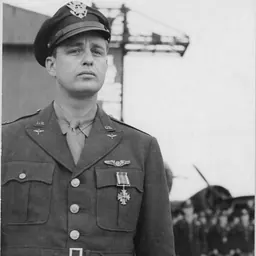
Related people
Same field, nearest in time
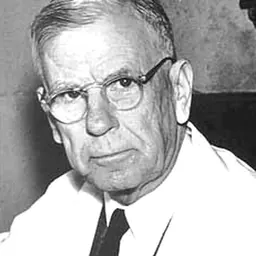
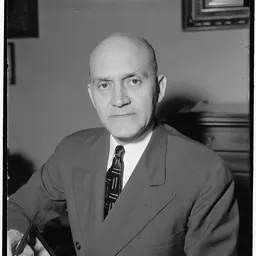



Contemporaries
People whose lives overlapped George William Goddard's




Frequently asked questions
Who was George William Goddard?
United States general (1889-1987)
When was George William Goddard born?
George William Goddard was born on 15 June 1889 in London.
When did George William Goddard die?
George William Goddard died on 20 September 1987 in Boca Raton.
What was George William Goddard's occupation?
George William Goddard was a military officer.
What nationality was George William Goddard?
George William Goddard was American.
Sources & further reading
· Wikipedia: George William Goddard
· DBpedia: George William Goddard
Cite this page
APA: Biography.guide. (2026). George William Goddard. https://biography.guide/george-william-goddard/
MLA: "George William Goddard." Biography.guide, https://biography.guide/george-william-goddard/.
Chicago: "George William Goddard." Biography.guide. https://biography.guide/george-william-goddard/.
Data last updated: 2026-09-24 · Spot an error? Report a correction.
Portrait: Wikimedia Commons · author & licence
Page generated 2026-09-27 05:09 UTC