
About George Wellesley
Lived 1814 – 1901 (aged 86). George Wellesley was a British naval officer.
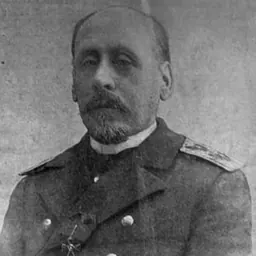
Admiral Sir George Greville Wellesley (2 August 1814 – 6 April 1901) was a Royal Navy officer. As a junior officer he took part in the capture of Acre during the Oriental Crisis in 1840 and, as Captain of in the Baltic Fleet, he took part in the Bombardment of Sveaborg in August 1855 during the Crimean War. He went on to be Commander-in-Chief of the North America and West Indies Station and then Commander-in-Chief of the Channel Squadron but was relieved of the latter post by a court-martial after an incident in which an armoured frigate, which had been under his command at the time, ran aground at Pearl Rock off Gibraltar in July 1871. He was appointed First Naval Lord in November 1877 and in that capacity he secured a considerable increase in naval construction, for example on the Colossus-class battleships, although some of these ships were of doubtful quality.
Early career
Born the son of Gerald Valerian Wellesley (brother of the Arthur Wellesley, 1st Duke of Wellington) and Lady Emily Mary (daughter of Charles Cadogan, 1st Earl Cadogan), Wellesley joined the Royal Navy in 1828. After initial training at the Royal Navy College at Portsmouth and promotion to lieutenant on 22 April 1838, he was posted to the first-rate HMS Princess Charlotte in the Mediterranean Fleet. He transferred to the fifth-rate HMS Castor in March 1839 and took part in operations on the coast of Syria taking part in the capture of Acre in November 1840 during the Oriental Crisis. Wellesley became Admiral Superintendent at Portsmouth in June 1865 and then Commander-in-Chief of the North America and West Indies Station, hoisting his flag in the ironclad frigate HMS Royal Alfred, in June 1869. Wellesley went on to be Commander-in-Chief of the Channel Squadron, hoisting his flag in the armoured frigate HMS Minotaur, in October 1870 but was relieved of that post by a court-martial after an incident in which the armoured frigate HMS Agincourt, which had been under his command at the time, ran aground at Pearl Rock off Gibraltar in July 1871. After that Wellesley was made Commander-in-Chief of the North America and West Indies Station again, this time hoisting his flag in the central battery ironclad HMS Bellerophon, in September 1873. Wellesley was appointed First Naval Lord in November 1877.
In retirement Wellesley was advanced to Knight Grand Cross of the Order of the Bath on 21 June 1887 and became a Commissioner of the Patriotic Fund in June 1888. He died at his home at Chester Square in London on 6 April 1901.
Family In 1853 Wellesley married Elizabeth Doughty Lukin (c.1816 - 1906); they had one daughter, Olivia Georgiana.
Don’t just read it —
keep it.
Full-length biographies made to live with: read them, listen on the way to work, watch them tonight.
- E-book
- Audio
- Video
Instant download · yours to keep · every purchase keeps this site free
Important facts
People in George Wellesley's life
Named in this biography and alive at the same time


Related people
Same field, nearest in time

Contemporaries
People whose lives overlapped George Wellesley's





Frequently asked questions
Who was George Wellesley?
Lord of the Admiralty (1814-1901)
When was George Wellesley born?
George Wellesley was born on 2 August 1814 in London.
When did George Wellesley die?
George Wellesley died on 6 April 1901 in London.
What was George Wellesley's occupation?
George Wellesley was a naval officer.
What nationality was George Wellesley?
George Wellesley was British.
Sources & further reading
Cite this page
APA: Biography.guide. (2026). George Wellesley. https://biography.guide/george-wellesley/
MLA: "George Wellesley." Biography.guide, https://biography.guide/george-wellesley/.
Chicago: "George Wellesley." Biography.guide. https://biography.guide/george-wellesley/.
Data last updated: 2026-09-20 · Spot an error? Report a correction.
Page generated 2026-09-27 05:18 UTC