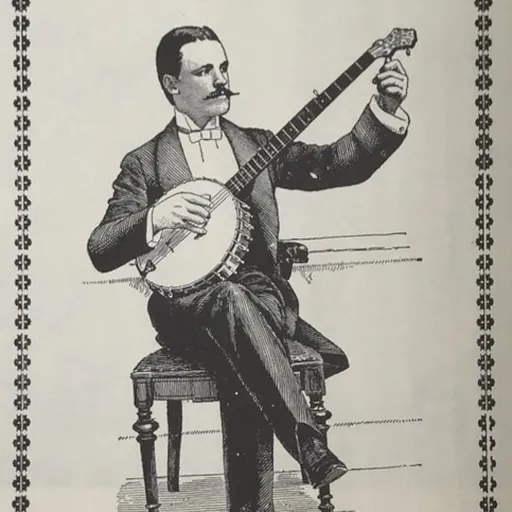
About George Washington Gregory
Lived 1867 – 1902 (aged 35). George Washington Gregory was a banjoist and composer.
Performance
In January 1891, an advertisement appeared in the New York Clipper trade magazine, a banjo-playing challenge by George W. Gregory to anyone who wanted to contend for the "Championship of the World." Those wanting to respond to the ad were directed to Gregory's "manager," Frank B. Converse. The combination featured the banjo players, a former member of Carlo Curti's Spanish Students, Sig. Luigi Ricca (leading his own Spanish Student group), the Spanish dancer Signora Ovideo, and classical recitationist Florence Russell. His books were the first to teach the "guitar style" of playing banjo, a style which the classic banjoists (including Gregory) used. He was one of many acts playing back-to-back without a break in the entertainment. They played private engagements and worked into New York's theater and club industry.
Multiple image
image1=The Gregory Trio, ad.jpg caption1=The Gregory Trio, advertisement, 1894 width1=134 image2=Gregory Trio, 1893.jpg caption2=Gregory Trio, 1893. (From left) William B. "Billy" Farmer, Charles Van Baar, George W. Gregory. With Gregory, "The Gregory Trio play what no one could mistake for anything but banjos," (Tannhaeuser March, by Wagner) because they chose works requiring "immense masses of orchestral tone coloring." By the summer of 1894 he lost the use of his second finger.
Farmer, who had been one of Gregory's students for about two years before joining him as a performance partner, broke off on his own, as did the pianist, Van Baar.
In spite of being off the performance track, he retained a following in the banjo world. Gregory was still admired in December 1899 by a S. S. stewarts's Banjo and Guitar Journal reader who placed him musically alongside Farland, Vess Ossman, Paul Eno, and Ruby Brooks, saying that these banjo players had "acquired the very essential correct fingering," He created a banjo method which taught his method, focusing on using the thumb and all four fingers of the right hand in sounding the strings. Stewart was able to sell reprints of the serial, and the method was sold as a unit due 60 cents. He was due to begin another series when Stewart died in 1898; the second series never ran.
Tragic end Gregory followed the example that his father had set, meeting an unpleasant end. His father had wasted most of his inheritance, been separated from his wife, and at the end may have been insane, drinking and dying of liver carcinoma. When he returned about the beginning of May, his was wife was working for a living, suing for divorce, and his children living in an orphan asylum.
Compositions and arrangements Narcisus by Ethelbert Nevin Liberty Bell March, by John Philip Sousa Washington Post, by Sousa. The High School Cadets, by Sousa. In the Valley Les Sylphes, by Georges Bachmann Rapsody Hongroise Number 2, by Liszt La Czarina, by Louis Ganne Possibly arranged by Frank Converse. Selections from La Perrichole, by Jacques Offenbach, arranged by George W. Gregory
Sheet music L'Infanta March Advertisement L'Infanta March, for banjo, by George W. Gregory. Two versions of L'Infanta March. The first version was published in S. S. Stewart's Banjo and Guitar Journal, August–September 1893. The journal featured music for those learning to play the banjo; the version he played on stage may have been more complicated. The second version was by a music publisher, Cammeyer Music and Manufacturing.
Cocoanut Dance
La Czarina Advertisement, sheet music for La Czarina, arranged by G. W. Gregory.
Teaching methods Practical fingering for the Banjo published in S. S. Stewart's Banjo and Guitar Journal, issues 87-97 Technical studies and foundation exercises named in S. S. Stewart's Banjo and Guitar Journal as upcoming, shortly before Stewart's death. May not have been published.
Addresses Addresses listed by S. S. Stewart as places that Gregory advertised as his place of teaching: 543 5th Ave NYC 1892-Feb 1895 (Found in 1892 city directory, SS Stewarts Banjo & Guitar Journal issue 83-issue 85) 55 W. 42nd, NYC Feb 1895-Dec 1895 (Found in issue86-issue 90) 57 W. 42nd, NYC Dec 1895-June 1896 (Found in issue 91-issue 93) 1147 Broadway, NYC June 1896-Dec 1897 (Found in issue 94-issue 102) 44 W Thirtieth St, NYC Dec 1897- at least Dec 1898, the last month the teacher's address list was published. (Found in issue 103-issue 109)
Don’t just read it —
keep it.
Full-length biographies made to live with: read them, listen on the way to work, watch them tonight.
- E-book
- Audio
- Video
Instant download · yours to keep · every purchase keeps this site free
Important facts
People in George Washington Gregory's life
Named in this biography and alive at the same time


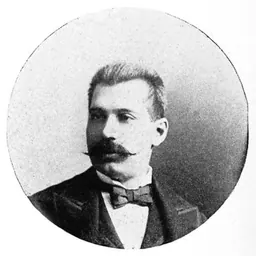

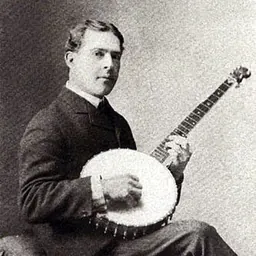
Related people
Same field, nearest in time
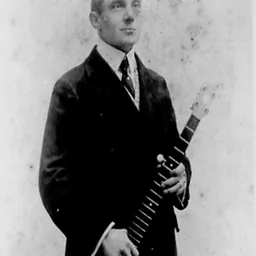
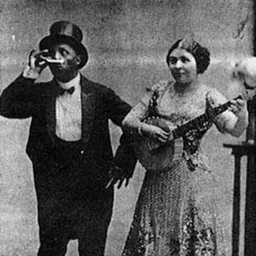

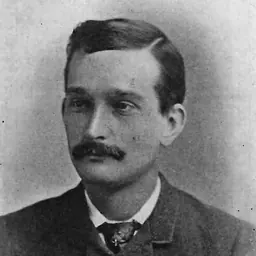
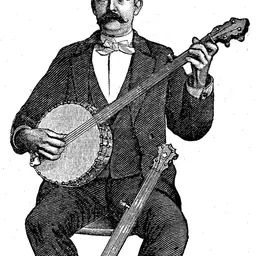
Contemporaries
People whose lives overlapped George Washington Gregory's



Frequently asked questions
Who was George Washington Gregory?
musical artist
When was George Washington Gregory born?
George Washington Gregory was born on 15 February 1867.
When did George Washington Gregory die?
George Washington Gregory died on 2 May 1902.
What was George Washington Gregory's occupation?
George Washington Gregory was a banjoist and composer.
Sources & further reading
· Wikipedia: George Washington Gregory
· DBpedia: George Washington Gregory
Cite this page
APA: Biography.guide. (2026). George Washington Gregory. https://biography.guide/george-washington-gregory/
MLA: "George Washington Gregory." Biography.guide, https://biography.guide/george-washington-gregory/.
Chicago: "George Washington Gregory." Biography.guide. https://biography.guide/george-washington-gregory/.
Data last updated: 2026-09-23 · Spot an error? Report a correction.
Portrait: Wikimedia Commons · author & licence
Page generated 2026-09-27 05:06 UTC