
About George Washington Donaghey
Lived 1856 – 1937 (aged 81). George Washington Donaghey was an American politician, businessperson and architect.
George Washington Donaghey (July 1, 1856 – December 15, 1937) was an American businessman and the 22nd governor of Arkansas from 1909 to 1913.
Early life and education Donaghey was born as the oldest of five children to Christopher Columbus and Elizabeth (née Ingram) Donaghey, in the Oakland Community in Union Parish in north Louisiana. His father's family was from Ireland and his mother's from Scotland. His father Christopher was a farmer who moved from Alabama to northern Louisiana, purchasing land there, and later moved to Arkansas where he served in the Confederate Army.
In 1875, without letting his family know, Donaghey moved to Texas where he worked as a cowboy on the Chisholm Trail and farmer, but later moved again to Arkansas in 1876 due to cowboy lifestyle and health issues. From 1882 to 1883, he attended the University of Arkansas at Fayetteville. He was a school teacher and carpenter, and studied both architecture and structural engineering. In 1883, Donaghey established his residence at Conway, Arkansas, and adopted that city as his hometown. There, he later met his wife Louvenia Wallace; they had no children. One of the major streets there bears his name. He served one term as town marshal and was an unsuccessful prohibition candidate for mayor in 1885. the University of Central Arkansas, State Normal School (where he was the principal speaker for its 1908 dedication) and Little Rock Junior College (both now part of University of Central Arkansas) in Conway, where his service extended from 1906 until his death. Additionally, he gave generously to both institutions. Donaghey had to wait ten months to take office. In the meantime he traveled the country, and as professor Calvin Ledbetter, Jr. of the University of Arkansas at Little Rock points out in his book The Carpenter from Conway, Donaghey educated himself for the political office which awaited him. In June 1909, he appointed the fourth and final state capitol commission and hired Cass Gilbert for the architecture project. In autumn 1911, he appeared with Booker T. Washington at the National Negro Business League and said to an audience of one thousand black men to "not waste their time running around begging for social equality". The Chicago Defender quoted him as saying "You must ride in the last two seats in our street cars; you must not sit in a Pullman car; you must not ride on the same deck, nor eat in the same restaurant, nor drink in the same saloon as me...You are a race of degenerates, your women are lewd and we cannot afford to have our white women and children associate with you".
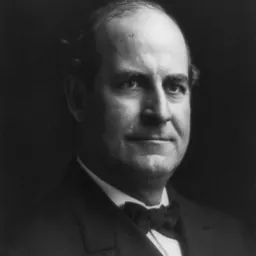
Donaghey's progressive stance procured passage of the Initiative and Referendum Act by which Arkansans can take governmental matters into their own hands and bypass the state legislature. He recruited William Jennings Bryan to help campaign for the amendment's adoption in 1910. Arkansas is the only state in the American South to grant its citizens such power. The initiative, which began in South Dakota, is otherwise particularly known in California and Colorado.
The Donaghey administration focused on roads, public health, and railroads. Donaghey was vehemently opposed to the use of prisoners for contract-leased labor, especially for building railroads. He particularly learned about convict lease while at a Southern governors' conference in West Virginia in autumn 1912. Unable to get the legislature to abolish the practice, he prior to leaving office pardoned 360 prisoners, 44 in country farms and 316 out of 850 in penitentiaries as well as the first businessman to become governor of Arkansas.
After being governor After his bid for a third term as governor was defeated by Joseph Taylor Robinson in 1912, Donaghey persisted in his quest to complete the Capitol. A critical year was 1913. Senator Jeff Davis died two days into the year. Robinson, by this time state governor, was named by the legislature as Davis's successor. J. M. Futtrell, president of the Arkansas Senate, became acting governor. The result was that Futtrell and the Capitol Building Commission asked Donaghey to become a commission member and take charge of completing construction, which he did. The Capitol, valued at more than $300 million today, was completed in 1917 for $2.2 million,
Former Arkansas Governor (1949–1953) Sid McMath said in his memoir Promises Kept: a Memoir that Donaghey was "without a doubt, one of the great governors of Arkansas and served as an inspiration to my administration and to others, particularly in the continuing struggle for human rights, and I decided to continue what he had begun". One book called him "arguably one of the best and most influential governors and philanthropists in Arkansas history".
In 1999, the Log Cabin Democrat named him one of the ten most influential people in Faulkner County's history.
Donaghey's Monument
In 1931, Donaghey, who felt a kinship to both Arkansas and Louisiana, established a monument at the Union Parish/Union County state line near his birthplace. The Art Deco-style monument contains intricate carvings; it includes references to transportation in 1831 and 1931, and mentions Governor Huey P. Long, Jr., whose educational program Donaghey admired. The land was not registered with state parks offices in either state, timber companies cut trees around it, and the marker was forgotten.
In 1975, an employee of the Louisiana Department of Transportation came across the abandoned monument and informed then-State Representative Louise B. Johnson of Bernice of his discovery.
The Monument was dedicated in 1933; Donaghey died four years later. At one time there were plans for a Donaghey State Park, but these were never implemented.
Don’t just read it —
keep it.
Full-length biographies made to live with: read them, listen on the way to work, watch them tonight.
- E-book
- Audio
- Video
Instant download · yours to keep · every purchase keeps this site free
Important facts
People in George Washington Donaghey's life
Named in this biography and alive at the same time



Related people
Same field, nearest in time





Contemporaries
People whose lives overlapped George Washington Donaghey's




Frequently asked questions
Who was George Washington Donaghey?
American politician (1856-1937)
When was George Washington Donaghey born?
George Washington Donaghey was born on 1 July 1856 in Union Parish.
When did George Washington Donaghey die?
George Washington Donaghey died on 15 December 1937 in Little Rock.
What was George Washington Donaghey's occupation?
George Washington Donaghey was a politician, businessperson and architect.
What nationality was George Washington Donaghey?
George Washington Donaghey was American.
Sources & further reading
· Wikipedia: George Washington Donaghey
· DBpedia: George Washington Donaghey
Cite this page
APA: Biography.guide. (2026). George Washington Donaghey. https://biography.guide/george-washington-donaghey/
MLA: "George Washington Donaghey." Biography.guide, https://biography.guide/george-washington-donaghey/.
Chicago: "George Washington Donaghey." Biography.guide. https://biography.guide/george-washington-donaghey/.
Data last updated: 2026-09-20 · Spot an error? Report a correction.
Page generated 2026-09-27 05:27 UTC