
About George W. Housner
Lived 1910 – 2008 (aged 97). George W. Housner was an American engineer, university teacher and civil engineer.
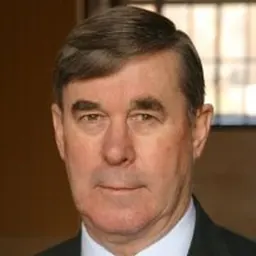
George W. Housner (December 9, 1910 in Saginaw, Michigan – November 10, 2008 in Pasadena, California) was a professor of earthquake engineering at the California Institute of Technology and National Medal of Science laureate.
Biography Housner received his bachelor's degree in civil engineering from the University of Michigan where he was influenced by Stephen Timoshenko. His dissertation was titled "An Investigation of the Effects of Earthquakes on Buildings." He became a professor of earthquake engineering at Caltech from 1945 to 1981, and professor emeritus thereafter. His doctoral students included Robert D. Hanson.
Housner was actively involved with the Earthquake Engineering Research Institute (EERI). He served as the organization's vice president in 1949, then as president from 1950 to 1965. His actions as president included advocating for increased governmental funding for the Seismological Field Survey, a unit of the U.S. Coast and Geodetic Survey, and collaborating with the California Division of Architecture to use shaking machines to study the dynamic properties of buildings. In the 1990s, he also participated in the World Seismic Safety Initiative, an International Association for Earthquake Engineering initiative approved as an International and Regional International Decade for Natural Disaster Reduction Project. On his death, Housner left a substantial gift to EERI "to advance the objectives of EERI." This gift has been used to train future earthquake engineering policy advocates and thought leaders through the EERI Housner Fellows Program, which has been active since 2011.
Housner's research and contributions to the field of earthquake engineering span strong motion earthquake analysis, development of earthquake design spectra, and the effect of fluid sloshing on liquid storage tanks. His published journal articles include "Behavior of Structures During Earthquakes" in the Journal of Engineering Mechanics (1959) and "The Mechanism of Sandblows" in the Bulletin of the Seismological Society of America (1958). He also co-authored the textbooks Applied Mechanics – Statics (1949, with Donald E. Hudson), Applied Mechanics – Dynamics (1950, also with Hudson), and The Analysis of Stress and Deformation (1966, with Thad Vreeland).
Beyond the above-mentioned textbooks, Housner's other collaborations with Donald Hudson included spearheading the creation of the Universities Council on Earthquake Engineering Research in the late 1960s, which eventually evolved into the California Universities for Research in Earthquake Engineering (CUREe), and hosting a wind engineering research conference around 1970 with funding from the National Science Foundation. and studied soil liquefaction after the 1964 earthquake in Niigata, Japan. He was appointed to the Los Angeles County's earthquake investigation commission after the 1971 San Fernando earthquake, where Housner advocated for measures to address the hazard posed by unreinforced masonry buildings. Caltrans followed this Board's recommendations to establish a Caltrans seismic advisory board; Housner became the board's chairman and participated until 1995.
Partial list of achievements
Chairman of the earthquake engineering research committee of the National Academy of Sciences Founding Member of the Earthquake Engineering Research Institute UNESCO representative to International Institute of Seismology and Earthquake Engineering in Tokyo AEC advisory panel on safety against ground shock AID consultant at University of Roorkee, India Chairman of Panel on Aseismic Design and Testing of Nuclear Facilities for International Atomic Energy Agency Member of Los Angeles County Earthquake Commission Member of Earthquake Engineering and Hazards Reduction Delegation to People's Republic of China, 1978 Consultant to Japanese Atomic Energy Commission and Italian Nuclear Energy Commission and numerous nuclear energy projects in the U.S. International Association for Earthquake Engineering (IAEE) President, 1969–1973 Elected to the National Academy of Sciences, 1972 Named Braun Professor of Engineering at Caltech, 1974 Chairman of Earthquake Earthquake Engineering Committee and the Committee on Dam Safety of the National Research Council (NRC) President of Seismological Society of America Received National Medal of Science, 1978
Don’t just read it —
keep it.
Full-length biographies made to live with: read them, listen on the way to work, watch them tonight.
- E-book
- Audio
- Video
Instant download · yours to keep · every purchase keeps this site free
Important facts
People in George W. Housner's life
Named in this biography and alive at the same time

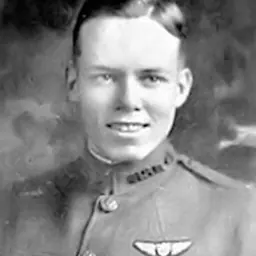
Related people
Same field, nearest in time

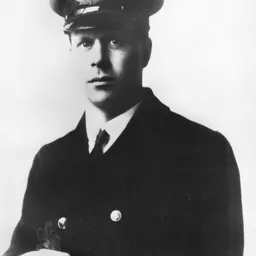

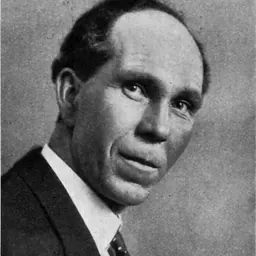
Contemporaries
People whose lives overlapped George W. Housner's






Frequently asked questions
Who was George W. Housner?
American engineer (1910-2008)
When was George W. Housner born?
George W. Housner was born on 9 December 1910 in Saginaw.
When did George W. Housner die?
George W. Housner died on 10 November 2008 in Pasadena.
What was George W. Housner's occupation?
George W. Housner was an engineer, university teacher and civil engineer.
What nationality was George W. Housner?
George W. Housner was American.
Sources & further reading
· Wikipedia: George W. Housner
Cite this page
APA: Biography.guide. (2026). George W. Housner. https://biography.guide/george-w-housner/
MLA: "George W. Housner." Biography.guide, https://biography.guide/george-w-housner/.
Chicago: "George W. Housner." Biography.guide. https://biography.guide/george-w-housner/.
Data last updated: 2026-09-20 · Spot an error? Report a correction.
Page generated 2026-09-27 05:32 UTC