
About George W. Hayward
Lived 1839 – 1870 (aged 31). George W. Hayward was a British explorer.
Affiliation with the Royal Geographical Society
Hayward appeared in England in 1868 and approached Sir Henry Rawlinson, vice president of the Royal Geographical Society. He wanted to be hired as an explorer in central Asia and the western Himalayas. Surprisingly Hayward was provided with £300, surveying equipment, map making instruments and instructions to attempt to reach and survey the then unmapped Pamir Mountains where the territory and influence of the Raj and the Russian Empire were inching ever closer. Hayward was to become the only explorer funded by the Royal Geographical Society during "The Great Game."
Although the Royal Geographical Society was strictly apolitical, Rawlinson was also a member of the government's India Council and a known Russophobe. For this reason it has often been suggested that he may have had political motivations in encouraging Hayward's explorations.
Journey to Kashgar and Yarkand
Hayward's official Royal Geographical Society mission was to explore the Pamirs and their routes and approaches. After being rebuffed by officials from approaching the Pamirs via the Northwest Frontier he travelled to Ladakh and onwards to Kashgaria with the intention of approaching the Pamirs from there.
Another Englishman, Robert Shaw, uncle of Sir Francis Younghusband, was making a similar journey to Yarkand and Kashgar at the same time. Shaw seems to have resented Hayward's presence, and although they were often within a few hundred metres of one another, they only met once at the start of their approach to Kashgaria, and then again many months later.
While awaiting permission to proceed at the Kashgaria border Hayward escaped from his guards and spent 20 days exploring and charting the course of the Yarkand River.
Shaw reached Kashgaria in December 1868 after sending ahead envoys announcing his arrival and carrying with him gifts for Yakub Beg. Yakub Beg had just made himself ruler of Kashgaria after the Chinese had been driven out by the Dungan Revolt (1862–77). A few weeks after Shaw's arrival he was joined by Hayward. Hayward sent no envoy and hand no gifts but convinced the border guards he was with Shaw. Shaw was disturbed by this as he figured Hayward would be stopped at the border. The alternative, which was less convenient for the British, had it that the Maharaja of Kashmir had arranged Hayward's death as revenge for the letter about the Kashmiri atrocities in Dardistan. The theory says the Maharaja exacted revenge against Hayward and also benefited by framing the ruler's enemy, Mir Wali.
Since his death, Hayward has received little recognition. He stands alone, however, among the explorers of the Western Himalaya in the difficulty of the areas he surveyed and the small size of his expeditions – usually just himself and three to six porters and bearers.
Miscellaneous
In the 1930s Colonel Reginald Schomberg, a British traveller, passed through Darkot and said local families still possessed Hayward's pistol, telescope and saddle. A London auction sold six topographical watercolours by Hayward in the 1950s that turned up in the Bombay bazaar.
Sir Henry Newbolt wrote the poem "He Fell Among Thieves" about Hayward's death. Welsh composer David John Thomas (1881-1928), also known by his bardic name as Afan Thomas, composed a cantata based on this poem.
Biography: "Murder in the Hindu Kush"
A biography of Hayward, entitled Murder in the Hindu Kush: George Hayward and the Great Game, by travel writer Tim Hannigan was published by the History Press in 2011. His story is also covered briefly in The Great Game by Peter Hopkirk, and Explorers of the Western Himalayas by John Keay.
Don’t just read it —
keep it.
Full-length biographies made to live with: read them, listen on the way to work, watch them tonight.
- E-book
- Audio
- Video
Instant download · yours to keep · every purchase keeps this site free
Important facts
People in George W. Hayward's life
Named in this biography and alive at the same time

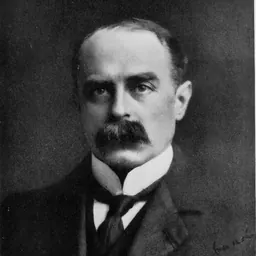

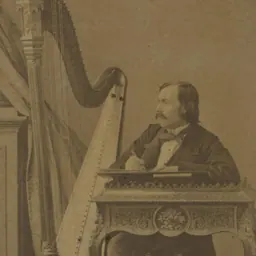



Related people
Same field, nearest in time

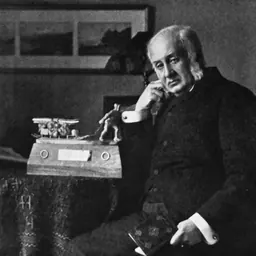
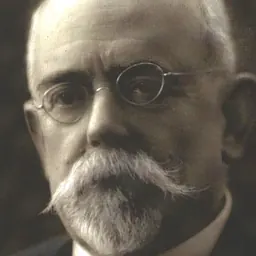

Contemporaries
People whose lives overlapped George W. Hayward's

Frequently asked questions
Who was George W. Hayward?
British explorer (1839–1870)
When was George W. Hayward born?
George W. Hayward was born on 9 June 1839 in Leeds.
When did George W. Hayward die?
George W. Hayward died on 18 July 1870 in Kashgar.
What was George W. Hayward's occupation?
George W. Hayward was an explorer.
What nationality was George W. Hayward?
George W. Hayward was British.
Sources & further reading
· Wikipedia: George W. Hayward
Cite this page
APA: Biography.guide. (2026). George W. Hayward. https://biography.guide/george-w-hayward/
MLA: "George W. Hayward." Biography.guide, https://biography.guide/george-w-hayward/.
Chicago: "George W. Hayward." Biography.guide. https://biography.guide/george-w-hayward/.
Data last updated: 2026-09-22 · Spot an error? Report a correction.
Page generated 2026-09-27 05:00 UTC