
George W. Gardner
American politician (1834–1911); 28th and 30th mayor of Cleveland
About George W. Gardner
Lived 1834 – 1911 (aged 77). George W. Gardner was an American politician.
Sketch by J. P. McEvoy of George W. Gardner's cousin, Lucius P. Yale, of Yale & Reagan, Chicago railroad builder of the Welland Canal, 1923 George W. Gardner (1834–1911) was a grain dealer and the 28th and 30th Mayor of Cleveland, serving two terms as a Republican. He was also co-proprietor with John D. Rockefeller and Maurice B. Clark of the firm Clark, Gardner & Company, later Clark & Rockefeller, commission merchants. They were the largest grain dealers in Cleveland before Rockefeller went on with Clark in the oil industry. His father was a manufacturer of furniture, proprietor of Gardner & Vincent, one of the two oldest firms in Cleveland at the time.
His brother James was a merchant in Cleveland, later in the newspaper business in Cincinnati, and fought in the 150th Ohio Infantry Regiment during the American Civil War. Another brother was Rev. Theodore Yale Gardner, minister of the Presbyterian Church, whose wife was president of the Ladies' aid societies and daughter of Colonel Nahum Ball Gates.
Their grandmother was Eunice Yale, daughter of Capt. Josiah Yale of the Yale family, while their great-grandmother was Rachel Adams of Quincy, descendant of Henry Adams. Other Yale family members included Rev. Cyrus Yale, Capt. Theophilus Yale, abolitionist lawyer Barnabas Yale, paper manufacturer Wellington Smith, socialite Elizur Yale Smith, and Chicago railroad contractor Lucius P. Yale, who pioneered the construction of railroads in the West and built the Welland Canal.
The Yale family is known for having given their name to Yale University, while the Adams family is known for the two U.S. Presidents they have produced, John Adams and John Quincy Adams. In 1858, Gardner married Rosaline Lucretia Oviatt, daughter of General Orson Minott Oviatt and Lucretia Wood. As he was looking for partners, he convinced the young John D. Rockefeller to join the business with $1,000, which he got from his father, William Rockefeller Sr., and created the Clark & Rockefeller firm. As they needed capital and connections, George W. Gardner joined as well, coming from an old family background, in contrast to the other two partners.
In April 1858, they formed the business under Clark, Gardner & Company, owned together as three partners but without Rockefeller's name, as his name was not known enough to be useful to attract business, something Rockefeller was very displeased with.
It would become a pattern in his life, staying out of the spotlight and focus on wealth-building and concealing his wealth.
Politics Gardner was an active Republican politician, serving as a city councilman from 1863 to 1864 and 1876–1881. He served as the mayor of Cleveland for two non-consecutive two-year terms, from 1885 to 1886, and later 1889–1890. In 1886, he established Cleveland's Civil Service. Senator Mark Hanna, nicknamed the "king maker" for having made William McKinley president, was an intimate associate and friend, supporting him in his political career as the chairman of the Republicans.
He was also a large dealer in grain and flour, and became President of the City Council of Cleveland, as well as President of the Board of Trustees of the Ohio Reform School. He purchased the yacht Wasp. Mrs. Huntington was the granddaughter of Dr. Huntington, son-in-law of Congressman Zephaniah Swift, the Chief Justice of Connecticut.
He was also Secretary to Founding Father Oliver Ellsworth under President John Adams, and was among those chosen to be at the Treaty of Mortefontaine, involving negotiations with King Joseph Bonaparte, the older brother of Napoleon. George H. Gardner's enterprise was one of the largest printing plants in Ohio, and he was also president of the Iron Trade Review Company, and secretary and treasurer of the Cleveland Printing & Publishing Co.
Another son named Burt, a resident of Chicago, became the western editor of the Iron Trade Review, and James became secretary of the Saegertown Mineral Springs Company. Gardner died in Dayton, Ohio on December 18, 1911. He was buried at the Woodland Cemetery in Cleveland.
Don’t just read it —
keep it.
Full-length biographies made to live with: read them, listen on the way to work, watch them tonight.
- E-book
- Audio
- Video
Instant download · yours to keep · every purchase keeps this site free
Important facts
People in George W. Gardner's life
Named in this biography and alive at the same time




Related people
Same field, nearest in time

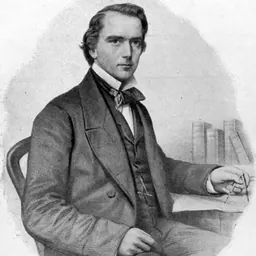




Contemporaries
People whose lives overlapped George W. Gardner's




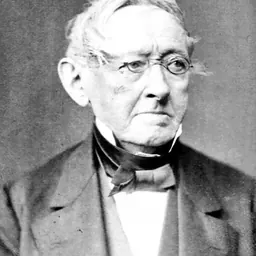
Frequently asked questions
Who was George W. Gardner?
American politician (1834–1911); 28th and 30th mayor of Cleveland
When was George W. Gardner born?
George W. Gardner was born on 7 February 1834 in Pittsfield.
When did George W. Gardner die?
George W. Gardner died on 18 December 1911 in Dayton.
What was George W. Gardner's occupation?
George W. Gardner was a politician.
What nationality was George W. Gardner?
George W. Gardner was American.
Sources & further reading
· Wikipedia: George W. Gardner
Cite this page
APA: Biography.guide. (2026). George W. Gardner. https://biography.guide/george-w-gardner/
MLA: "George W. Gardner." Biography.guide, https://biography.guide/george-w-gardner/.
Chicago: "George W. Gardner." Biography.guide. https://biography.guide/george-w-gardner/.
Data last updated: 2026-09-25 · Spot an error? Report a correction.
Page generated 2026-09-27 05:12 UTC