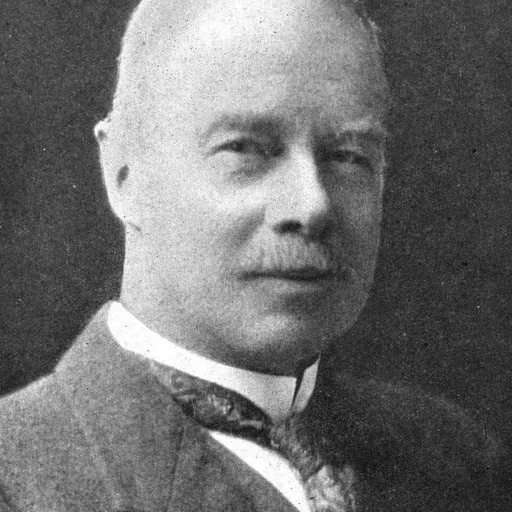
George Vernon Hudson
English-born New Zealand entomologist and astronomer
About George Vernon Hudson
Lived 1867 – 1946 (aged 78). George Vernon Hudson was a New Zealand entomologist, astronomer, non-fiction writer, scientific illustrator, naturalist and postal worker.
Hudson in 1907, as a member of the Auckland Islands party of the Sub Antarctic Expedition George Vernon Hudson FRSNZ (20 April 1867 – 5 April 1946) was a New Zealand entomologist credited with proposing the modern daylight saving time. He was awarded the Hector Memorial Medal in 1923.
Biography Born in London, England, on Easter Saturday, 1867 Hudson was the sixth child of Emily Jane Carnal and Charles Hudson, an artist and stained-glass window designer. By the age of 14 he had built up a collection of British insects, and had published a paper in The Entomologist. In 1881 Hudson moved with his father to Nelson, New Zealand. He worked on a farm, and in 1883, aged 16, he began working at the post office in Wellington, where he eventually became chief clerk, retiring in 1918. His shift-work job gave him leisure time to collect insects, and led him to value after-hours daylight. In 1895, he presented a paper to the Wellington Philosophical Society proposing a two-hour daylight-saving shift, and after considerable interest was expressed in Christchurch, he followed up in an 1898 paper. In 1933, Hudson was the first recipient (together with Ernest Rutherford) of the T. K. Sidey Medal, set up by the Royal Society of New Zealand from funds collected to commemorate the passing of the Summer-Time Act 1927.
Another Briton, William Willett, championed the use of daylight saving time. It was made law there in 1916.
Hudson's collection of insects, the largest in New Zealand, is housed in the Museum of New Zealand Te Papa Tongarewa. Between 1881 and 1946, Hudson recorded information in three handwritten volumes that described thousands of species, inventing his own coding system. In 2018, Te Papa launched a crowd-sourcing project calling for digital volunteers to help decipher those codes, which will then allow conservation entomologists to compare Hudson's records with the status of those same insects today.
Honours and awards 1919 – Original Fellow of the Royal Society of New Zealand 1923 – Hector Medal 1929 – Hutton Medal Hudson died on 5 April 1946 at his home "Hillview" in the Wellington suburb of Karori. 1898: New Zealand Moths and Butterflies (Macro-Lepidoptera) London: West, Newman, & Co. 1904: 1928: 1950:
Don’t just read it —
keep it.
Full-length biographies made to live with: read them, listen on the way to work, watch them tonight.
- E-book
- Audio
- Video
Instant download · yours to keep · every purchase keeps this site free
Important facts
People in George Vernon Hudson's life
Named in this biography and alive at the same time


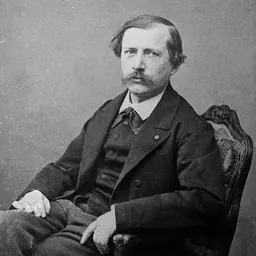
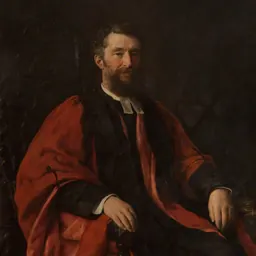
Related people
Same field, nearest in time




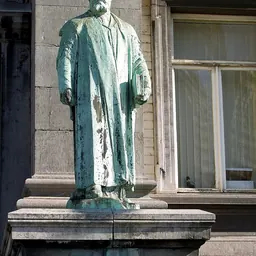
Contemporaries
People whose lives overlapped George Vernon Hudson's

Frequently asked questions
Who was George Vernon Hudson?
English-born New Zealand entomologist and astronomer (1867–1946)
When was George Vernon Hudson born?
George Vernon Hudson was born on 20 April 1867 in London.
When did George Vernon Hudson die?
George Vernon Hudson died on 5 April 1946 in Karori.
What was George Vernon Hudson's occupation?
George Vernon Hudson was an entomologist, astronomer, non-fiction writer, scientific illustrator, naturalist and postal worker.
What nationality was George Vernon Hudson?
George Vernon Hudson was New Zealand.
Sources & further reading
· Wikipedia: George Vernon Hudson
· DBpedia: George Hudson (entomologist)
Cite this page
APA: Biography.guide. (2026). George Vernon Hudson. https://biography.guide/george-vernon-hudson/
MLA: "George Vernon Hudson." Biography.guide, https://biography.guide/george-vernon-hudson/.
Chicago: "George Vernon Hudson." Biography.guide. https://biography.guide/george-vernon-hudson/.
Data last updated: 2026-09-22 · Spot an error? Report a correction.
Portrait: Wikimedia Commons · author & licence
Page generated 2026-09-27 05:02 UTC