
About Boris Uvarov
Lived 1886 – 1970 (aged 83). Boris Uvarov was a British and Russian entomologist, biologist and scientific collector.
Sir Boris Petrovitch Uvarov (3 November 1886 ), the youngest of three sons of Pyotr P. Uvarov, a state bank employee, and his wife, Aleksandra. His interest in natural history was aided in young life by his father's gift of six volumes of Brehm's Tierleben. He went to a school in Uralsk from 1895 to 1902 where he was encouraged by S. M. Zhuravlev. He then studied briefly at the School of Mining at Ekaterinoslav (now Dnipro) but transferred in 1906 to study biology in the Saint Petersburg State University, graduating in 1910. He was influenced by the teachings of Shimkevitch, Wagner, and Palladin but enjoyed most the meetings of the Russian Entomological Society where he was influenced by, among others, D. N. Borodi, and A. A. Lyubishev. His first job after graduating was as an entomologist at the Murgab Crown Cotton Estate (Transcaucasia) but he moved to St Petersburg in 1911. He then worked at Stavropol on Locusta migratoria becoming director of the entomological bureau at the age of 23 and helped put locust control on a sound scientific basis. From 1915 he worked in Tiflis, which after the Russian revolution of 1917 had become the capital of the short-lived Democratic Republic of Georgia. With the rise of Georgian nationalism he found himself selling pies in the marketplace to supplement income. A chance meeting with a British army medical entomologist Patrick A. Buxton in Georgia who in turn contacted Guy A.K. Marshal in London led in 1920 to an invitation to join the Imperial Institute of Entomology. He moved to London along with his wife and son and would not visit Russia again until 1968. He became a naturalized British citizen in 1943.
Starting in 1945, Dr. Uvarov and his small team received official designation as the Anti-Locust Research Centre, London. During the next fourteen years, the Centre developed into the foremost laboratory in the world for research on locusts. His assistants included the sisters Zena and Nadia Waloff. The organization published profusely, collaborated with a wide range of scientists from around the world. He influenced the FAO to take an interest in the coordination of monitoring and research towards prediction and control of locusts. He personally published nearly 430 papers and made important contributions in the areas of taxonomy, population biology and locust control.
Uvarov's principal contribution was the phase theory of locusts. He identified the solitary and migratory phases and provided an ecological theory on what triggered their transformation. He suggested that environmental conditions could be controlled to prevent the transformation into the migratory phase. Throughout his career he and his team investigated the proximate and ultimate triggers for the phase transition. These included endocrinological, behavioural, and genetic studies.
Personal life Uvarov's oldest brother Nikolai was sentenced to death in 1920. Nikolai's daughter Olga Uvarov (1910–2001) was brought from Russia to London in 1923 with the help of the International Red Cross.
Selected works Uvarov, Boris-Petrovich. "A revision of the genus Locusta, L.(= Pachytylus, Fieb.), with a new theory as to the periodicity and migrations of locusts." Bulletin of entomological Research 12.2 (1921): 135-163. Uvarov, Boris Petrovich. "Locusts and Grasshoppers. A handbook for their study and control." Locusts and Grasshoppers. A Handbook for their Study and Control. (1928). Uvarov, Boris P., and Boris N. Zolotarevsky. "Phases of locusts and their interrelations." Bulletin of Entomological Research 20.3 (1929): 261-265. Uvarov, Boris Petrovitch. "Insects and climate." Transactions of the Royal Entomological Society of London 79.pt. 1 (1931). Uvarov, Boris. Grasshoppers and locusts. A handbook of general acridology Vol. 2. Behaviour, ecology, biogeography, population dynamics. Centre for Overseas Pest Research, 1977.
Don’t just read it —
keep it.
Full-length biographies made to live with: read them, listen on the way to work, watch them tonight.
- E-book
- Audio
- Video
Instant download · yours to keep · every purchase keeps this site free
Important facts
People in Boris Uvarov's life
Named in this biography and alive at the same time



Related people
Same field, nearest in time
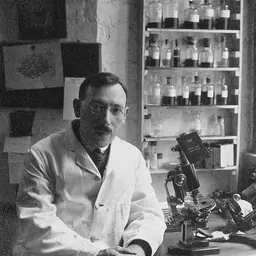

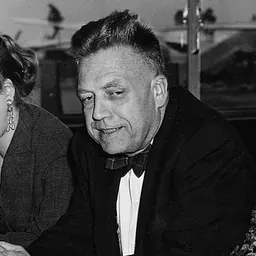


Contemporaries
People whose lives overlapped Boris Uvarov's
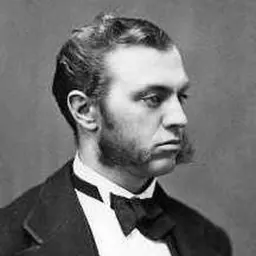


Frequently asked questions
Who was Boris Uvarov?
Russian-British entomologist
When was Boris Uvarov born?
Boris Uvarov was born on 22 October 1886 in Oral.
When did Boris Uvarov die?
Boris Uvarov died on 18 March 1970 in London.
What was Boris Uvarov's occupation?
Boris Uvarov was an entomologist, biologist and scientific collector.
What nationality was Boris Uvarov?
Boris Uvarov was British and Russian.
Sources & further reading
Cite this page
APA: Biography.guide. (2026). Boris Uvarov. https://biography.guide/boris-uvarov/
MLA: "Boris Uvarov." Biography.guide, https://biography.guide/boris-uvarov/.
Chicago: "Boris Uvarov." Biography.guide. https://biography.guide/boris-uvarov/.
Data last updated: 2026-09-20 · Spot an error? Report a correction.
Page generated 2026-09-27 05:29 UTC