
About George Tice
Lived 1938 – 2025 (aged 86). George Tice was an American photographer.
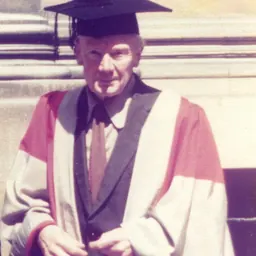
George Andrew Tice (October 13, 1938 – January 16, 2025) was an American photographer. His work depicts a broad range of American life, landscape, and urban environment, mostly photographed in his native New Jersey. He lived all his life in New Jersey, except for his service in the U.S. Navy, a brief period in California, a fellowship in the United Kingdom, and summer workshops in Maine, where he taught at the Maine Photographic Workshops, now the Maine Media Workshops.
Tice's work is held in the collections of the Art Institute of Chicago, Center for Creative Photography, J. Paul Getty Museum, Metropolitan Museum of Art, Museum of Modern Art, San Francisco Museum of Modern Art, and Whitney Museum.
Early life and entry into photography George A. Tice was born in Newark, New Jersey, on October 13, 1938, the son of insurance underwriter William S. Tice and Margaret Robertson, a Traveller of Irish, Scottish, and Welsh ancestry with a fourth grade education. In 1663, Tice's Belgian ancestors settled in Brooklyn and their firstborn son, Peter Tyson, moved to Monmouth County, New Jersey, in 1709, making Tice a tenth-generation New Jerseyan. Though George was raised by his mother, he regularly visited his father for advice until William's death when George was 19.
His first contact with photography was in the albums of family photographs belonging to his father, which gave him the desire to create images of his own. He began with a Kodak Brownie. In 1953, having bought a Kodak Pony, which gave him some control over exposure and focus, and a Kodak developing kit, he began to advance his craft. He also joined the Carteret Camera Club. Tice's photographs of homeless men on the Bowery won second place in the black-and-white print competition. It was at this point that he decided to make photography his career. That same year, Tice received an honorable discharge.
Only six months after moving to Irvington, California, Tice moved his family back to New Jersey due to his wife's homesickness and his dissatisfaction with the lower pay for portrait photography. In 1972, Tice continued to experiment with early photographic processes by printing a photogenic drawing of leaves in a contact frame exposed to sunlight onto hand-sensitized paper coated with diluted silver nitrate, resembling Henry Fox Talbot's Calotype negatives.
In 1970, Doubleday published Tice's first book, Fields of Peace: A Pennsylvania German Album, with text by Millen Brand. That year, he photographed coastal Maine, taught at The New School for Social Research, and traveled to London and Paris with Lee Witkin. Together, they met with Frederick H. Evans' son, who sold them a block of platinum prints and lantern slides for the Witkin Gallery.
In 1971, Tice issued his portfolio, Bodie, with an introduction by Lee Witkin, printed an Evans portfolio from lantern slides, and published, again with Doubleday, Goodbye River Goodbye, with poetry by George Mendoza. In 1972 Life magazine sent him on assignment for the article "Home to Iowa." Rutgers University Press published Paterson, and the Metropolitan Museum of Art presented a solo exhibition, Paterson, New Jersey. Doubleday published Seacoast Maine: People and Places, with a text by Martin Dibner.
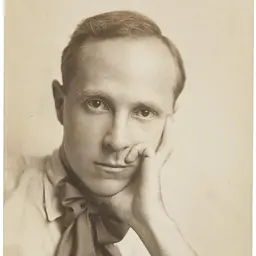
Tice received fellowships from the National Endowment for the Arts and the Guggenheim Foundation. Paterson was awarded the Grand Prix du Festival d'Arles. In the last year of his life, Edward Steichen appointed Tice as printer of his negatives, a role which Tice fulfilled until 1998 by printing several portfolios of Steichen's work. Tice also made prints of photographs by Frederick H. Evans, Francis Bruguière, and Edward Weston, which were issued by the Witkin Gallery. In 1975, the Witkin Gallery presented a twenty-year retrospective of Tice's work accompanied by the book George A. Tice, Photographs: 1953–1973, which was published by the Rutgers University Press.
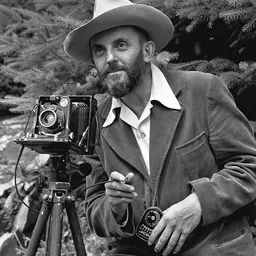
Ansel Adams recommended Tice for a commission by the Field Museum of Natural History to make a pair of murals of Sapelo Island. Life sent Tice to Hutchinson, Kansas, to contribute to its special report "One Day in the Life of America."
Around 1976/77, Tice acquired a Fujica soft-focus lens, which he used over the next two years for a series of photographs of a girlfriend, Deborah, and three white cats, one of which belonged to his daughters. Whereas modern photographers treated soft focus as a flaw producing cloudy glows, Tice praised the effect as one lost along the history of photography.
Urban Landscapes: A New Jersey Portrait followed in 1976, again from the Rutgers University Press, an expansion of Tice's vision of the gritty cities of industrial New Jersey. As in Paterson, Tice explored scenes of the working man's environment that survived only precariously at the time, soon to disappear forever. Although his subject-matter, technique, and style extend far beyond that, almost to the point of universality, the urban scene of New Jersey remained his most familiar vein.
In 1977, Tice produced Artie Van Blarcum: An Extended Portrait, documenting the life of a Tri-County Camera Club member. When Tice decided to create a book about him, Blarcum reluctantly allowed Tice to watch his daily life. Blarcum, then 52, was presented as a New Jersey everyman who was a third-generation factory worker sharing his family home with his brother. Tice used Blarcum's amateur photography to critique art that intends to suit the tastes of competition judges by perfecting one's technique on banal subject matter. After Blarcum's death, Tice presented his archives to William Paterson University, which exhibited them from September 8 – October 16, 2015.
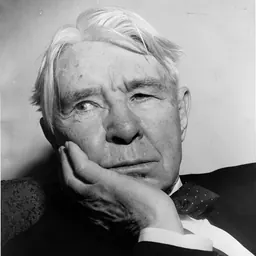
Later career After reading Carl Sandburg's biographies of Abraham Lincoln in 1981 and coming across the Lincoln Motel & Abe's Disco in Newark, New Jersey, Tice began a series cataloging physical depictions of Lincoln across the United States, ranging from the grand Lincoln Memorial to simpler murals in Lincoln, Illinois. In 1984, Rutgers University Press published this series of photographs. 2003: New Jersey State Council for the Humanities Honor Book for Urban Landscapes 2003: Honorary Doctorate from William Paterson University 2015: Lucie Award for Lifetime Achievement
Publications Fields of Peace: A Pennsylvania German Album. New York: Doubleday, 1970. With an essay by Millen Brand. Rev. ed.: New York: Dutton, 1973. Rev. ed.: Boston: David R. Godine, 1998. Goodbye, River, Goodbye. New York: Doubleday, 1971. Poetry by George Mendoza. Paterson. New Brunswick, New Jersey: Rutgers University Press, 1972. Statement by Tice. Seacoast Maine: People and Places. New York: Doubleday, 1973. With an essay by Martin Dibner. Boston: Godine, 2009. With an introduction by John K. Hanson Boston: Godine, 2015. . George A. Tice: Photographs, 1953–1973. New Brunswick, New Jersey: Rutgers University Press, 1975. With an introduction by Lee D. Witkin. Urban Landscapes: A New Jersey Portrait. New Brunswick, New Jersey: Rutgers University Press, 1975. Statement by Tice. Artie Van Blarcum: An Extended Portrait.. Danbury, New Hampshire: Addison House, 1977. With an introduction by Tice and an afterword by Robert Coles. Urban Romantic: The Photographs of George Tice. Boston: David R. Godine, 1982. With an introduction by Tice. Lincoln. New Brunswick, New Jersey: Rutgers University Press, 1984. With an introduction by Tice. Hometowns: An American Pilgrimage. Boston: A New York Graphic Society Book, Little Brown & Co., 1988. With an introduction by Tice. Stone Walls • Grey Skies: A Vision of Yorkshire. Bradford, UK: National Museum of Photography, Film & Television, 1990. With a foreword by Tice and an afterword by Juliet R. V. Barker. Expanded ed.: Bradford, UK: National Museum of Photography, Film & Television, 1992. With a foreword by Tice and an afterword by Juliet R. V. Barker. George Tice: Selected Photographs, 1953–1999. Boston: David R. Godine, 2001. With a foreword by David R. Godine. George Tice: Urban Landscapes. New York: International Center of Photography in Association with W.W. Norton, 2002. With a preface by Tice and an introduction by Brian Wallis. Common Mementos. Revere, Pennsylvania: Lodima, 2005. Statement by Tice. Paterson II. Quantuck Lane, New York, 2006. With a foreword by Mary Sue Sweeney Price, a preface by Tice and an introduction by A.D. Coleman. Ticetown. Revere, Pennsylvania: Lodima, 2007. Essay by Tice. Seldom Seen. Exton, Pennsylvania: Brilliant, 2013. With essays By Michael More and August Kleinzahler. Lifework: Photographs 1953–2013. Woodinville, Washington: Veritas, 2021. With an essay by Michael Miller and an afterword by Tice.
Exhibitions Aside from a permanent collection of 13 photographic prints in the New York Museum of Modern Art, Urban Landscapes: A New Jersey Portrait, at Rutgers University Art Gallery, 1976. Liberty State Park: The Master Plan, Museum of Modern Art, New York City (organized by MoMA's Department of Architecture), 1979. George A. Tice, , Helsinki, Finland, 1985. Main Street to Red Square, Drew University, Madison, New Jersey, 1985. Stone Walls, Grey Skies and A Retrospective, National Museum of Photography, Film & Television, Bradford, UK, 1991 Urban Landscapes, International Center of Photography, New York, 2002. George Tice: Urban Landscapes, An American Master, New Jersey State Museum, Trenton, New Jersey, Museum of Art, University of Maine, Bangor, 2003. George Tice: Paterson, Newark Museum, 2006. Paterson II: George Tice, William Paterson University, Wayne, New Jersey, 2007. A to Z: 26 Great Photographs From the Norton Collection, Norton Museum of Art, West Palm Beach, 2013. Seeing Beyond the Moment The Photographic Legacy and Gifts of George Tice, Newark Museum, 2013. Without Adornment: Photographs by George Tice, September 9 through December 13, 2013, William Paterson University Galleries, 2013.
Filmography Honoree George Tice, Lucie Foundation George Tice: Seeing Beyond the Moment, 2013, a documentary written and directed by Bruce Wodder, Peter Bosco, and Douglas Underdahl, High Bridge, NJ, New Street Films.
Collections Tice's work is held in the following permanent collections: Art Institute of Chicago, Chicago, IL: 34 prints Center for Creative Photography, University of Arizona, Tucson, Arizona (personal and professional records detailing Tice's work and life) J. Paul Getty Museum, Los Angeles, CA: 16 prints Metropolitan Museum of Art, New York Museum of Modern Art, New York: 13 prints San Francisco Museum of Modern Art, San Francisco, CA: 66 prints Whitney Museum, New York: 10 prints (Stone Walls, Grey Skies, A Vision of Yorkshire)
Don’t just read it —
keep it.
Full-length biographies made to live with: read them, listen on the way to work, watch them tonight.
- E-book
- Audio
- Video
Instant download · yours to keep · every purchase keeps this site free
Important facts
People in George Tice's life
Named in this biography and alive at the same time




Related people
Same field, nearest in time


Contemporaries
People whose lives overlapped George Tice's




Frequently asked questions
Who was George Tice?
American photographer (1938–2025)
When was George Tice born?
George Tice was born on 13 October 1938 in Newark.
When did George Tice die?
George Tice died on 16 January 2025.
What was George Tice's occupation?
George Tice was a photographer.
What nationality was George Tice?
George Tice was American.
Sources & further reading
Cite this page
APA: Biography.guide. (2026). George Tice. https://biography.guide/george-tice/
MLA: "George Tice." Biography.guide, https://biography.guide/george-tice/.
Chicago: "George Tice." Biography.guide. https://biography.guide/george-tice/.
Data last updated: 2026-09-20 · Spot an error? Report a correction.
Page generated 2026-09-27 05:18 UTC