
About George Stead
Lived 1841 – 1908 (aged 66–67). George Stead was a New Zealand businessperson.
George Gatonby Stead (17 August 1841 – 29 April 1908) was a notable New Zealand grain merchant, racehorse owner and breeder, and businessman.
Early life Stead was born in 1841 in London, England to George Stead and Mary Gatonby. In 1849 the family emigrated to South Africa, where he completed his studies at St. Andrew's College, Grahamstown. He returned to London in 1865, and the following year left for New Zealand, on the Talbot.
Business career NZ Grain Agency & Mercantile Co. – Southland Times 1 Feb 1882 Upon his arrival in Christchurch Stead was employed by the Union Bank of Australia, at the first permanent bank branch in Christchurch, managed by Joseph Palmer. By 1871 Stead had left the bank and partnered with William Royse, to form Royse, Stead & Co. In the early 1870s New Zealand was entering a boom period, largely brought about by public borrowing for investment in immigration, land development, and transport links, such as railways and roads. Private individuals and companies were also raising funds offshore.
Royse, Stead & Co. were well placed to benefit from the boom. Royse was an experienced grain merchant and shipping agent, with Australian connections through his uncle Joseph Darwent. Stead, from his time with the bank, had five years' worth of contacts in Canterbury business and farming circles. Royse and Stead were able to capitalise on the rapid development of wheat cropping on the Canterbury Plains in the 1870s, and built up extensive interests as grain traders, shipping agents, brick makers, maltsters, and property developers, among other activities. Alfred Lee Smith from Dunedin also had a stake in Royse, Stead and Co for some time.
The boom ended in 1878 when the City Bank of Glasgow collapsed, which led to credit drying up on the London market. This reduced the funding available to New Zealand, and with many activities dependent on borrowing, and many landowners heavily indebted, the credit shortage hit hard, compounded by falling wool prices. Stead and Cunningham were the founding directors in New Zealand, and Mr. F. A. Du Croz, who had known Royse's uncle, the late Joseph Darwent, was one of the British directors.
The New Zealand Grain Agency and Mercantile Company survived for less than three years. It was bankrupt by 1884, due to poor grain harvests in 1882 and 1883,
Horse racing and breeding His main interest was race horses, and he was honorary secretary of the Canterbury Jockey Club from 1873 for over 30 years. Stead was the most successful racehorse owner of his time, with 181 wins, and he made an important contribution to New Zealand bloodlines by importing sires and brood mares from Australia and England. The line opened in November 1877.
Public life
Stead was very active in public life. He was the patron of The Canterbury Athletic and Cycling Club from its foundation in 1899, a member of the board of governors of Canterbury College, a committee member of Lincoln School of Agriculture,
He launched and promoted the patriotic movement that raised the funds to provide and equip a troop of 110 mounted men, "The NZ Roughriders", for the South Africa war. They were members of the Third Contingent, the first privately funded troops of the war, who sailed from Lyttelton aboard the s.s. Knight Templar, in February, 1900.
He stood for Parliament in the electorate in the , however the working-class electorate rejected him because he had organised and supported the strikebreakers at Lyttelton Port during the national maritime strike earlier that year. Stead was defeated by the incumbent, Edwin Blake, and never stood for Parliament again.
Family life
In 1876 Stead married Lucie Maria Wilkinson. They had three sons and a daughter.
The Stead family home from 1890 was Strowan, set in park-like grounds on Papanui Road.
Stead collapsed at the Riccarton Racecourse when he had an attack of Bright's disease. He died two days later, on 29 April 1908, at Strowan House. His wife lived at their house until 1918 and she died in 1920.
Don’t just read it —
keep it.
Full-length biographies made to live with: read them, listen on the way to work, watch them tonight.
- E-book
- Audio
- Video
Instant download · yours to keep · every purchase keeps this site free
Important facts
People in George Stead's life
Named in this biography and alive at the same time

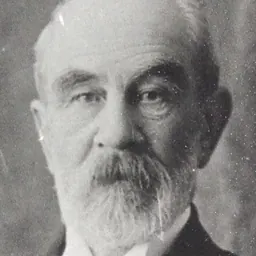

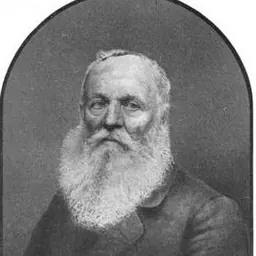

Related people
Same field, nearest in time
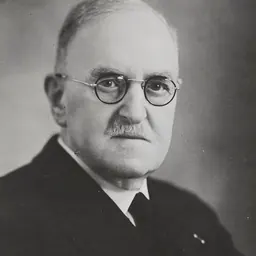
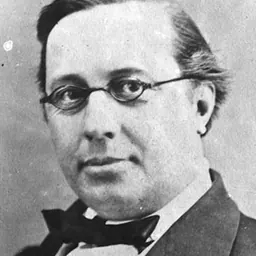

Contemporaries
People whose lives overlapped George Stead's
Frequently asked questions
Who was George Stead?
grain merchant, racehorse owner and breeder, businessman
When was George Stead born?
George Stead was born in 1841.
When did George Stead die?
George Stead died in 1908.
What was George Stead's occupation?
George Stead was a businessperson.
What nationality was George Stead?
George Stead was New Zealand.
Sources & further reading
Cite this page
APA: Biography.guide. (2026). George Stead. https://biography.guide/george-stead/
MLA: "George Stead." Biography.guide, https://biography.guide/george-stead/.
Chicago: "George Stead." Biography.guide. https://biography.guide/george-stead/.
Data last updated: 2026-09-20 · Spot an error? Report a correction.
Page generated 2026-09-27 05:28 UTC