
About George Seymour
Lived 1787 – 1870 (aged 82). George Seymour was a British naval officer.
Admiral of the Fleet Sir George Francis Seymour, (17 September 1787 – 20 January 1870) was a Royal Navy officer. After serving as a junior officer during the French Revolutionary Wars, Seymour commanded the third-rate under Admiral Sir John Duckworth at the Battle of San Domingo during the Napoleonic Wars. He also commanded the sloop at the blockade of Rochefort and the fifth-rate under Admiral Lord Gambier at the Battle of the Basque Roads. He then saw active service during the War of 1812.
Seymour became Third Naval Lord in the Second Peel ministry and went on to be Commander-in-Chief Pacific Station. In late 1844 the French Admiral Abel Aubert du Petit-Thouars entered into a confrontation with Queen Pōmare IV of Tahiti and with the English missionary and consul George Pritchard, expelling the consul and establishing a French protectorate over the territory during the Franco-Tahitian War. This matter became known as the "Pritchard Affair". Seymour handled this matter tactfully and avoided a confrontation with the French Government, which had already denounced Thouars' actions. Seymour later served as Commander-in-Chief North America and West Indies Station and then as Commander-in-Chief, Portsmouth.
Early career Seymour was the eldest son of Vice-Admiral Lord Hugh Seymour and Anna Horatia Waldegrave (a daughter of James Waldegrave, 2nd Earl Waldegrave) and joined the Royal Navy in October 1797. He was assigned to the Royal yacht HMY Princess Augusta and then transferred to the third-rate HMS Sans Pareil in the Channel Squadron in March 1798 and to the second-rate HMS Prince of Wales in the West Indies later that year. He was present when the Batavian Republic surrendered Suriname to British forces in August 1799 during the French Revolutionary Wars and, having been promoted to midshipman, transferred to the fifth-rate HMS Acasta early in 1800.
Promoted to commander on 23 January 1806, Seymour became commanding officer of the third-rate HMS Northumberland, flagship of the West Indies Squadron, in January 1806 and fought under Admiral Sir John Duckworth at the Battle of San Domingo where he was wounded off the southern coast of the French-occupied Spanish colony San Domingo in the Caribbean Sea in February 1806. He went on to be commanding officer of the fifth-rate HMS Manilla in September 1809. He became Serjeant-at-Arms to the House of Lords in 1818 and was given a short leave of absence to undertake a tour as commanding officer of the fifth-rate HMS Briton on "particular service" in 1827. and advanced to Knight Grand Cross of the Royal Guelphic Order on 9 December 1834.
Senior command
Seymour was appointed Third Naval Lord in the Second Peel ministry in September 1841. he became Commander-in-Chief Pacific Station, with his flag in the third-rate HMS Collingwood, in May 1844. Later that year the French Admiral Abel Aubert du Petit-Thouars entered into a confrontation with Queen Pōmare IV of Tahiti and with the English missionary and consul George Pritchard, expelling the consul and establishing a French protectorate over the territory in the Franco-Tahitian War. The expulsion of the consul became known as the "Pritchard Affair", a business which Seymour handled tactfully avoiding a confrontation with the French Government who had already denounced Thouars' actions. Tensions with United States were high as a result of the Oregon boundary dispute and Seymour avoided inflaming this situation in discussions over fisheries. Seymour became Commander-in-Chief North America and West Indies Station, with his flag in the third-rate HMS Cumberland, in January 1851. and became Commander-in-Chief, Portsmouth, with his flag in the first-rate HMS Victory in 1856. and advanced to Knight Grand Cross of the Order of the Bath on 18 May 1860, he was appointed Rear-Admiral of the United Kingdom on 16 May 1863 and Vice-Admiral of the United Kingdom on 23 September 1865. Promoted to Admiral of the Fleet on 20 November 1866, he died of bronchitis at his home at Eaton Square in London on 20 January 1870.
Family In March 1811 Seymour married Georgiana Mary Berkeley (a daughter of Sir George Berkeley) and they had three sons:
Don’t just read it —
keep it.
Full-length biographies made to live with: read them, listen on the way to work, watch them tonight.
- E-book
- Audio
- Video
Instant download · yours to keep · every purchase keeps this site free
Important facts
People in George Seymour's life
Named in this biography and alive at the same time
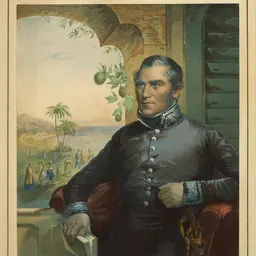



Related people
Same field, nearest in time
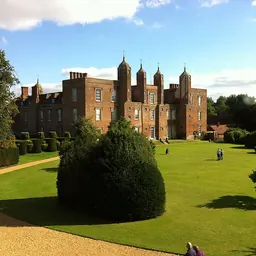




Contemporaries
People whose lives overlapped George Seymour's



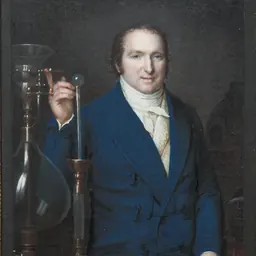
Frequently asked questions
Who was George Seymour?
Royal Navy admiral of the fleet (1787-1870)
When was George Seymour born?
George Seymour was born on 17 September 1787 in Berkeley.
When did George Seymour die?
George Seymour died on 20 January 1870 in Eaton Square.
What was George Seymour's occupation?
George Seymour was a naval officer.
What nationality was George Seymour?
George Seymour was British.
Sources & further reading
· DBpedia: George Seymour (Royal Navy officer)
Cite this page
APA: Biography.guide. (2026). George Seymour. https://biography.guide/george-seymour-naval-officer/
MLA: "George Seymour." Biography.guide, https://biography.guide/george-seymour-naval-officer/.
Chicago: "George Seymour." Biography.guide. https://biography.guide/george-seymour-naval-officer/.
Data last updated: 2026-09-26 · Spot an error? Report a correction.
Page generated 2026-09-27 05:13 UTC