
George Selwyn Marryat
British fisherman
About George Selwyn Marryat
Lived 1840 – 1896 (aged 55).
George Selwyn Marryat (20 June 1840 – 14 February 1896) was a country gentleman and British angler most noted for his relationship with F. M. Halford, Francis Francis and the development of dry-fly fishing on the chalk streams of southern England. Upon his death in 1896, he became known as the "Prince of Fly Fishers". George was the nephew of Royal Navy officer and novelist Frederick Marryat.
In 1854, Marryat's family moved to Mapperton Manor, Dorset. In Dorset, on the River Frome at Maiden Newton, young Marryat learned to fish with the wet fly. He attended Winchester College from 1854 to 1858. Upon leaving Winchester, George gained a commission as a cornet in the Carabiniers on 16 March 1858. In October 1858, his regiment was posted to Meerut, India, to help quell the Indian Rebellion of 1857. The regiment returned to England in January 1862, and George was promoted, by purchase, to lieutenant. He sold his commission and resigned from the Army in 1865.
Marryat married Lucy Dorothea Clinton in St George's, Hanover Square, London on 9 July 1872. They had four daughters: Mary Margaret, Dorothea Charlotte Edith, Joan O. Gladstone, and Alice Lucy. Alice died shortly before her first birthday. occurred when George Marryat first met a young Frederic M. Halford in Hammond's Fly Shop in Winchester on 28 April 1879. From that introduction came 16 years of collaboration with Halford on all aspects of dry-fly fishing the chalk streams of England.
Development of the floating fly Marryat wrote virtually nothing about the development the dry fly fishing at the time. However he fished for over a decade at the side of Frederick Halford and together they refined dry fly patterns into lighter, more realistic flies suitable for the equipment of the time. Marryat did share his patterns with Hammond's in London and they made their way into the stocks of commercial flies of the time. In his second book, Dry Fly Fishing: theory and practice (1889), Halford acknowledged his debt to Marryat's innovation and tutelage in the dedication.
Two dry flies of the time designed by and named for Marryat are the "Little Marryat" and "Marryat Quill". He is buried in the cloister garth of Salisbury Cathedral.
Shortly after Marryat's death, Major W. G. Turle, a close personal friend and noted angler (see Turle knot), wrote in the Fishing Gazette:
Don’t just read it —
keep it.
Full-length biographies made to live with: read them, listen on the way to work, watch them tonight.
- E-book
- Audio
- Video
Instant download · yours to keep · every purchase keeps this site free
Important facts
People in George Selwyn Marryat's life
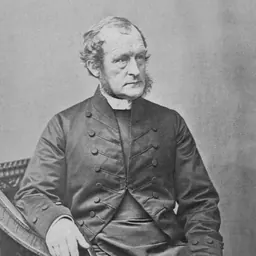
Named in this biography and alive at the same time

Contemporaries
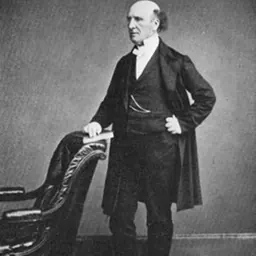
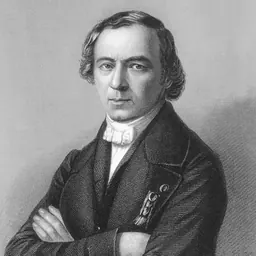
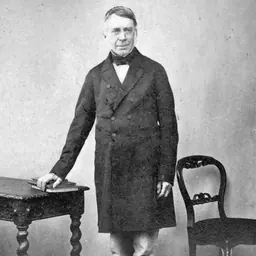
People whose lives overlapped George Selwyn Marryat's


Frequently asked questions
Who was George Selwyn Marryat?
British fisherman
When was George Selwyn Marryat born?
George Selwyn Marryat was born on 20 June 1840 in Chewton Glen.
When did George Selwyn Marryat die?
George Selwyn Marryat died on 14 February 1896.
What was George Selwyn Marryat known for?
George Selwyn Marryat was known for Fly fishing.
Sources & further reading
· Wikipedia: George Selwyn Marryat
· DBpedia: George Selwyn Marryat
Cite this page
APA: Biography.guide. (2026). George Selwyn Marryat. https://biography.guide/george-selwyn-marryat/
MLA: "George Selwyn Marryat." Biography.guide, https://biography.guide/george-selwyn-marryat/.
Chicago: "George Selwyn Marryat." Biography.guide. https://biography.guide/george-selwyn-marryat/.
Data last updated: 2026-09-20 · Spot an error? Report a correction.
Page generated 2026-09-27 04:57 UTC