
About George S. Schairer
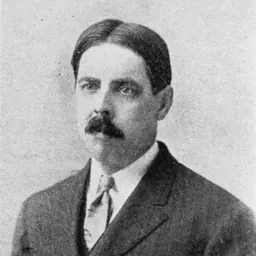
Lived 1913 – 2004 (aged 91). George S. Schairer was an American military flight engineer and engineer.
George S. Schairer (May 19, 1913 – October 28, 2004) was an aerodynamicist at Consolidated Aircraft and Boeing whose design innovations became standard on virtually all types of military and passenger jet planes. His father, Dr. Otto Schairer, was one of the founders of KDKA, the first commercial broadcasting station in the U.S., and also a pioneer in electronic television. He received a bachelor's degree in engineering from Swarthmore in 1934 and a master's degree in engineering from the Massachusetts Institute of Technology in 1935. At Consolidated Aircraft, he also gained extensive experience in the design of controls for aircraft.
Career at Boeing In 1939, Edmund T. "Eddie" Allen—the test pilot who led Boeing's Research Division—hired Schairer to be chief of the company's aerodynamics unit, replacing Ralph Cram, who had been killed in the March 18 crash of the prototypeBoeing 307 Stratoliner. Schairer helped redesign the plane's vertical tail, then to test the aircraft, which would become the first pressurized airliner to enter service. He also was involved in the development of the Boeing B-17 Flying Fortress—in particular, the replacement of spring tabs with aerodynamically balanced control surfaces on the B-17E.
Boeing adoption of swept wings In Germany after World War II, Schairer was part of a team that collected documents, designs and wind tunnel data on swept-wings up to Mach 1.2. Impressed by the research, he informed Boeing to halt work on the XB-47 Stratojet and to modify it with a 35° sweep; it won the medium bomber competition and over 2,000 were built. He also conceptualised the B-47 podded engines.
On May 10, he wrote a seven-page letter to Boeing colleague Bob Withington that included a drawing of the swept wing and, in cramped handwriting, presented the key mathematical formulas. To avoid delay, Schairer wrote "Censored" on the envelope and mailed it, he led the effort to overhaul the B47 design upon returning from Germany. The engineers led by Theodore von Kármán were searching through technical data at captured German research centers in 1945, Schairer found test results at the Völkenrode research center.
Birth of the B-52 On Thursday, October 21, 1948, Schairer and Boeing engineers Art Carlsen and Vaughn Blumenthal presented the design of a four-engine turboprop bomber to the Air Force chief of bomber development, Col. Pete Warden. Warden, looked over the turboprop data and was clearly disappointed. He asked if the Boeing team could come up with an updated proposal for a four-engine turbojet bomber. Joined by Ed Wells, Boeing vice president of Engineering, the engineers worked that night in the Hotel Van Cleve and redesigned Boeing's proposal to be a four-engine turbojet bomber. On Friday, Col. Warden carefully looked over the new charts and graphs and asked for a better design. Returning to the Hotel Van Cleve, the Boeing team was joined by Bob Withington and Maynard Pennell, two top Boeing engineers who just happened to be in town on other business.
By late Friday night, they had laid out what was essentially a new airplane. The new design featured a wing that was swept back at 35 degrees with a 185-foot span. More significantly, it featured eight jet engines. After a Saturday morning trip to a local hobby shop for balsa wood, glue, carving tools and silver paint, Schairer set to work building a model. The rest of the team focused on weight and performance data. Wells, who was also a skilled artist, completed the aircraft drawings. On Sunday, a stenographer was hired to type a clean copy of the proposal. On Monday, Schairer presented Col. Warden with a neatly bound 33-page proposal and a beautiful 14-inch scale model on a stand. The result was a contract to build what became the Boeing B-52 Stratofortress.
After the US Air Force in November 1950 asked Boeing to look at tanker/transport aircraft that would be a significant improvement over the Boeing KC-97 Stratofreighter, design studies were begun. This design eventually evolved into the Boeing 367-80, which Schairer was heard to observe was not different than design he, Ed Wells and John Alexander had sketched in October 1949.
Later career As Assistant Chief Engineer, Schairer led Boeing's design efforts for what was then called "Weapon System 110A", a supersonic bomber for the US Air Force. In the end, North American Aviation won the contract to build what was named the North American XB-70 Valkyrie. Boeing 737 and Boeing 747.
From 1959 to 1973, as vice president for research and development at Boeing, Schairer oversaw Boeing's technical staff, including the engineers who conducted structural analyses and tested a plane's flight controls, hydraulics and electrical systems. He retired from Boeing in 1978.
Don’t just read it —
keep it.
Full-length biographies made to live with: read them, listen on the way to work, watch them tonight.
- E-book
- Audio
- Video
Instant download · yours to keep · every purchase keeps this site free
Important facts
People in George S. Schairer's life
Named in this biography and alive at the same time



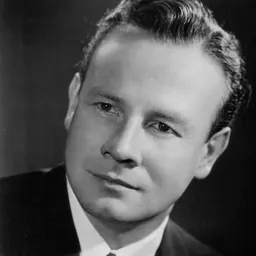

Related people
Same field, nearest in time

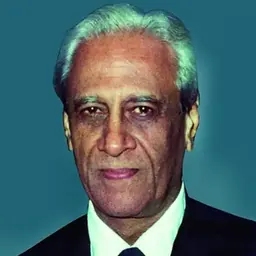
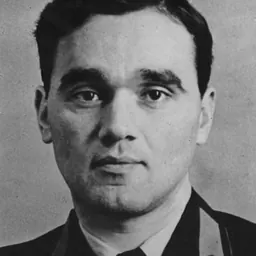

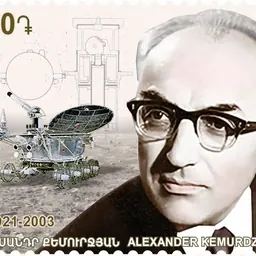
Contemporaries
People whose lives overlapped George S. Schairer's




Frequently asked questions
Who was George S. Schairer?
American aerospace engineer (1913-2004)
When was George S. Schairer born?
George S. Schairer was born on 19 May 1913 in Wilkinsburg.
When did George S. Schairer die?
George S. Schairer died on 28 October 2004 in Kirkland.
What was George S. Schairer's occupation?
George S. Schairer was a military flight engineer and engineer.
What nationality was George S. Schairer?
George S. Schairer was American.
Sources & further reading
· Wikipedia: George S. Schairer
Cite this page
APA: Biography.guide. (2026). George S. Schairer. https://biography.guide/george-s-schairer/
MLA: "George S. Schairer." Biography.guide, https://biography.guide/george-s-schairer/.
Chicago: "George S. Schairer." Biography.guide. https://biography.guide/george-s-schairer/.
Data last updated: 2026-09-22 · Spot an error? Report a correction.
Page generated 2026-09-27 05:17 UTC