
About George S. Messersmith
Lived 1883 – 1960 (aged 76). George S. Messersmith was an American diplomat, consul general and civil servant.
George Strausser Messersmith (October 3, 1883 – January 29, 1960) was a United States ambassador to Austria, Cuba, Mexico, and Argentina. Messersmith also served as head of the consulate in Germany from 1930 to 1934, during the rise of the Nazi Party.
He was best known in his day for his controversial decision to issue a visa to Albert Einstein to travel to the United States. He is also known today for his diplomatic handling of Edward VIII and Wallis Simpson, later Duke and Duchess of Windsor, in the era before World War II.
Education and early career Messersmith, a graduate of Keystone State Normal School, and left his position as vice president of the Delaware State Board of Education to become US consul in Fort Erie, Ontario.
After serving as a US consul at Curacao (1916–1919) and Antwerp (1919–1925), he became US Consul General for Belgium and Luxembourg in 1925. He served as US Consul General in Buenos Aires, Argentina, from 1928 to 1930. There, he became responsible for administering the annual quota of Germans permitted to migrate to the United States.
While he did not personally interview Albert Einstein, Messersmith cleared the way for the scientist to leave Germany. He called Einstein himself to tell him that his visa would be ready.
Minister to Austria His service in Germany ended in February 1934, when President Franklin Roosevelt nominated him to be US Ambassador to Uruguay, only to renominate him the next month as Minister to Austria before his service in Uruguay could begin.
On January 17, 1935, Edward Albert (later Edward VIII), the Prince of Wales, was visiting Vienna on vacation with his new mistress, Wallis Simpson. While Simpson went shopping, Edward met with President Wilhelm Miklas and Chancellor Kurt Schuschnigg of Austria. Messersmith had spies at the meeting who reported to the State Department through him on the meeting's goal: solidifying the Balkan Pact.
Messersmith "deplored the American Olympic Committee's decision to go to Berlin," for the 1936 Summer Olympics.
When Edward VIII abdicated in December 1936, he visited Messersmith, who spied on him, in Vienna and made "what amounted to a detailed watching brief on the duke." They became friends, even attending Christmas Day services together later that month. That month, Edward confided in him that the Earl of Harewood, his brother-in-law, had treated him "shabbily."
In return, Messersmith accidentally leaked through them that the Americans knew that Nazi Germany and Fascist Italy had secret connections as early as that month.
Diplomatic Career in Latin America 1940-1947 At his several posts in Latin America, Messersmith was a staunch supporter of Roosevelt's "Good Neighbor Policy," balancing a Pan-American diplomatic approach with the need to respect the individual needs and dignity of the countries he was working with.
In March 1940, he replaced J. Butler Wright as United States Ambassador to Cuba, a position he would hold until February 1942. In February 1942, he replaced Josephus Daniels as United States Ambassador to Mexico, serving both the Roosevelt administration and the Truman administration. In April/May 1946, Messersmith left Walter C. Thurston in charge of Mexico and replaced Spruille Braden as United States Ambassador to Argentina, a posoition he would hold until June 1947.
Cuba
While Messersmith served as United States Ambassador Extraordinary and Plenipotentiary to Cuba, he wrote a report on March 4, 1941, about the Windsors' friend, James D. Mooney, and was critical of the General Motors executive's opinions against England. He considered that Mooney was "dangerous... for the Duke and Duchess of Windsor to be associated with." Messersmith "no longer adhered to his moderate view of the duke and duchess.". but Roosevelt instead selected future Secretary of State Edward Stettinius, Jr.
Argentina In Argentina, Messersmith replaced Spruille Braden who had left the previous September to become Assistant Secretary of State for Latin American affairs. His focus was to abolish Nazi influence in the country and to work towards defense agreements with Argentina.
Retirement
In 1945, Spruille Braden served as Assistant Secretary of State for Western Hemisphere Affairs under Harry Truman. He clashed with Messersmith former ambassador to Mexico, with whom he had many disagreements about foreign policy in Latin America. The disagreement with Braden would eventually force Messersmith out of the foreign service. (Beginning in 1948, Braden was a paid lobbyist for the United Fruit Company. When the company's interests were threatened in Guatemala by President Jacobo Arbenz Guzmán, Braden helped to conceive and execute the 1954 coup d'état that overthrew him. )
Messersmith left his post in Argentina in 1947 and retired from the Foreign Service. His administrative abilities having been recognized, he was offered the position of Chairman of the Board of Mexican Light and Power Company, and served successfully in that capacity until his retirement from the Company in 1955. He died in Mexico in 1960.
Legacy
Messersmith's collection of papers has been digitized and made available to researchers by the University of Delaware. The digitization project was made possible through a grant from the National Historical Publications and Records Commission (NHPRC).
Don’t just read it —
keep it.
Full-length biographies made to live with: read them, listen on the way to work, watch them tonight.
- E-book
- Audio
- Video
Instant download · yours to keep · every purchase keeps this site free
Important facts
People in George S. Messersmith's life
Named in this biography and alive at the same time
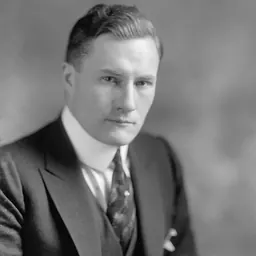

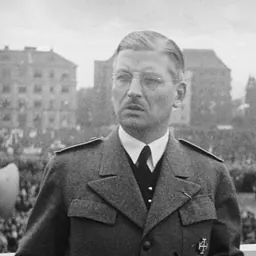
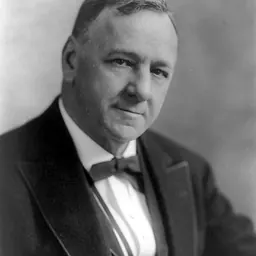



Related people
Same field, nearest in time
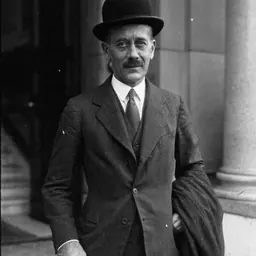

Contemporaries
People whose lives overlapped George S. Messersmith's


Frequently asked questions
Who was George S. Messersmith?
American diplomat (1883-1960)
When was George S. Messersmith born?
George S. Messersmith was born on 3 October 1883 in Fleetwood.
When did George S. Messersmith die?
George S. Messersmith died on 29 January 1960 in Dallas.
What was George S. Messersmith's occupation?
George S. Messersmith was a diplomat, consul general and civil servant.
What nationality was George S. Messersmith?
George S. Messersmith was American.
Sources & further reading
· Wikipedia: George S. Messersmith
· DBpedia: George S. Messersmith
Cite this page
APA: Biography.guide. (2026). George S. Messersmith. https://biography.guide/george-s-messersmith/
MLA: "George S. Messersmith." Biography.guide, https://biography.guide/george-s-messersmith/.
Chicago: "George S. Messersmith." Biography.guide. https://biography.guide/george-s-messersmith/.
Data last updated: 2026-09-24 · Spot an error? Report a correction.
Page generated 2026-09-27 05:05 UTC