
About George S. Kaufman
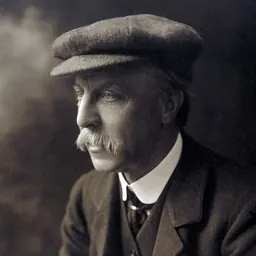
Lived 1889 – 1961 (aged 71). George S. Kaufman was an American theatre director, screenwriter, journalist, playwright, bridge player and writer.
George Simon Kaufman (November 16, 1889 – June 2, 1961) was an American playwright, theater director and producer, humorist, and drama critic. In addition to comedies and political satire, he wrote several musicals for the Marx Brothers and others. He won the Pulitzer Prize for Drama for the musical Of Thee I Sing (with Morrie Ryskind and Ira Gershwin) in 1932, and won again in 1937 for the play You Can't Take It with You (with Moss Hart). He also won the Tony Award for Best Direction of a Musical in 1951 for Guys and Dolls.
Early years George S. Kaufman was born to Joseph S. Kaufman, a hatband manufacturer, and Nettie Meyers in Pittsburgh, Pennsylvania. He had a younger sister, Ruth. selling silk
Theater
Kaufman's Broadway debut was September 4, 1918, at the Knickerbocker Theatre, with the premiere of the melodrama Someone in the House. The play opened on Broadway (running for only 32 performances) during that year's serious flu epidemic, when people were being advised to avoid crowds. With "dour glee", Kaufman suggested that the best way to avoid crowds in New York City was to attend his play.
Every Broadway season from 1921 through 1958 had a play written or directed by Kaufman. Since Kaufman's death in 1961, Kaufman wrote only one play alone, The Butter and Egg Man in 1925. With Marc Connelly, he wrote Merton of the Movies, Dulcy, and Beggar on Horseback; with Ring Lardner, he wrote June Moon; with Edna Ferber, he wrote The Royal Family, Dinner at Eight, and Stage Door; with John P. Marquand, he wrote a stage adaptation of Marquand's novel The Late George Apley; and with Howard Teichmann, he wrote The Solid Gold Cadillac. According to his biography on PBS, "he wrote some of the American theater's most enduring comedies" with Moss Hart. Their work includes Once in a Lifetime (in which he also performed), Merrily We Roll Along, The Man Who Came to Dinner, and You Can't Take It with You, which won the Pulitzer Prize in 1937.
For a period, Kaufman lived at 158 West 58th Street in New York City. The building later was the setting for Stage Door. It is now the Park Savoy Hotel, and for many years was considered a single room occupancy hotel.
Musical theater Despite his claim that he knew nothing about music and hated it in the theater, Kaufman collaborated on many musical theater projects. His most successful of such efforts include two Broadway shows crafted for the Marx Brothers, The Cocoanuts, written with Irving Berlin, and Animal Crackers, written with Morrie Ryskind, Bert Kalmar, and Harry Ruby. According to Charlotte Chandler, "By the time Animal Crackers opened ... the Marx Brothers were becoming famous enough to interest Hollywood. Paramount signed them to a contract". Kaufman was one of the writers who excelled in writing intelligent nonsense for Groucho Marx, a process that was collaborative, given Groucho's skills at expanding upon the scripted material. Though the Marx Brothers were notoriously critical of their writers, Groucho and Harpo Marx expressed admiration and gratitude towards Kaufman. Dick Cavett, introducing Groucho onstage at Carnegie Hall in 1972, told the audience that Groucho considered Kaufman to be "his god".
While The Cocoanuts was being developed in Atlantic City, Irving Berlin was hugely enthusiastic about including the song "Always", which he had written as a wedding present for his bride. (1=Both Kaufman and Marx describe the song as having been written expressly for the show, but it had been registered with the Music Publishers' Protective Association in May 1925, before Berlin started working on The Cocoanuts.) "Always" was eventually restored to the score in a 1996 revival. The Cocoanuts would remain Irving Berlin's only Broadway musical – until his last one, Mr. President – that did not include at least one eventual hit song.
Kaufman recalled the matter differently. In an article in Stage magazine, he recalled that Berlin woke him up at 5 am one morning to play a new song he had just written. "Even my deficient musical sense recognized that here was a song that was going to be popular. I listened to it two or three times, then took a stab at it myself, and as dawn came up over the Atlantic, Irving and I were happily singing 'Always' together—its first performance on any stage. I went back to bed a happy man, and stayed happy until rehearsals started, when it turned out that 'Always' had not been written for our show at all, but purely for Irving's music-publishing house. In its place in The Cocoanuts was a song called 'A Little Bungalow,' which we never could reprise in Act Two because the actors couldn't remember it that long."
Humor derived from political situations was of particular interest to Kaufman. He collaborated on the hit musical Of Thee I Sing, which won the 1932 Pulitzer Prize, the first musical so honored, The musical Sherry! (1967) was based on his play The Man Who Came to Dinner.
Directing and producing
Kaufman directed the original or revival stage productions of many plays and musicals, including The Front Page by Charles MacArthur and Ben Hecht (1928), Of Thee I Sing (1931 and 1952), Of Mice and Men by John Steinbeck (1937), My Sister Eileen by Joseph Fields and Jerome Chodorov (1940), Hollywood Pinafore (1945), The Next Half Hour (1945), Park Avenue (1946, also co-wrote the book), Town House (1948), Bravo! (1948, also co-wrote the script), Metropole (1949), the Frank Loesser musical Guys and Dolls, for which he won the 1951 Best Director Tony Award, The Enchanted (1950), The Small Hours (1951, also co-wrote the script), Fancy Meeting You Again (1952, also co-wrote the script), The Solid Gold Cadillac (1953, also co-wrote the script), and Romanoff and Juliet by Peter Ustinov (1957).
Film and television Many of Kaufman's plays were adapted into Hollywood and British films. Among the more well-received were Dinner At Eight, Stage Door (almost completely rewritten by others for the film version) and You Can't Take It with You (changed significantly by others for the film version), which won the Best Picture Oscar in 1938, and The Dark Tower. He also occasionally wrote directly for the movies, most significantly the screenplay for A Night at the Opera for the Marx Brothers. His only credit as a film director was The Senator Was Indiscreet (1947) starring William Powell.
From 1949 until midway through the 1952–1953 season, he appeared as a panelist on the CBS television series This Is Show Business. Kaufman made a remark about the excessive airing of "Silent Night" during the Christmas season, "Let's make this one program", he said, "on which no one sings 'Silent Night'." The resulting public outcry prompted his dismissal by CBS. In response, Fred Allen said, "There were only two wits on television: Groucho Marx and George S. Kaufman. Without Kaufman, television has reverted to being half-witted." It would be more than a year before Kaufman appeared on TV again. Kaufman was notoriously impatient with poor players. One such partner asked permission to use the men's room, according to legend, and Kaufman replied: "Gladly. For the first time today I'll know what you have in your hand." On sitting South: (1) "No matter who writes the books or articles, South holds the most terrific cards I ever saw. There is a lucky fellow if ever I saw one." (2) Oswald Jacoby reported a deal that Kaufman played marvelously in 1952, after which he cracked, "I'd rather sit South than be the President."
His first wife Beatrice Bakrow Kaufman was also an avid bridge player, and an occasional poker player with Algonquin men, who wrote at least one New Yorker article on bridge herself, in 1928.
Personal life
In the 1920s, Kaufman was a member of the Algonquin Round Table, a circle of writers and show business people. From the 1920s through the 1950s, Kaufman was as well known for his personality as he was for his writing. In the Moss Hart autobiography Act One, Hart portrayed Kaufman as a morose and intimidating figure, uncomfortable with any expressions of affection between human beings—in life or on the page. Hart writes that Max Siegel said: "Maybe I should have warned you. Mr Kaufman hates any kind of sentimentality—can't stand it!" This perspective, along with a number of taciturn observations made by Kaufman himself, led to a simplistic but commonly held belief that Hart was the emotional soul of the creative team while Kaufman was a misanthropic writer of punchlines. Kaufman preferred never to leave Manhattan. He once said: "I never want to go any place where I can't get back to Broadway and 44th by midnight."
Kaufman was married to his first wife Beatrice from 1917 until her death in 1945. They had one daughter, Anne Kaufman (Booth).
Known as "Public Lover Number One," Kaufman had affairs with several prominent Broadway actresses. In 1936, he found himself in the center of a notorious scandal when, in the midst of a child custody suit, the former husband of screen actress Mary Astor threatened to publish her diary which contained extremely explicit details of sexual encounters between Kaufman and the actress. Some of the sexually explicit portions of Mary Astor's writing about Kaufman were reprinted in New York magazine in 2012 and Vanity Fair magazine in 2016. Kaufman had an affair with actress Natalie Schafer during the 1940s.
Kaufman joined the theater club The Lambs in 1944.
On May 26, 1949, four years after Beatrice's death, he married actress Leueen MacGrath, with whom he collaborated on a number of plays before their divorce in August 1957. Kaufman died in New York City on June 2, 1961, at the age of 71. His granddaughter, Beatrice Colen, was an actress who had recurring appearances on both Happy Days and Wonder Woman.
In 1979, Donald Oliver compiled and edited a collection of Kaufman's humorous pieces, with a foreword by Dick Cavett.
Portrayals Kaufman was portrayed by the actor David Thornton in the 1994 film Mrs. Parker and the Vicious Circle and by Jason Robards in the 1963 film Act One. In the 2014 Broadway adaptation of the latter by James Lapine, he was played by Tony Shalhoub.
The title character of the 1991 Coen brothers film Barton Fink, who is a playwright, bears a strong physical resemblance to Kaufman.
Kaufman is portrayed in the film Mank by actor Adam Shapiro.
Legacy Kaufman has influenced many writers worldwide, including Billy Wilder, Preston Sturges, Neil Simon, Tom Stoppard, Mel Brooks, Woody Allen, Aaron Sorkin, Larry David and Swedish author and playwright Vladimir Oravsky.
Awards Awarding institution Award title Year Production Results Notes Pulitzer Prize Pulitzer Prize for Drama 1932 Of Thee I Sing Won award in collaboration of Morris Ryskind, Ira Gershwin Pulitzer Prize Pulitzer Prize for Drama 1937 You Can't Take It With You Award won in collaboration with Moss Hart Tony Awards Tony Award for Best Direction of a Musical 1951 Guys and Dolls
Don’t just read it —
keep it.
Full-length biographies made to live with: read them, listen on the way to work, watch them tonight.
- E-book
- Audio
- Video
Instant download · yours to keep · every purchase keeps this site free
Important facts
Family & relationships
People in George S. Kaufman's life
Named in this biography and alive at the same time




Related people
Same field, nearest in time


Contemporaries
People whose lives overlapped George S. Kaufman's


Frequently asked questions
Who was George S. Kaufman?
American writer (1889-1961)
When was George S. Kaufman born?
George S. Kaufman was born on 16 November 1889 in Pittsburgh.
When did George S. Kaufman die?
George S. Kaufman died on 2 June 1961 in New York City.
What was George S. Kaufman's occupation?
George S. Kaufman was a theatre director, screenwriter, journalist, playwright, bridge player and writer.
What nationality was George S. Kaufman?
George S. Kaufman was American.
Sources & further reading
· Wikipedia: George S. Kaufman
Cite this page
APA: Biography.guide. (2026). George S. Kaufman. https://biography.guide/george-s-kaufman/
MLA: "George S. Kaufman." Biography.guide, https://biography.guide/george-s-kaufman/.
Chicago: "George S. Kaufman." Biography.guide. https://biography.guide/george-s-kaufman/.
Data last updated: 2026-09-20 · Spot an error? Report a correction.
Page generated 2026-09-27 05:31 UTC