
About George Russell Shaw
Lived 1848 – 1937 (aged 88). George Russell Shaw was an American architect and botanist.
The former Calumet and Hecla Mining Company library in Calumet, Michigan, completed in 1898.
George R. Shaw (1848–1937) was an American architect in practice in Boston from 1874 to 1902. In retirement, he was noted as a botanist.
Life and career George Russell Shaw was born October 28, 1848, in Parkman, Maine to Samuel Parkman Shaw, an attorney, and Hannah (Buck) Shaw. He was raised in Waterville and Portland before the family moved to Cambridge, Massachusetts in 1863. He graduated from Harvard University as a member of the class of 1869, and in 1870, traveled to Europe, where for six months he studied art at the National Art Training School in London. In 1871, Shaw and his younger brother, Robert G. Shaw (1850–1931), were both admitted to the Polytechnische Schule München in Munich, but ill health obliged him to withdraw in March 1872. He regained his health after several months of travel, and in November, resumed the study of architecture in Paris. In spring of 1874, he passed the examinations of the École des Beaux-Arts, but returned to the United States in October, soon after his marriage. They practiced together under the name of G. R. & R. G. Shaw until 1882, when Robert G. Shaw retired to manage several Boston-area estates and trusts. Effective January 1, 1883, Shaw formed a new partnership with Henry S. Hunnewell (1851–1931), who had been in the office since he returned from his own European education in 1881. Hunnewell was the brother-in-law of Robert G. Shaw and the son of H. H. Hunnewell, the firm's most important client. The firm of Shaw & Hunnewell was active until the retirement of both architects in 1902.
Shaw was made a Fellow of the Boston Society of Architects in 1875, and shortly thereafter became a member of the American Institute of Architects. He, like all AIA members, became a Fellow in 1889 when the AIA merged with the Western Association of Architects. In 1902, after his retirement, he was elected a corresponding member of the AIA.
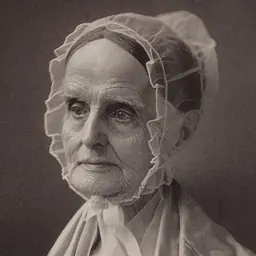
Personal life Shaw was married in 1874 to Emily Mott, a granddaughter of Lucretia Mott, in Paris. Like his father, T. Mott Shaw became a noted architect and in 1923 was cofounder of the architectural firm now known as Perry Dean Rogers Architects.
In 1910, Shaw moved to Concord to be closer to his children. In retirement, he studied botany, with a particular interest in plants of the genus Pinus. He traveled extensively in his research, and published several papers and books on the subject. He died January 15, 1937, at home in Concord.
From 1884 until his death, Shaw was a member of the Society of the Cincinnati, succeeding his uncle, Francis G. Shaw, in representing their ancestor, Samuel Shaw. University Museum extensions, Harvard University, Cambridge, Massachusetts (1880 and 1900, NRHP 1986) Samuel L. Powers house, 96 Arlington St, Newton, Massachusetts (1881) Welles Building, 18 Broadway, New York City (1881–83, demolished) Wellesley Town Hall and Wellesley Free Library, 525 Washington St, Wellesley, Massachusetts (1881–83 and 1883–85, NRHP 1976) Watertown Free Public Library, 123 Main St, Watertown, Massachusetts (1882–84) Jefferson Laboratory, Harvard University, Cambridge, Massachusetts (1883–84) Charles Head house, 412 Beacon St, Boston (1887) Bowditch House, McLean Hospital, Belmont, Massachusetts (1894–95) Free Hospital for Women (former), 60 Glen Rd, Brookline, Massachusetts (1894–95 and 1896) The Pines, 828 Washington St, Wellesley, Massachusetts (1894) Wyman House, McLean Hospital, Belmont, Massachusetts (1894–95) Center Building, McLean Hospital, Belmont, Massachusetts (1895–97) Calumet and Hecla Mining Company library, 25947 Red Jacket Rd, Calumet, Michigan (1898) Boston Medical Library, 8 Fenway, Boston (1900–01) Pierce Hall, Harvard University, Cambridge, Massachusetts (1900–01)
Published works George R. Shaw, The Pines of Mexico (Boston: Arnold Arboretum, 1909) George R. Shaw, The Genus Pinus (Boston: Arnold Arboretum, 1914) George R. Shaw, Knots: Useful and Ornamental (New York: Bonanza Books, 1924)
Don’t just read it —
keep it.
Full-length biographies made to live with: read them, listen on the way to work, watch them tonight.
- E-book
- Audio
- Video
Instant download · yours to keep · every purchase keeps this site free
Important facts
People in George Russell Shaw's life
Named in this biography and alive at the same time


Related people
Same field, nearest in time


Contemporaries
People whose lives overlapped George Russell Shaw's



Frequently asked questions
Who was George Russell Shaw?
American botanist and architect, active in Massachusetts (1848–1937)
When was George Russell Shaw born?
George Russell Shaw was born on 28 October 1848 in Parkman.
When did George Russell Shaw die?
George Russell Shaw died on 15 January 1937 in Concord.
What was George Russell Shaw's occupation?
George Russell Shaw was an architect and botanist.
What nationality was George Russell Shaw?
George Russell Shaw was American.
Sources & further reading
· Wikipedia: George Russell Shaw
Cite this page
APA: Biography.guide. (2026). George Russell Shaw. https://biography.guide/george-russell-shaw/
MLA: "George Russell Shaw." Biography.guide, https://biography.guide/george-russell-shaw/.
Chicago: "George Russell Shaw." Biography.guide. https://biography.guide/george-russell-shaw/.
Data last updated: 2026-09-20 · Spot an error? Report a correction.
Page generated 2026-09-27 05:19 UTC