
About George Rennie
Lived 1802 – 1860 (aged 57–58). George Rennie was a British politician and sculptor.
George Rennie (23 April 1801 – 22 March 1860) was a Scottish sculptor, Member of Parliament (MP) for Ipswich, and Governor of the Falkland Islands between 1847 and 1855.
Family George Rennie was born on 23 April 1801 in Phantassie, East Lothian, Scotland, to the agriculturist George Rennie and Marion Rennie. He was a nephew of the engineer John Rennie.
Rennie's sons included: Richard Rennie, Chief Justice of the British Supreme Court for China and Japan; and William Hepburn Rennie, Auditor-General of Hong Kong and Lieutenant-Governor of Saint Vincent and the Grenadines.
Arts He studied sculpture in Rome before he returned to Britain to exhibit statues and busts at the Royal Academy, and three times at the Suffolk Street Gallery, from 1828 to 1837. His most important works at the academy were: A Gleaner and Grecian Archer (both 1828); Cupid and Hymen (which depicts Cupid blowing the torch of Hymen) which is now in the Victoria and Albert Museum; and busts of Bertel Thorvaldsen and his uncle John Rennie (1831). His 1833 works included: The Archer (which he afterwards presented to the Athenaeum Club, London); and a bust of the artist David Wilkie.
Rennie's 1836 suggestion, to Sir William Ewart, that he form a Parliamentary Committee for the Arts provoked the creation of design schools at Somerset House. He assisted Joseph Hume's campaign to create freedom of access to all monuments and works of art that were in public either buildings or museums.
Political Career Rennie from 1841 to 1842 was Liberal Member of Parliament (MP) for Ipswich. His election was voided in May 1842, and he withdrew from the 1847 general election to enable the election of Hugh Adair.
He in 1842 proposed the creation of a 'New Edinburgh' in New Zealand, the development of which is now called Dunedin.
Rennie on 15 December 1847 was invested as Governor of the Falkland Islands, as which he served until he returned to England in 1855. He died in London on 22 March 1860.
Don’t just read it —
keep it.
Full-length biographies made to live with: read them, listen on the way to work, watch them tonight.
- E-book
- Audio
- Video
Instant download · yours to keep · every purchase keeps this site free
Important facts
People in George Rennie's life
Named in this biography and alive at the same time


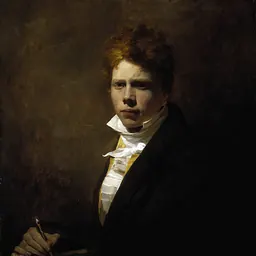



Related people
Same field, nearest in time
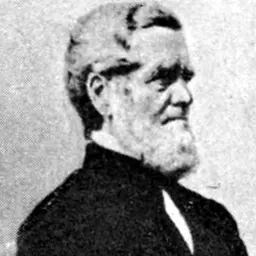

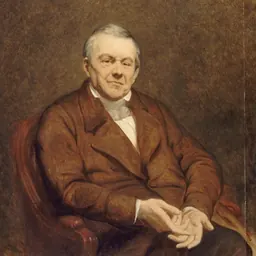


Contemporaries
People whose lives overlapped George Rennie's






Frequently asked questions
Who was George Rennie?
Scottish sculptor and politician (1802-1860)
When was George Rennie born?
George Rennie was born in 1802 in East Lothian.
When did George Rennie die?
George Rennie died on 22 March 1860 in London.
What was George Rennie's occupation?
George Rennie was a politician and sculptor.
What nationality was George Rennie?
George Rennie was British.
Sources & further reading
· DBpedia: George Rennie (sculptor)
Cite this page
APA: Biography.guide. (2026). George Rennie. https://biography.guide/george-rennie/
MLA: "George Rennie." Biography.guide, https://biography.guide/george-rennie/.
Chicago: "George Rennie." Biography.guide. https://biography.guide/george-rennie/.
Data last updated: 2026-09-20 · Spot an error? Report a correction.
Page generated 2026-09-27 05:27 UTC