
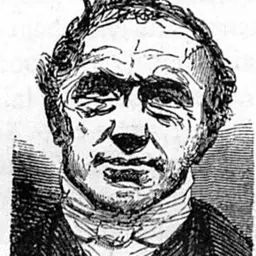
George Rainy
Scottish merchant, slave owner and landowner
About George Rainy
Lived 1790 – 1863 (aged 72–73). George Rainy was a British merchant, plantation owner and large estate owner.
George Rainy (6 June 1790 – 9 June 1863) was a Scottish merchant, slave owner and land owner.
In the early 1800s, Rainy became involved in sugar plantations in the Caribbean which were worked by African slaves in Demerara in Guiana. Due to extensive family connections he eventually became a full partner in Sandbach, Tinne & Company, a Scottish-run company which dealt in trade in the same field and was prominent in British Guiana, to the extent that the men who ran it were called the "Rothschilds of Demerara" on account of their wealth and influence.
After the abolition of the Atlantic slave trade in the British Empire in the 1830s, Rainy became involved in the Highland Clearances. Using monies from the payout to former slave-owners following the Slavery Abolition Act 1833, he purchased the islands of Raasay, Rona and Fladda from Clan MacLeod in 1846: he removed from the land twelve townships of ninety-four Gaelic Highlander families to make way for sheep farming, causing mass depopulation and displacement on the islands.
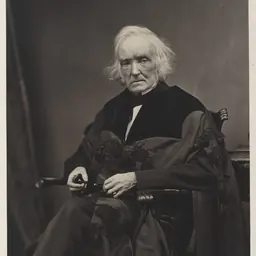
Harry Rainy, the noted pathologist and Professor of Forensic Medicine at the University of Glasgow was another brother, making George Rainy the uncle of Robert Rainy a Scottish Presbyterian divine for whom Rainy Hall in New College, Edinburgh is named.
Plantations in Guiana George Rainy followed his brother, Gilbert Rainy, into the sugar trade in Guiana. He became associated with the Scottish-dominated, Liverpool-based company Sandbach, Tinne & Company. This company had been founded in 1790 when his uncle George Robertson, who had been trading in Grenada and his future brother-in-law Charles Parker joined with Samuel Sandbach and the Demerara merchant James McInroy (1759–1825) to create what was originally known as McInroy, Sandbach & Company. This business had been described as the "Rothschilds of Demerara" in the 1820s.
According to the journal of J.C. Cheveley, who visited in 1821, the estates in Demerara containing the slave-worked sugar plantations, were heavily mortgaged to Sandbach, Tinne & Company. He stated that many estates which were mortgaged out had to rely on the company for shipping out sugar on ships owned by them, through their agents in Guiana and Britain.
Some Scottish newspapers, including, The Sunday Post have claimed that Rainy received the largest payout of all the slave owners. The largest plantations which Rainy owned in Guiana were Leonora, Zeelandia, La Jalousie & Fellowship, among others.
Highland Clearances As the Atlantic slave trade and the triangular trade associated with it was brought to an end, Rainy returned to Britain. In 1846, George Rainy bought the islands of Raasay, Rona and Fladda, a group of islands in the Gàidhealtachd, between the Isle of Skye and the mainland of Scotland. The island had been ruled by Clan Macleod of Raasay for several centuries but had declined in the aftermath of their clan rallying to the standard of Charles Edward Stuart in the Jacobite rising of 1745. The last laird, John Macleod, was deep in debt and chose to emigrate to Tasmania having sold Raasay for 35,000 guineas to Rainy. During this period, with the decline of traditional culture in the Scottish Highlands, many land speculators and landlords moved in to "improve" the estate; the main purpose of this was to clear the native Highland Gaels from the lands, either to urban centres in Great Britain or abroad to North America and Australasia, to make way for sheep farming. This was known as the Highland Clearances. When Rainy came to control Raasay, he set about implementing this process on the island and has been described as "a cruel landlord who epitomised the horror of the Clearances." There had been a steady drip of emigration from the island in the previous two decades, but when Rainy came to control the islands, this went into overdrive.
Donald MacLeod (born 1805), a crofter from Torran, Raasay provided testimony to the Napier Commission on 22 May 1883 in regards to abuses under Rainy's tenure at Raasay. He stated that when Rainy came to control the island he enacted a rule that nobody should marry on the island, so that the local natives could not reproduce their population. This has been described as "a measure of control reminiscent of the slave plantations".
Scottish poet and Raasay-native Sorley MacLean authored the Scottish Gaelic poem Hallaig about the Rainy years on Raasay.
Personal life George Rainy was married three times; firstly to Margaret Jessie Louisa Darroch, the daughter of Lieutenant General Duncan Darroch, 2nd Baron of Gourock from the Glengarry Fencibles. She died without issue in 1840. After this, Rainy took Elizabeth Haygarth as his second wife, she was the daughter of Rev. George Haygarth, she died in 1856. The couple did have a child together, Rainy's one and only son, George Haygarth Rainy (1845–1872), who died in his 20s without issue. Thirdly, Rainy married Isabella Rudlin, the widow of the Rev. George Hingston. No issue came from this marriage. After the death of George Haygarth Rainy the trustees of his estate disposed the Rainy controlled lands in the Inner Hebrides in favour of George Grant MacKay of Rosehall and Oban. George Rainy had two daughters who were born in Demerara. They returned with him to England in 1837 and later the sisters emigrated to Australia.
Don’t just read it —
keep it.
Full-length biographies made to live with: read them, listen on the way to work, watch them tonight.
- E-book
- Audio
- Video
Instant download · yours to keep · every purchase keeps this site free
Important facts
People in George Rainy's life
Named in this biography and alive at the same time



Related people
Same field, nearest in time
Contemporaries
People whose lives overlapped George Rainy's



Frequently asked questions
Who was George Rainy?
Scottish merchant, slave owner and landowner
When was George Rainy born?
George Rainy was born in 1790.
When did George Rainy die?
George Rainy died in 1863.
What was George Rainy's occupation?
George Rainy was a merchant, plantation owner and large estate owner.
What nationality was George Rainy?
George Rainy was British.
Sources & further reading
Cite this page
APA: Biography.guide. (2026). George Rainy. https://biography.guide/george-rainy-merchant/
MLA: "George Rainy." Biography.guide, https://biography.guide/george-rainy-merchant/.
Chicago: "George Rainy." Biography.guide. https://biography.guide/george-rainy-merchant/.
Data last updated: 2026-09-20 · Spot an error? Report a correction.
Page generated 2026-09-27 05:13 UTC