
About George Pappas
Born 1942. George Pappas is an American philosopher and university teacher.
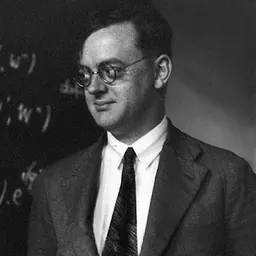
George Sotiros Pappas ( – ) was a professor of philosophy at Ohio State University. Pappas specialized in epistemology, the history of early modern philosophy, philosophy of religion and metaphysics. He was of Greek and English origin.
He was the author of the Stanford Encyclopedia of Philosophy entry on "Internalist versus Externalist" conceptions of epistemic justification.
He was co-editor (with Marshall Swain) of Essays on Knowledge and Justification (1978), an anthology of essays relating to the Gettier problem used as a core text in undergraduate epistemology courses.
Pappas is an editorial consultant of Berkeley Studies.
Studies in Berkeley's philosophy Pappas was known to be a leading Berkeley scholar; his essay "Berkeley and Scepticism" was in 1993 awarded the International Berkeley Prize. Pappas was a regular participant of International Berkeley Conferences. At one such conference, celebrating the 300th anniversary of George Berkeley's birth, Pappas propounded a new approach to the relationship between Berkeley's anti-abstractionism and "esse est percipi" principle. On Pappas' reading, Berkeley's two theses — that there are no abstract ideas and that sensible objects must be perceived in order to exist — entail one another.
Pappas' interpretation of Berkeley's esse is percipi thesis has sparked much discussion. In 1989, the Garland Publishing Company brought out a 15-volume collection of major works on Berkeley; Pappas' paper "Abstract ideas and the 'esse is percipi' thesis" was included in the third volume, as it was considered to be a significant contribution to Berkeley scholarship.
Pappas developed his treatment of Berkeley's "esse est percipi" principle to repudiate the "inherence interpretation of Berkeley", upon which Edwin E. Allaire, among others, elaborated.
That account is put forward to answer an extremely perplexing question in the history of philosophy: Why did Berkeley embrace idealism, i. e., why did he hold that esse est percipi, that to be is to be perceived?
After emerging in the early 1960s, the "inherence account" attracted numerous proponents and became an influential element of contemporary Berkeley scholarship. In his paper "Ideas, minds, and Berkeley" Pappas revealed some discrepancies between fountain-head evidences and Allaire's approach to a reconstruction of Berkeley's idealism. Pappas' critical examination of the "inherence account" is greatly appreciated by Berkeley scholars. Pappas' penetrating remarks compelled Edwin B. Allaire to revise and improve his conception. Even those who share Allaire's account of Berkeley's idealism acknowledge Pappas' article to be "an excellent review and critique of the IA [inherence account]."
In 2000, Pappas published his monograph Berkeley's thought in which some parts were based on earlier papers of his. While writings by A. A. Luce or Geoffrey Warnock are long outdated, Berkeley's thought is often included in lists of recommended literature on Berkeley's philosophy.
Publications
Don’t just read it —
keep it.
Full-length biographies made to live with: read them, listen on the way to work, watch them tonight.
- E-book
- Audio
- Video
Instant download · yours to keep · every purchase keeps this site free
Important facts
People in George Pappas's life
Named in this biography and alive at the same time

Related people
Same field, nearest in time


Contemporaries
People whose lives overlapped George Pappas's



Frequently asked questions
Who is George Pappas?
American philosopher
When was George Pappas born?
George Pappas was born in 1942.
What is George Pappas's occupation?
George Pappas is a philosopher and university teacher.
What nationality is George Pappas?
George Pappas is American.
Sources & further reading
Cite this page
APA: Biography.guide. (2026). George Pappas. https://biography.guide/george-pappas/
MLA: "George Pappas." Biography.guide, https://biography.guide/george-pappas/.
Chicago: "George Pappas." Biography.guide. https://biography.guide/george-pappas/.
Data last updated: 2026-09-20 · Spot an error? Report a correction.
Page generated 2026-09-27 05:04 UTC