
About George O. Abell
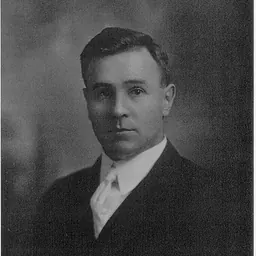
Lived 1927 – 1983 (aged 56). George O. Abell was an American astronomer and professor.
George Ogden Abell (March 27, 1927 – October 7, 1983) was an American astronomer and professor. He taught at UCLA, primarily as a research astronomer. He earned his B.S. in 1951, his M.S. in 1952 and his Ph.D. in 1957, all from Caltech. He was a Ph.D. student under Donald Osterbrock. His astronomy career began as a tour guide at the Griffith Observatory in Los Angeles. Abell made great contributions to astronomical knowledge which resulted from his work during and after the National Geographic Society - Palomar Observatory Sky Survey, especially concerning clusters of galaxies and planetary nebulae. A galaxy, an asteroid, a periodic comet, and an observatory are all named in his honor. His teaching career extended beyond the campus of UCLA to the high school student oriented Summer Science Program, and educational television. He not only taught about science but also about what is not science. He was an originating member of the Committee on Scientific Investigation of Claims of the Paranormal now known as the Committee for Skeptical Inquiry.
Early life George Ogden Abell was born in Los Angeles on March 1, 1927, to Theodore Curtis Abell and Annamarie (Ogden) Abell. Theodore Abell was born in Waterbury, Connecticut, in 1890, was a Unitarian minister, and was one of the original members of the Hollywood Humanist Society. Annamarie was born in Kansas City, Missouri, in 1896, and studied to be a librarian, worked for a short while as a librarian but eventually became a social worker. George Ogden Abell was named for his mother's brother, George Ogden.
Theodore and Annamarie divorced when Abell was 6 years old. Annamarie and son went to live with her father, also George Ogden, who was an author of western novels. Theodore maintained regular contact with Abell and took him to many museums and to Griffith Observatory and planetarium when he was about 8, soon after it opened. This prompted Abell to start reading books on astronomy. Abell attended Van Nuys High School where he achieved all As in all math and science courses that he took. The Abell catalog of 2,712 rich clusters of galaxies, which include Abell 68. The recognition of second order clusters of the clusters of galaxies, which also disproved Carl Charlier's hierarchical model. The study of luminosity of clusters showing how they can be used for determination of relative distances. A list of 86 planetary nebulae which includes Abell 39. Recognition that planetary nebulae derive from red giant stars, (This conclusion later confirmed by many investigations.)
An extended version of the clusters of galaxies catalogue was published after Abell's death in 1987 under the authorship of Abell, Harold G. Corwin and Ronald P. Olowin. This extended catalog includes clusters seen from the southern hemisphere, lists approximately 4,000 clusters of galaxies and includes thirty members with a redshift up to z = 0.2. (See List of Abell clusters.)
Teaching
UCLA Abell taught at the University of California, Los Angeles (UCLA) for 17 years.
He helped produce educational TV programs/series such as Project Universe and Understanding Space and Time. He also appeared in some of these as himself, an astronomer. Periodic comet 52P/Harrington-Abell, which Abell co-discovered with Robert Harrington George Abell Observatory, Open University, Milton Keynes, United Kingdom
Affiliations
American Astronomical Society Education Committee, Chairman Astronomical Society of the Pacific Member Board of Directors 1982-1984 Royal Astronomical Society, elected a Fellow in 1970 Academic Director 1960-1983 Guest speaker in other years
Personal life Abell was married twice. The first marriage occurred right after his graduation from Caltech. His first wife was a school teacher and they had two sons together named Anthony and Jonathan. This marriage ended after 19 years with the sons remaining with their father. Abell's second wife, Phyllis, was a painter who studied three years at the Philadelphia Museum School of Art but did not graduate.
Abell enjoyed many hobbies during his lifetime such as, softball, bowling, music concerts and grand opera (on which he was considered an authority), record collecting, and literature. He was an avid baseball fan, frequently in attendance at Los Angeles Dodgers games.
Abell died at home on October 7, 1983, after suffering a heart attack.
Selected published works (PhD Thesis)
Journal articles
He was slated to take over as editor of the Astronomical Journal effective January 1, 1984, but his death occurred before that appointment became effective.
Filmography
Don’t just read it —
keep it.
Full-length biographies made to live with: read them, listen on the way to work, watch them tonight.
- E-book
- Audio
- Video
Instant download · yours to keep · every purchase keeps this site free
Important facts
People in George O. Abell's life
Named in this biography and alive at the same time



Related people
Same field, nearest in time


Contemporaries
People whose lives overlapped George O. Abell's



Frequently asked questions
Who was George O. Abell?
American astronomer (1927—1983)
When was George O. Abell born?
George O. Abell was born on 1 March 1927 in Los Angeles.
When did George O. Abell die?
George O. Abell died on 7 October 1983 in Los Angeles.
What was George O. Abell's occupation?
George O. Abell was an astronomer and professor.
What nationality was George O. Abell?
George O. Abell was American.
Sources & further reading
Cite this page
APA: Biography.guide. (2026). George O. Abell. https://biography.guide/george-o-abell/
MLA: "George O. Abell." Biography.guide, https://biography.guide/george-o-abell/.
Chicago: "George O. Abell." Biography.guide. https://biography.guide/george-o-abell/.
Data last updated: 2026-09-20 · Spot an error? Report a correction.
Page generated 2026-09-27 04:59 UTC