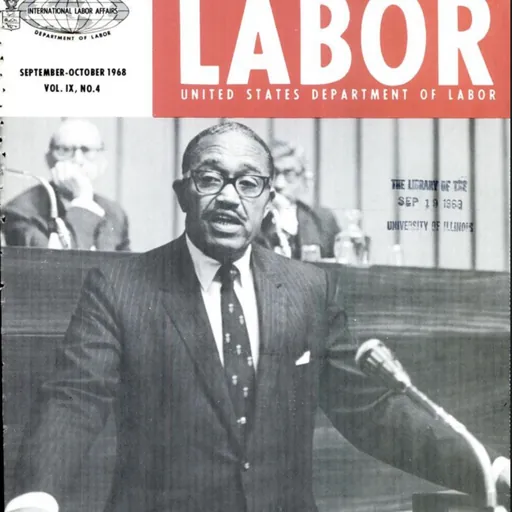
About George L.P. Weaver
Lived 1912 – 1995 (aged 83). George L.P. Weaver was an American trade unionist and civil rights advocate.
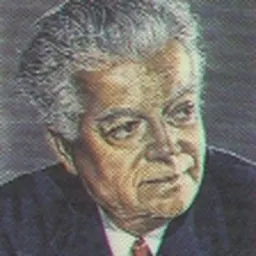
George Leon-Paul Weaver (May 18, 1912 – July 14, 1995) was an American labor leader, active in promoting civil rights both in the United States and internationally. After serving as Assistant Secretary of Labor for International Affairs in both the Kennedy and Johnson administrations, he was elected chair of the governing body of the International Labour Organization, a United Nations body, in 1968.
Early life and education Weaver was born in Pittsburgh, Pennsylvania, and grew up in Dayton, Ohio. He attended what now is Roosevelt University in Chicago and Howard University law school in Washington, D.C.
Career Labor unions In 1968, Weaver was unanimously elected chair of the International Labour Organization's governing board. In the 1930s, while working as a railway porter, he joined the United Transport Services Employees (UTSE). After his union joined the CIO in 1942, he became assistant to CIO's Secretary-Treasurer James B. Carey. In January 1943, Weaver was named to lead the CIO's new Committee to Abolish Racial Discrimination (CARD), marking the first time the CIO put any Black person into a leadership staff role.
After the CIO merged with the AFL to form the AFL–CIO in 1955, Weaver became executive secretary of the Civil Rights Committee. Soon thereafter, President Truman's Executive Order 9981 (July 26, 1948) abolished discrimination "on the basis of race, color, religion or national origin" in the United States Armed Forces, and led to the re-integration of the services during the Korean War (1950–1953).
Beginning in 1950, Weaver worked on international labor issues as a special assistant to W. Stuart Symington, who chaired the National Security Resources Board and later the Reconstruction Finance Corporation. Symington credited Weaver with substantial help in stopping speculation that drove up tin prices, calling him in 1969 "one of the ablest public servants we have today."
During the 1950s, Weaver spent time abroad as a representative of the International Confederation of Free Trade Unions (ICFTU), with the goal of assisting foreign labor leaders. In 1955, ICFTU official Jay Krane described Weaver as "one of the outstanding Negro trade unionists in the United States and ... a leading figure in the fight against discrimination and segregation." In Okinawa, Singapore, and Malaysia, Weaver built relationships with local labor leaders that both sides later maintained with correspondence.
Weaver was recruited by his former boss James Carey in 1958 to leave the AFL–CIO for Carey's rival international union International Union of Electrical, Radio and Machine Workers. Weaver became Carey's assistant for political education and international programs.
Weaver and Carey worked to promote labor support for Democratic candidates. In early primaries during the 1960 United States presidential election, Weaver campaigned for his former boss Stuart Symington, but after Symington was eliminated he shifted to support Kennedy.
Kennedy and Johnson administrations In January 1961, President Kennedy appointed Weaver Assistant Secretary of Labor for International Affairs. After Kennedy's death, President Johnson continued Weaver in this role throughout his own administration.
From 1961 through 1969 when Richard Nixon won the presidency in 1968, Weaver chaired the United States delegation to the annual conference of the United Nations' International Labour Organization. In 1968, Weaver was unanimously elected to head the ILO's governing board for the year 1968–1969.
Don’t just read it —
keep it.
Full-length biographies made to live with: read them, listen on the way to work, watch them tonight.
- E-book
- Audio
- Video
Instant download · yours to keep · every purchase keeps this site free
Important facts
People in George L.P. Weaver's life
Named in this biography and alive at the same time

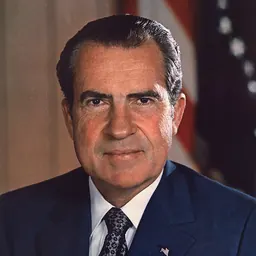


Related people
Same field, nearest in time

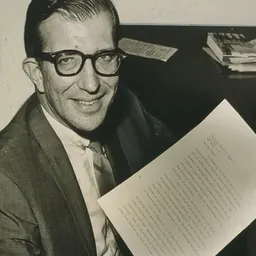

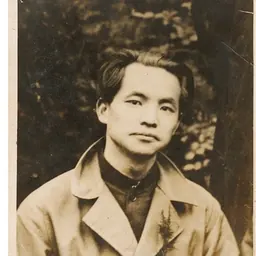

Contemporaries
People whose lives overlapped George L.P. Weaver's





Frequently asked questions
Who was George L.P. Weaver?
American labor leader (1912–1995)
When was George L.P. Weaver born?
George L.P. Weaver was born on 18 May 1912 in Pittsburgh.
When did George L.P. Weaver die?
George L.P. Weaver died on 14 July 1995 in George Washington University Hospital.
What was George L.P. Weaver's occupation?
George L.P. Weaver was a trade unionist and civil rights advocate.
What nationality was George L.P. Weaver?
George L.P. Weaver was American.
Sources & further reading
· Wikipedia: George L.P. Weaver
· DBpedia: George L. P. Weaver
Cite this page
APA: Biography.guide. (2026). George L.P. Weaver. https://biography.guide/george-l-p-weaver/
MLA: "George L.P. Weaver." Biography.guide, https://biography.guide/george-l-p-weaver/.
Chicago: "George L.P. Weaver." Biography.guide. https://biography.guide/george-l-p-weaver/.
Data last updated: 2026-09-22 · Spot an error? Report a correction.
Portrait: Wikimedia Commons · author & licence
Page generated 2026-09-27 05:03 UTC