
About George John Dibbern
Lived 1889 – 1962 (aged 73). George John Dibbern was an author.
George John Dibbern (born Georg Johann Dibbern; March 26, 1889 – June 12, 1962) was an author, adventurer, and sailor-philosopher. He was a free-thinker, a self-declared citizen of the world, and a friend of American author Henry Miller.
Life Georg Johann Dibbern was born on March 26, 1889, in Kiel, Germany to Sea Captain Adolph Friedrich Dibbern (1845-1895) and Emma Juliane Tantau (1850-1907) who married in 1875. His sisters were Anna Marie Dibbern (1877-?) and Agnes Katharina Dorothea (1879-1925). At age 50, Adolph died from complications due to malaria contracted while at sea.
Because Dibbern suffered from asthma, his mother took him and his sisters to Sicily for two years (1899-1901). After his return to Germany, he spent his secondary school years in Marne, with his sister Anni and her husband Ludwig Schramm, a high school teacher. He completed his final exams in 1907 and went to sea as an apprentice aboard the Flying P line square-rigger Pamelia, to Valparaiso, Chile. In 1909 Dibbern jumped ship, the Antuco, in Sydney, Australia.
In 1911 Dibbern returned to Sydney aboard the steamer Scharnhorst to begin a business selling canvas canoes. When that failed, he headed to New Zealand. Since he had learned to drive, Dibbern became a chauffeur to the Maori in the area of Dannevirke until he was interned as an enemy alien on Somes Island in June 1918 .
Being back in Germany that same year, Dibbern met Elisabeth Vollbrandt, 11 years his junior. They married in January 1921 and in anticipation of reparation funds for assets left behind in New Zealand, purchased a property in Stocksee, a small municipality in northern Germany. There, their son Jens Rangi was born in 1921, but died six months later, their daughter Frauke Wahine was born in 1922, followed by Elke Maata in 1924 and Sunke Tai in 1925. he named the boat Te Rapunga, being Maori for “Longing” or “Dark Sun”.
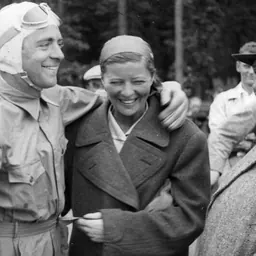
Reduced to workfare, Dibbern, whose views differed from his co-workers, talked himself into a corner and found he had no choice but to leave his family and sail to his Maori spiritual mother, Rangi Rangi Paewai, in New Zealand. The Te Rapunga left Kiel in August 1930 with a crew consisting of him, his nephew Günter Schramm, Baron Albrecht von Fritsch (later known as René Halkett) and his sister Dorothée Leber von Fritsch. Baron von Fritsch soon left the crew. To earn some money the Te Rapunga took on paying passengers. By 1932 Dibbern, with Schramm and Leber von Fritsch crossed the Atlantic. In Panama, they met German pilot Elly Beinhorn. From Balboa they helmed north; too late for the 1932 Los Angeles Summer Olympics, they pressed on, arriving in San Francisco on 20 September 1932, after 101 days at sea without touching land.
In March 1934 the Te Rapunga arrived in Auckland, New Zealand. Dibbern learned that his spiritual mother Rangi Rangi Paewai, on whose help he had counted, had died. Back at sea the Te Rapunga participated in the second Trans-Tasman Race, from Auckland to Melbourne, along with Johnny Wray's Ngataki. The Te Rapunga won the 1934-35 race, about 1630 miles, in 18 days, 23 hours, 58 minutes. She also won the subsequent race to Hobart, Tasmania before returning to Auckland. Inspired by multiple chance-encounters during his cruises, Dibbern's new mission became to make Te Rapunga yacht of a friendship, a bridge of tolerance and brotherhood. He took a new crew and headed north to the Cook Islands, Hawaii, and Canada, arriving in Victoria, British Columbia, on July 1, 1937, with a flag representing his ideals as he refused to fly the obligatory German Swastika. That December the home of his wife Elisabeth in Berlin was ransacked by the Gestapo searching for evidence of her husband's perceived anti-German sentiments. Then, the Te Rapunga sailed in Desolation Sound with Canadian writer M. Wylie Blanchet, author of The Curve of Time.
In 1939 residency was denied Dibbern as he refused to take up arms for any country and he became widely known as a “man without a country.” With his remaining crew member from New Zealand, Eileen Morris, he sailed to San Francisco. He was invited to the Dan Seymour radio show “We the People” in New York City where he left the manuscript of Quest with publisher W.W. Norton. In 1940, in San Francisco, eight years before American actor and peace activist Garry Davis renounced his citizenship, Dibbern created his own passport declaring himself a “Friend of all peoples” and a "Citizen of the World." Dibbern was permitted to stay a short while on Hawaii to effect repairs to Te Rapunga. Dibbern then decided to test his self-made flag and self-made passport and to return Eileen Morris to her home country New Zealand. But on arrival in Napier in January 1941, his passport was not acknowledged. Immediately he was interned as an enemy alien for the duration of the War - once again Somes Island. His book Quest was published in March 1941 while he was still held captive. Still in New Zealand Dibbern was given a Tattersall lottery ticket in partial payment for casual work. He shared the 10,000.- pound win with the donor of the ticket. With his half, he purchased Satellite (Woody) Island, where he envisioned a friendship retreat as he had with land purchased in Canada and on Partridge Island. Among his many friends he counted the founder of Ansett Airlines son, John Ansett who met him through Henry Miller, and Tasmanian Egyptologist and science fiction author, Herbert Leslie Greener. Miller attempted to speed up payment of Dibbern's royalties for Quest. He sent relief packages to Elisabeth and the girls in post-war Germany; he urged friends and neighbours in Big Sur to do the same. He arranged for a typewriter to replace Elisabeth's which had been destroyed in the bombing of Berlin. He tried to get his own agent to take on George's new manuscript and insisted that Quest should be published in French (he appealed to Frédéric Jaques Temple) and in German. After the stranding of Te Rapunga in 1957, Miller sent out a broadsheet with Dibbern's story, urging readers to contribute money to help him refit the boat. On the obverse was Miller's 1946 Circle essay. Miller and Dibbern corresponded till Dibbern's death in 1962, but they never met.
A reprint edition of Quest was published by Grundmann in 2008.
Dibbern's yacht Te Rapunga was sold to a series of owners and ultimately ended up languishing and deteriorating until, in 2017, Bruny Island Coastal Retreats and Nature Pact, in Tasmania, bought her and are having her restored by Denman Marine in time for the 2021 Australian Wooden Boat Festival. George Dibbern's message remains timely and will live on through his beloved, reborn Te Rapunga.
German interest in Dibbern has been limited. Propelled by Erika Grundmann's research the story of Dibbern has been subject to articles published in magazines like mare Magazin and the Klassiker! Magazine by the Freundeskreis Klassische Yachten. A one-hour Radio feature was produced by German national station SWR and aired on Feb. 3, 2013. Most recently cultural anthropologist Martina Kleinert called attention to Dibbern already in the 1930s having lived a truly cosmopolitan life.
Works
Articles
"Eine wilde Fahrt. Erinnerung aus Neuseeland", Hamburger Anzeiger, 12. April. 1927, p. 1-2 "Der eilige Fahrgast", Windausche Zeitung, 16. Feb. 1929, p. 2
Various articles and travel reports for the NZ sailing magazine SeaSpray.
Books
Quest. W. W. Norton, New York, NY, 1941 Reprint by RockRead Press, Manson's Landing, BC, 2008. Unter eigener Flagge. German translation by Arno Dohm. Classen Verlag, Hamburg, 1965. Ship without Port. Unpublished manuscript
Films Videos on the restoration of the Te Rapunga are posted by current owner Bruny Island Coastal Retreats and Denman Marine on YouTube and Instagram.
Bruny Island has also assembled a short clip on the story of Dibbern titled "Who is George Dibbern".
Don’t just read it —
keep it.
Full-length biographies made to live with: read them, listen on the way to work, watch them tonight.
- E-book
- Audio
- Video
Instant download · yours to keep · every purchase keeps this site free
Important facts
People in George John Dibbern's life
Named in this biography and alive at the same time






Related people
Same field, nearest in time



Contemporaries
People whose lives overlapped George John Dibbern's





Frequently asked questions
Who was George John Dibbern?
German writer and yachtsman (1889-1962)
When was George John Dibbern born?
George John Dibbern was born on 26 March 1889 in Kiel.
When did George John Dibbern die?
George John Dibbern died on 12 June 1962 in Auckland.
What was George John Dibbern's occupation?
George John Dibbern was an author.
Sources & further reading
· Wikipedia: George John Dibbern
Cite this page
APA: Biography.guide. (2026). George John Dibbern. https://biography.guide/george-john-dibbern/
MLA: "George John Dibbern." Biography.guide, https://biography.guide/george-john-dibbern/.
Chicago: "George John Dibbern." Biography.guide. https://biography.guide/george-john-dibbern/.
Data last updated: 2026-09-26 · Spot an error? Report a correction.
Page generated 2026-09-27 05:13 UTC