
George Jessel
American actor, singer, songwriter, film producer
About George Jessel
Lived 1898 – 1981 (aged 83). George Jessel was an American actor, film producer, singer-songwriter, singer, film actor and stage actor.
George Albert "Georgie" Jessel (April 3, 1898 – May 23, 1981) was an American actor, singer, songwriter, and film producer. He was famous in his lifetime as a multitalented comedic entertainer, achieving a level of recognition that transcended his limited roles in movies. He was widely known by his nickname, the "Toastmaster General of the United States," for his frequent role as the master of ceremonies at political and entertainment gatherings. Jessel originated the title role in the stage production of The Jazz Singer. Joseph and Charlotte "Lottie" (née Schwarz) George was reputedly named after the British jurist George Jessel, who was his second cousin once removed and a member of a politically notable branch of the family. By age 10, he was appearing in vaudeville and on Broadway to support his family after the death of his father, who was a playwright.
Career Vaudeville His most famous comedy skit was called "Hello Mama" or "Phone Call from Mama," which portrayed a one-sided telephone conversation. In 1919 he produced his own solo show, George Jessel's Troubles.
Jessel co-wrote the lyrics for a hit tune, "Oh How I Laugh When I Think How I Cried About You," and he performed in several successful comedy stage shows in the early 1920s. In 1921 he recorded a hit single, "The Toastmaster." He sometimes appeared in blackface in his vaudeville shows.
In 1925, he emerged as one of the most popular leading men on Broadway with the starring role in the stage production of The Jazz Singer. The success of the show prompted Warner Bros.—after their success with Don Juan (1926) with music and sound effects only—to adapt The Jazz Singer as the first "talkie" with dialogue and to cast Jessel in the lead role. However, the studio refused his salary demands, so Jessel turned down the movie role, which was eventually played by Al Jolson. According to Jessel during an interview around 1980, Warner Bros. still owed Jessel money for earlier roles and lacked enough funds to produce this movie with a leading star. Jolson, the biographical inspiration for the movie, became the movie's main financial backer.
Jessel's next movie role was in Private Izzy Murphy (1926). Whereas Jolson's film career skyrocketed after the 1927 release of The Jazz Singer, Jessel remained in smaller movie roles, often intended for audiences fond of Jewish and other "ethnic" humor.
In the mid-1940s, he began producing musicals for 20th Century Fox, producing 24 films in all in a career that lasted through the 1950s and 1960s. At the same time he became known as a host on the banquet circuit, famous for his good-natured wit aimed at his fellow celebrities. In 1946, he was one of the founding members of the California branch of the Friars Club. (A recording exists of an example of his "blue" work in front of a stag audience, although it was actually recorded at a roast hosted by the Friars' rival, the Masquers Club.) He also traveled widely overseas with the USO entertaining troops. As he grew older, he wrote eulogies for many of his contemporaries in Hollywood. He wrote three volumes of memoirs, So Help Me (1943), This Way, Miss (1955), and The World I Lived In (1975).
Jessel produced a number of Hollywood films, including The Dolly Sisters (1945), Nightmare Alley (1947), Golden Girl (1951) and The I Don't Care Girl (1953).
In the early 1950s, he performed on the radio in The George Jessel Show, which became a television series of the same name from 1953 to 1954.
HHe guest-starred on NBC's The Jimmy Durante Show. In 1968, he starred in Here Come the Stars, a syndicated variety show. By his later years, Jessel's style of entertainment was increasingly regarded as old-fashioned. in which he appeared as one of numerous contemporaries of John Reed and Louise Bryant, and The Other Side of the Wind, which was filmed before his death but not released until 2018.
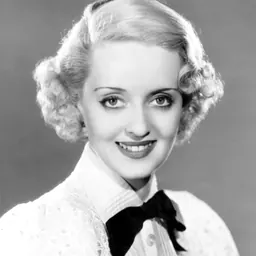
Political views Jessel was active in political causes throughout much of his career, and his political affiliations shifted over time. He supported the Democratic Party during the 1940s and 1950s. In 1948, he participated in a Democratic campaign rally supporting President Harry S. Truman. During the 1952 presidential election, Jessel supported Democratic nominee Adlai Stevenson II. In an October 1952 campaign broadcast sponsored by the International Ladies' Garment Workers' Union, Truman publicly thanked Jessel and Bette Davis for their efforts on Stevenson's behalf.
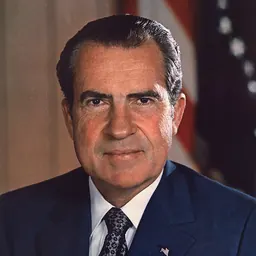
Jessel's politics subsequently became more conservative. He strongly supported the United States military effort in the Vietnam War and made several trips to Vietnam to entertain American servicemen. In the 1972 presidential election, he supported Republican President Richard Nixon's campaign for re-election.
His political views occasionally led to public controversy. In July 1971, following the publication of portions of the Pentagon Papers, Jessel appeared on NBC's Today and compared The New York Times and The Washington Post to the Soviet newspaper Pravda. Host Edwin Newman challenged Jessel over the remarks and ended the interview. In a 1977 interview, Jessel also said that he had tried to prevent Rebel Without a Cause from being distributed in Europe because he believed that the film portrayed Americans negatively and showed insufficient respect for law enforcement. He campaigned for his long-time friend, Ronald Reagan, during the 1980 presidential election. Reagan sent a message that was read at Jessel's funeral in 1981.
Personal life
In the 1930s, his personal life kept him in the public eye as much as his movies. On May 2, 1930, Jessel married Florence Courtney in Chicago. She divorced him on October 24, 1932, on the grounds of cruelty. On April 23, 1934, Jessel married silent movie star Norma Talmadge, causing a scandal because Talmadge was married at the time that they started their affair, and she obtained a Mexican divorce only ten days earlier. After their divorce on August 11, 1939, he caused another scandal by breaking into her house with a pistol and firing shots at her new lover. In 1940, he married a 16-year-old showgirl, Lois Andrews, when he was 42. They had a daughter, Jerrilyn, before divorcing in 1942. filed a paternity suit against Jessel claiming he was the father of her daughter Christine. Jessel later admitted he was Christine's father and settled the suit out of court. As part of the terms of the settlement, Jessel agreed to pay Tyler $500 a month in child support .
In 1964, Jessel reportedly sexually groped an adult Shirley Temple. According to Temple, he invited her to his office under the guise of discussing a recent role. During their meeting, Jessel put an arm around Temple while taking off his pants. He then grabbed the 35-year-old Temple's breasts. She fought off his attempts by kicking him in the groin.
Death On May 23, 1981, Jessel died of a heart attack at the University of California at Los Angeles Medical Center at the age of 83. He was interred in the Hillside Memorial Park Cemetery in Culver City, California.
Honors and awards In 1969, the Academy of Motion Picture Arts and Sciences honored him for his charity work by awarding him the Jean Hersholt Humanitarian Award, a Special Academy Award. For his contribution to the motion picture industry, George Jessel has a star on the Hollywood Walk of Fame at 1777 Vine Street in Los Angeles.
Filmography
Year Title Role Notes 1919 The Other Man's Wife Davy Simon Lost film 1926 Private Izzy Murphy Isadore "Izzy" Murphy / Patrick Murphy Lost film 1927 Sailor Izzy Murphy Izzy Murphy Lost film 1927 Ginsberg the Great Johnny Ginsberg Lost film 1928 George Washington Cohen George Washington Cohen Lost film 1929 Lucky Boy Georgie Jessel 1929 Happy Days Minstrel show performer #4 1929 Love, Live and Laugh Luigi 1943 Stage Door Canteen Himself 1944 Four Jills in a Jeep Master of ceremonies 1953 Yesterday and Today Narrator Voice 1953 The I Don't Care Girl Himself Uncredited 1957 Beau James Himself 1959 Juke Box Rhythm Himself 1967 The Busy Body Mr. Fessel 1967 Valley of the Dolls MC Grammy Awards 1969 Can Heironymus Merkin Ever Forget Mercy Humppe and Find True Happiness? The Presence 1970 The Phynx Himself 1976 Won Ton Ton, the Dog Who Saved Hollywood Awards Announcer 1981 Reds Himself - Witness 2018 The Other Side of the Wind Himself Final film role; filmed between 1970 and 1976
Don’t just read it —
keep it.
Full-length biographies made to live with: read them, listen on the way to work, watch them tonight.
- E-book
- Audio
- Video
Instant download · yours to keep · every purchase keeps this site free
Important facts
Family & relationships
People in George Jessel's life
Named in this biography and alive at the same time






Related people
Same field, nearest in time


Contemporaries
People whose lives overlapped George Jessel's


Frequently asked questions
Who was George Jessel?
American actor, singer, songwriter, film producer (1898-1981)
When was George Jessel born?
George Jessel was born on 3 April 1898 in The Bronx.
When did George Jessel die?
George Jessel died on 23 May 1981 in Los Angeles.
What was George Jessel's occupation?
George Jessel was an actor, film producer, singer-songwriter, singer, film actor and stage actor.
What nationality was George Jessel?
George Jessel was American.
Sources & further reading
· DBpedia: George Jessel (actor)
Cite this page
APA: Biography.guide. (2026). George Jessel. https://biography.guide/george-jessel-actor/
MLA: "George Jessel." Biography.guide, https://biography.guide/george-jessel-actor/.
Chicago: "George Jessel." Biography.guide. https://biography.guide/george-jessel-actor/.
Data last updated: 2026-09-20 · Spot an error? Report a correction.
Page generated 2026-09-27 05:21 UTC