
George II Rákóczi
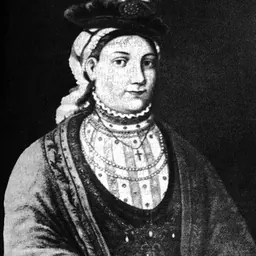
Hungarian nobleman, Prince of Transylvania (1648–1660), the eldest son of George I and Zsuzsanna Lorántffy
About George II Rákóczi
Lived 1621 – 1660 (aged 39). George II Rákóczi was a patron of the arts, ruler, politician and monarch.
George II Rákóczi (30 January 1621 – 7 June 1660), was a Hungarian nobleman, Prince of Transylvania (1648–1660), the eldest son of George I and Zsuzsanna Lorántffy.
Early life He was elected Prince of Transylvania during his father's lifetime (19 February 1642). On 3 February 1643, he married Sophia Báthory, a granddaughter of Stephen Báthory IX. Their son was Francis I Rákóczi.
War with the Polish-Lithuanian Commonwealth Preparation On ascending the throne (October 1648), his first thought was to realize his father's ambitions in Poland. With this object in view, he allied himself, in the beginning of 1649, with the Cossack hetman Bohdan Khmelnytsky, and the hospodars of Moldavia and Wallachia, (Vasile Lupu and Matei Basarab), but took no action for several years. On 6 December 1656, by the Treaty of Radnot, he also allied with King Charles X Gustav of Sweden against King John II Casimir of Poland. Rákóczi was to seize the provinces of Lesser Poland and Mazovia, together with rich salt deposits in Wieliczka and Bochnia.
1657
In 1657, he invaded the Polish–Lithuanian Commonwealth in the third part of the Second Northern War (1655–1660), also known as the Deluge.
Spring In late January 1657, Rákóczi's 25,000-strong army crossed the Carpathian Mountains near Krosno. The Transylvanians headed towards Medyka, where 10,000 Zaporozhian Cossacks under Anton Zdanovich joined them. The Transylvanian-Cossack army approached Lwów, but failed to capture the fortified city. Then it headed westwards, to Kraków. The army's march was marked by atrocities, destruction, and looting. Rákóczi captured and destroyed Dukla, Lesko, and Sanok, but failed to seize Przemyśl, Krosno, and Łańcut. On 21 March 1657, Rákóczi entered Tarnów, and seven days later reached Kraków, which was already under Swedish control.
April The Swedish garrison of Kraków was reinforced by 2,500 Transylvanians under János Bethlen, while the rest under Rákóczi headed northwards. On 12 April, near Ćmielów, the Transylvanians joined the Swedish army under Charles X Gustav. The combined forces crossed the Vistula at Zawichost, on 19 April capturing Lublin.
May On 8 May the Swedish-Transylvanian army besieged Brest Litovsk, capturing it two days later. After the siege, Rákóczi's soldiers plundered and looted intensely. The Transylvanians burned Biała Podlaska and Brańsk to the ground among other towns. On 20 May, news of the Dano-Swedish War reached Charles X Gustav and the king decided to march towards Swedish Pomerania, leaving Gustaf Otto Stenbock in charge.
June The army then marched towards Warsaw, burning the towns of Mielnik, Drohiczyn, Nur, Brok, and Pniewo. On 17 June, after a three-day siege, Rákóczi and Stenbock captured Warsaw. Swedish forces remained in Warsaw only for a few days, as on 22 June they left the city for Stettin, to join the war against Denmark. Since Rákóczi was well aware of the real quality of his army, he decided to abandon Warsaw as well, and head southeast.
July Following an order of the Polish King John II Casimir Vasa, the Transylvanians were followed by a 10,000-strong Stefan Czarniecki's mounted army, supported by 's Lithuanians and Austrian allies. Simultaneously, Jerzy Lubomirski's forces organized a revenge invasion of Transylvania, with widespread looting and destruction of Rákóczi's realm. On 8 July 1657 in Lancut, Polish leaders decided to split their forces. Stefan Czarniecki was to follow Rákóczi, while Jerzy Lubomirski and Stanisław "Rewera" Potocki were to cut the Transylvanians and Cossacks from crossing the border and escaping Poland. On 11 July Czarniecki partly destroyed the Transylvanian army in the Battle of Magierów. On 16 July, the Polish armies united and on 20 July Rákóczi was defeated in the Battle of Czarny Ostrów.
Rákóczi capitulates After the defeat and subsequent retreat of his Cossack allies, Rákóczi withdrew towards the Podolian town of Miedzyboz, where he capitulated to Jerzy Lubomirski (23 July), promising to break his alliance with Sweden, abandon the cities of Kraków and Brest Litovsk, and pay a contribution in the total amount of over 4 million złotys.
Final blow by the Crimean Tatars Polish commanders allowed his forces to march towards Transylvania, but on 26 July, Rákóczi was attacked by Tatars from the Crimean Khanate, who at that time were Poland–Lithuania's allies. Rákóczi abandoned his army, leaving it in the hands of János Kemény. The Transylvanian camp, located near Trembowla, was captured by the Tatars on 31 July. Some 500 Transylvanians were killed, and about 11,000 captured and taken to the Crimea. As a result, Rákóczi's army ceased to exist.thumb
Depositions and reinstatements On 3 November 1657, at the command of the Ottoman Empire (to which Transylvania was tributary), the Diet deposed him for undertaking an unauthorized war and replaced him by Francis Rhédey. But in January 1658 he was reinstated by a new session of the Diet at Medgyes. Again he was deposed by the Turkish Grand Vizier, and again reinstated as if nothing had happened.
War with the Ottomans Finally, the Turks invaded Transylvania, and Rákóczi died at Nagyvárad of wounds received at the battle of Gyalu (May 1660).
Family
Don’t just read it —
keep it.
Full-length biographies made to live with: read them, listen on the way to work, watch them tonight.
- E-book
- Audio
- Video
Instant download · yours to keep · every purchase keeps this site free
Important facts
more
György Rákóczy, Georg II Rákóczy, György II Rákóczy, Georgius Rakoczy, Georges II Rákóczi, Georges Rákóczi, Georgius Ragoczy, Georgius Ragotzovius, Georg Ragotzki, Georgius Rakoezii, György II. Rákóczi, Georgius Ragotzius, Georg Ragotzi, Rákóczi György, Georg Rákóczi, György Rákóczi, George Rakoczi, Georgius Rakocius, György II RákócziFamily & relationships
People in George II Rákóczi's life
Named in this biography and alive at the same time

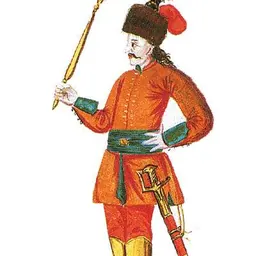
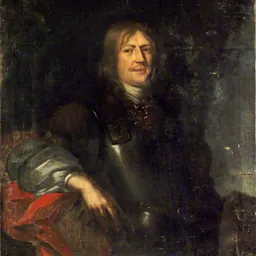
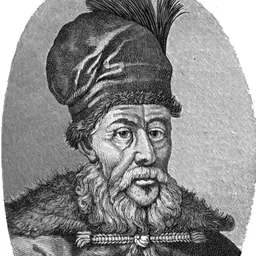


Related people
Same field, nearest in time


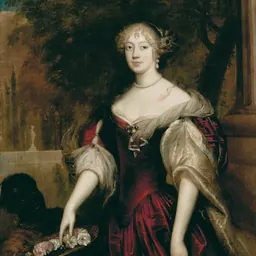


Contemporaries
People whose lives overlapped George II Rákóczi's





Frequently asked questions
Who was George II Rákóczi?
Hungarian nobleman, Prince of Transylvania (1648–1660), the eldest son of George I and Zsuzsanna Lorántffy
When was George II Rákóczi born?
George II Rákóczi was born on 30 January 1621 in Sárospatak.
When did George II Rákóczi die?
George II Rákóczi died on 7 June 1660 in Oradea.
What was George II Rákóczi's occupation?
George II Rákóczi was a patron of the arts, ruler, politician and monarch.
What nationality was George II Rákóczi?
George II Rákóczi's recorded nationality: Principality of Transylvania.
Sources & further reading
· Wikipedia: George II Rákóczi
Cite this page
APA: Biography.guide. (2026). George II Rákóczi. https://biography.guide/george-ii-rakoczi/
MLA: "George II Rákóczi." Biography.guide, https://biography.guide/george-ii-rakoczi/.
Chicago: "George II Rákóczi." Biography.guide. https://biography.guide/george-ii-rakoczi/.
Data last updated: 2026-09-25 · Spot an error? Report a correction.
Page generated 2026-09-27 05:12 UTC