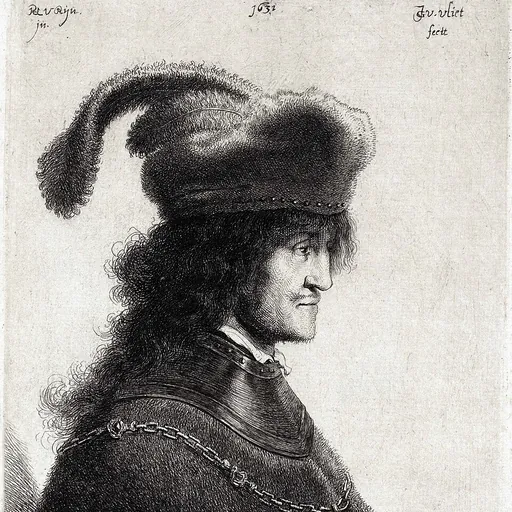
About George I Rákóczi
Lived 1593 – 1648 (aged 55). George I Rákóczi was a writer.
George I Rákóczi (8 June 1593 – 11 October 1648) was Prince of Transylvania from 1630 until his death in 1648. Prior to that, he was a leader of the Protestant faction in Hungary and a faithful supporter of Gabriel Bethlen, his predecessor as Prince. When Bohemian nobles requested military support in their struggles against the Habsburg monarchy, Rákóczi persuaded Bethlen to help and commanded Transylvanian forces in several battles. Rákóczi was elected prince after Bethlen's death, after short reigns by Bethlen's wife Catherine of Brandenburg (reigned 1629–1630) and brother Stephen Bethlen (reigned September – December 1630).
Reign Stephen Bethlen, the brother of the former prince, decided to gain power over Transylvania and therefore in January 1636 he convinced the Pasha of Buda Husein to support removing Rákóczi from the throne, to be the prince of Transylvania himself. After this, the Transylvanian orders held a meeting in Kolozsvár, where they declared that they shout at Rákóczi and if necessary "the orders are ready to protect the rights and freedoms of their country even at the risk of their lives and to stand up as a whole country for their prince". Husein Pasha sent an envoy in the person of Czausz Ali to Rákóczi, with the message that Rákóczi should submit to the Sultan and abdicate. However, Rákóczi detained Ali and declared martial law in the country. He sent his men to Silesia and Poland for mercenaries, called the Transylvanian Hungarian nobility, the Székelys and the Hajduks to war. In response, Sultan Murad IV sent 20–30 thousand Turkish soldiers against Transylvania led by Bekir Bey.However, the Ottoman troops were defeated by the Transylvanian forces at Szalonta on 6 October, and Husein Pasha when he heard this he realized that that he is forced to make peace with Rákóczi. According to the Treaty of Szászváros, the sultan recognizes Rákóczi's full authority over Transylvania, and he grants amnesty to Bethlen. Due to the failure of the campaign, the Sultan killed Begir Bey and replaced the Pasha of Buda, Husein. George Rákóczi gained enormous prestige with his victory.
Intervention in the conflict between Moldavia and Wallachia in 1637
The ruler of Moldavia, Vasile Lupu, wanted to get the throne of Wallachia for his son Ioan, so in the fall of 1637 he attacked Matei Basarab, the ruler of Wallachia. George Rákóczi immediately sent his general János Kemény with a few thousand Székely infantry and cavalry, to help Matei. In November Kemény's brigade crossed the Eastern Carpathians and united with Matei's forces and together they pushed Lupu back to Moldavia. However, the Moldavian ruler did not give up and attacked again two years later, but Matei defeated him again with the help of a Transylvanian cavalry team sent by Rákóczi near Bucharest on 6 December 1639. For Rákóczi's support, Matei had to pay him 5,000 thalers and one horse tax per year.
Thirty Years War Campaign against the Habsburg Monarchy in 1644–45 In 1644, he intervened in the Thirty Years War, declaring war against Emperor Ferdinand III. He contacts the ambassadors of Sweden and France to weaken the rule of the Habsburgs together. He took the whole of Upper Hungary with the offensive launched in February of that year, and the people there supported him and many joined him. In March, Rákóczi marched victoriously into Kassa, the capital of the region. Against this, Ferdinand sent the German generals Götz and Puchheim to Hungary, and Miklós Eszterházy joined to German troops with Hungarians loyal to the emperor. The imperial army consisted of 25 thousand people. This army defeated a team of Transylvanians in Galgóc, killing its commander, György Kapoczay. Rákóczi made a tactical retreat to the south and left his faithful man Reöthy Orbán with 3,000 men in Kassa. The Habsburg army reached the city on 6 June and began to besiege it, but were unable to take it. Meanwhile, the prince sent János Kemény with 15,000 men there, and Kemény he successfully cut the supply lines and inflicted significant losses on the besiegers by raiding on horseback. Götz was forced to retreat from Kassa after an 11-day siege, however Kemény was on their trail and, attacking their rearguard at Somos on 26 June, thoroughly routed it. The Hungarian troops marched on and took towns like Szendrő and Eperjes in summer. By the end of autumn, Rákóczi had occupied the most of Lower Hungary as well, and in the winter both sides paused the war.
At the beginning of 1645, the military operations continued and Rákóczi and his army took Nagyszombat, and contacted the Swedish general Torstenson with a view to an operation against Vienna. However, his nominal overlord, the Ottoman Sultan, ordered him to end the campaign. Despite this, Rákóczi continued his campaign and in June crossed the Moravian border, personally joined the Swedish army besieging Brno for a projected march against Vienna. At that time, the plague broke out in Hungary, and he realized that this was the right moment to make peace with the opponent. An armistice was signed on 22 August, and the formulating peace points with the imperial envoys, and 4 months later they signed them in Linz.
Family
György was married to Zsuzsanna Lorántffy. They had four sons:
Samuel (1617–1618) George Rákóczi II (1621–1660) Sigismund Rákóczi (1622–1652), who married Henriette Marie of the Palatinate Frank (1624–1632)
Footnotes
Don’t just read it —
keep it.
Full-length biographies made to live with: read them, listen on the way to work, watch them tonight.
- E-book
- Audio
- Video
Instant download · yours to keep · every purchase keeps this site free
Important facts
Family & relationships
People in George I Rákóczi's life
Named in this biography and alive at the same time




Related people
Same field, nearest in time

Contemporaries
People whose lives overlapped George I Rákóczi's


Frequently asked questions
Who was George I Rákóczi?
Hungarian prince of Transylvania
When was George I Rákóczi born?
George I Rákóczi was born on 8 June 1593 in Szerencs.
When did George I Rákóczi die?
George I Rákóczi died on 11 October 1648 in Alba Iulia.
What was George I Rákóczi's occupation?
George I Rákóczi was a writer.
What nationality was George I Rákóczi?
George I Rákóczi's recorded nationality: Principality of Transylvania.
Sources & further reading
Cite this page
APA: Biography.guide. (2026). George I Rákóczi. https://biography.guide/george-i-rakoczi/
MLA: "George I Rákóczi." Biography.guide, https://biography.guide/george-i-rakoczi/.
Chicago: "George I Rákóczi." Biography.guide. https://biography.guide/george-i-rakoczi/.
Data last updated: 2026-09-23 · Spot an error? Report a correction.
Portrait: Wikimedia Commons · author & licence
Page generated 2026-09-27 05:06 UTC