
About George H. D. Gossip
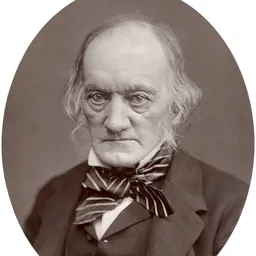
Lived 1841 – 1907 (aged 65). George H. D. Gossip was an American and British chess player and non-fiction writer.
George Hatfield Dingley Gossip (December6, 1841May11, 1907) was an American-English chess master and writer. He competed in chess tournaments between 1870 and 1895, playing against most of the world's leading players, but with only modest success. The writer G. H. Diggle calls him "the King of Wooden Spoonists" because he usually finished last in strong tournaments.
Gossip was also a noted writer. His treatise The Chess-Player's Manual—A Complete Guide to Chess, a 900-page tome published in 1874 after several years of work, was harshly received by the critics, largely because he had included a number of informal skittles games that he had (atypically) won against stronger players. As a result, Gossip developed a lifelong enmity toward chess critics, whom he often attacked ferociously in his books. However, his 1879 book Theory of the Chess Openings was well received. Wilhelm Steinitz, the first World Chess Champion, wrote that the 1888 edition of The Chess-Player's Manual was one of the best available books on the game. Thanks in part to a 122-page appendix by S. Lipschütz, it became one of the standard opening works of the time.
Gossip made his living primarily as a journalist, author, and translator. He wrote for publications in England, France, Australia, and the United States. At various times he resided in each of those countries, as well as in Germany and Canada. In 1898 and 1899, two publishers issued Gossip's sole book about a subject other than chess, The Jew of Chamant. Published under the pseudonym "Ivan Trepoff", it was virulently antisemitic.
Chess writers have often mocked Gossip's play, calling him a "grandpatzer" and the like. However, Kenneth Whyld, one of his previous critics, suggests that history may have judged his strength unfairly.
Early life and education George Hatfield Dingley Gossip was born in New York City on December6, 1841, to George Hatfield Gossip, an Englishman, and his wife Mary Ellen Dingley Gossip, of New York. When he was sixteen months old, his mother died; about two years later, he and his father moved to England. His aunt, Mrs. Reaston Rodes, raised him, apparently with little involvement by his father.
Gossip married Alicia (the name is sometimes given as "Alice"), a music teacher from Dublin, in Jersey in 1868. As of 1871, they were living in London with their 11-month-old son George and two servants. After Gossip's father died in 1882, the Gossips and their four children immigrated to Australia, arriving in January 1883. In May, the ship arrived in San Francisco, where, Gossip wrote, "I first set foot on my native soil after an absence of over forty years."
In 1889, Gossip returned to Europe. While living there, Gossip contributed articles to a newspaper in Manchester, England.
Under the pseudonym "Ivan Trepoff", Gossip wrote a book, The Jew of Chamant, which was published by Hausauer (Buffalo) in 1898, and by F.T. Neely (London and New York) in 1899. The two versions are subtitled, respectively, "or, the modern Monte Cristo" and "a romance of crime". The book is intensely antisemitic. The author explains in its preface: My object in the present work is to paint the rich Jew in his true colors, as the enemy of society; to show that the Jew who steals millions, can, in Europe, at any rate, defy the laws with impunity, and that he almost invariably escapes punishment owing to improper occult influences, and the mighty power of Israelitish gold.
The chess literature is silent about the last decade of Gossip's life. He died of heart disease on May 11, 1907, at the Railway Hotel in Liphook, England.
Chess career By 1864, Gossip was appearing in London chess circles, drawing a game against Joseph Henry Blackburne at a simultaneous exhibition in April. He played in a number of chess tournaments between 1870 and 1895, usually with unimpressive results. At London 1870, the Third British Chess Association Congress (won by John Wisker after a playoff against Amos Burn), Gossip scored two of six possible points, finishing in a tie for fifth–sixth out of seven players. He had the consolation of handing Burn his only loss. At London 1872 (won by Steinitz ahead of Johannes Zukertort and Blackburne), he scored just one out of seven, finishing seventh out of eight players.
Gossip won the 1873–74 correspondence chess tournament of the Chess-Players Chronicle, after which he "was thought by some to be the strongest correspondence player known". However, playing first board for England in an 1879 correspondence chess match against the United States, he lost all four of his games to Ellen Gilbert of Hartford, Connecticut. She "caused a sensation in the chess world" by announcing mate in 21 moves in one game, and mate in 35 moves in another. Gossip responded gallantly, dedicating his book Theory of the Chess Openings to her. He won a local tournament at the Café de la Régence in Paris in 1880. In 1882, he beat Wordsworth Donisthorpe in a match held at Simpson's Divan in London.
Gossip's first significant success at over-the-board chess came at the 1883 London Vizayanagaram minor tournament. He scored 17½ out of 25, tying for fifth–sixth place out of 26 players with Charles Ranken, who later co-authored the treatise Chess Openings Ancient and Modern (1889). Curt von Bardeleben won with 21½ points; Isidor Gunsberg, who would narrowly lose an 1890–91 World Championship match to Steinitz, finished fourth with 19 points. Kenneth Whyld writes that the Australians probably considered Gossip a "whingeing Pom". In 1950, when Esling was 90, the Australian Chess Federation formally declared, belatedly, that he had become the first Australian Chess Champion by winning his 1885 match against Gossip. The Second Australian Chess Championship, a tournament, was held at Adelaide in 1887. Gossip finished third with 6½ out of 9, behind Henry Charlick (7½ points) and Esling (7 points).
After returning to America in 1888, Gossip obtained an appointment at the Columbia Chess Club. The Congress, a double round robin that was one of the longest tournaments in history, was intended to select a challenger for the world championship title. There, Gossip had what G. H. Diggle calls "perhaps the best performance of his career". Mikhail Chigorin and Max Weiss tied for first with 29 points, edging out Gunsberg (28½ points). Gossip's run of last-place finishes moved Diggle to dub him "the King of Wooden Spoonists".
A report in the BCM in 1889 observed that Gossip suffered from great nervousness that prevented him from fully displaying his abilities at chess tournaments, where he had to stop his ears "to keep out the low hum inseparable from a large concourse of people". Bird likewise wrote that minor distractions that he would not even notice would "drive ... Gossip to despair". The BCM commentator accordingly believed that Gossip "would make a good stand in a single encounter with men who are much higher in the tournament than he is". This was an impressive result for Gossip "in view of Pollock's undoubted strength". arguably at that time the strongest tournament in history. Diggle writes that Gossip's drawn match with Pollock vindicates the BCMs 1889 observation that Gossip would be more at home in a match than a tournament. However, during his career he played tournament games against most of the world's leading players, including World Champions Lasker and Steinitz; World Championship challengers Zukertort, Tarrasch, Chigorin, and Gunsberg; Louis Paulsen, Harry Nelson Pillsbury, and James Mason, all at some point ranked number 1 in the world by Chessmetrics; Burn, Blackburne, Bird, and Cecil de Vere (all ranked number 2); and Weiss and Wisker (both ranked number 3).
Chess books and articles The Chess-Player's Manual by George H. D. Gossip and S. Lipschütz (1902 edition)
As of 1874, Gossip was the chess editor of The Hornet. In that year, after several years' work, he published his magnum opus, The Chess-Player's Manual—A Complete Guide to Chess. Mr Gossip had practiced the unfair ruse of carefully preserving stray skittles games which he had happened to win or draw, generally after many defeats, against masters whose public records stood far above his own... thus leading the public to believe that the author stood on a par with them, or was even their superior. According to Diggle, this edition of the book "failed utterly".
A new edition of The Chess-Player's Manual was published in 1888, this one with a 122-page appendix by Lipschütz. Steinitz wrote that "Mr Gossip has produced a useful work, which in some respects must be regarded even superior to that of Staunton or any other previous writers on the chess openings. ... But the most meritorious distinguishing feature of the Manual is the large collection of illustrative games by various first-class masters, and in that respect Mr Gossip's work stands second only to Signor Salvioli's Teoria e Pratica among the analytical works in any language."
An anonymous reviewer in The New York Times called the new edition of The Chess-Player's Manual "probably the most convenient, trustworthy, and satisfactory chess book accessible in the English language". The reviewer concluded that the games and problems in the volume would "afford great entertainment" to the casual enthusiast, "while for real students of chess ... it is very nearly indispensable". He also praised "Mr. Lipschütz's appendix, which brings the development of the openings almost down to date". David Hooper and Kenneth Whyld write in The Oxford Companion to Chess that Lipschütz's appendix "helped to make this one of the standard opening books of the time". World Champion Bobby Fischer had a copy of The Chess-Player's Manual in his personal library, and cited it in his famous 1961 article "A Bust to the King's Gambit".
The June 1888 issue of Steinitz's International Chess Magazine contained an article by Gossip that Robert John McCrary calls "a very illuminating, important, and detailed account of the state of San Francisco chess". For the last few months of 1888 Gossip was listed as being on the "Editorial Staff" of the Columbia Chess Chronicle. Its December 29, 1888, issue contained a lengthy article by him entitled "Chess in the Present Day", which offered a broad sweep of chess history and the advances made by chess in the United States. Gossip called Paul Morphy and Steinitz "the two greatest chessplayers that have ever lived" and remarked that "no Englishman has yet attained, or probably ever will attain, to the eminence of chess champion of the world. ... The deep-thinking German, the brilliant Frenchman and the versatile American have always been too much for sober, stolid John Bull."
Manner and reputation
Burn's biographer Richard Forster notes that Gossip "was well-known for his exaggerated self-esteem". Philip Sergeant in his book A Century of British Chess remarks that his "play was never quite up to his own estimate of it". Gossip, with his long, flowing beard, looks like one of the old-time monks. He has a good-shaped cranium, bald at the top, and is a little above the medium height. ... He believes himself to be one of the greatest chessplayers in the world, and thinks that if everything had gone on to his liking he could have beaten all the champions at the tournament. He is a deliberate player, but every now and then he takes a nip from a flask of brandy that generally stands on his table. He complained that his chair was too low, and he once attributed a defeat to that. Finally, he got a large ledger and sat upon it. He did, in fact, seem to derive some inspiration from its contents, for he played two or three excellent games afterward.
Diggle observes that Gossip "developed 'a happy knack of treading on other people's corns' by rushing into print" his occasional wins in offhand games against such leading players as Bird and Zukertort. In order, therefore, to establish an important point of theory, and at the same time to prevent American chessplayers from being misled and deceived by the superficial analysis of incompetent British chess editors, whose object in condemning the Steinitz Gambit has obviously been mainly to depreciate the originality of its illustrious inventor, whom they invariably try to drag down to their own miserable level of shallow incompetency and self-conceit, I submit the following variations which at any rate possess the undeniable merit of exposing the hollow analytical twaddle continually published in the two London journals above named.
Hooper and Whyld note Gossip's "unusual talent for making enemies" and attribute the critical reception of his books to this, since in their opinion "his books were not significantly worse than the general run of the time, and they were better than, for example, those by Bird, who was popular". I and Gossip are six each and may draw the match. He has proved a terrible crank and has had several games by forfeit, and one "cancelled". He now has a libel suit against the chess column of the Herald. ... We have just agreed, per the committee, to call the match a draw. Whereby all parties are relieved.
Chess historian Edward Winter observes that "Gossip has always been a soft target for mockery". Yakov Damsky in The Batsford Book of Chess Records (2005), addressing the question of which player "achieved the greatest negative distinction" on the international level, opines that Gossip "can probably feel safe from competition". Mike Fox and Richard James in their book The Even More Complete Chess Addict (1993) write that, "Of players who've entered chess history, perhaps the strongest claimant for the all-time grandpatzer title is George Hatfeild Dingley Gossip (1841–1907). George had a worse record in major tournaments than anyone in history (last at Breslau 1889, London 1889, Manchester 1890, London 1892, and New York 1893: a total of just four wins, 52 losses and 21 draws)." Like Hooper and Whyld, they overlook his result at New York 1889, a major tournament where he won 11 games and finished above the bottom. In a 2001 article, Whyld himself takes notice of Gossip's result at New York 1889 and suggests that "history has perhaps given him an unfair verdict".
By Arpad Elo's calculation, Gossip's strength during his five-year peak was equivalent to an Elo rating of 2310.
Another assessment system, Chessmetrics, calculates that Gossip's highest rating was 2470 (number 50 in the world) in April 1889. By comparison, the world's three highest-rated players at that time had Chessmetrics ratings over 2700. Chessmetrics also ranks Gossip number 17 in the world during four one-month periods between February and July 1873, Like Diggle, Chessmetrics considers New York 1889 Gossip's best individual performance, concluding that he scored 39% against opponents with an average rating of 2595, giving him a performance rating of 2539 for that tournament.
Diggle writes that despite his faults, Gossip was "a man of dauntless courage and infinite capacity for hard work", which enabled him to become a recognized author despite the disastrous reception that the first edition of his Chess-Player's Manual received. His literary style was vigorous, and shows him to be an educated and well-read man.
+ Showalter vs. Gossip, 1889
Chigorin vs. Gossip, New York 1889 + Chigorin vs. Gossip, 1889 When facing world-class opponents, Gossip more often fell victim to their combinations. A famous example is his loss, also at New York 1889, to Mikhail Chigorin (White), who lost world championship matches to Steinitz in 1889 and 1892.
Don’t just read it —
keep it.
Full-length biographies made to live with: read them, listen on the way to work, watch them tonight.
- E-book
- Audio
- Video
Instant download · yours to keep · every purchase keeps this site free
Important facts
People in George H. D. Gossip's life
Named in this biography and alive at the same time




Related people
Same field, nearest in time

Contemporaries
People whose lives overlapped George H. D. Gossip's

Frequently asked questions
Who was George H. D. Gossip?
American-British chess player (1841-1907)
When was George H. D. Gossip born?
George H. D. Gossip was born on 6 December 1841 in New York City.
When did George H. D. Gossip die?
George H. D. Gossip died on 11 May 1907 in Liphook.
What was George H. D. Gossip's occupation?
George H. D. Gossip was a chess player and non-fiction writer.
What nationality was George H. D. Gossip?
George H. D. Gossip was American and British.
Sources & further reading
· Wikipedia: George H. D. Gossip
· DBpedia: George H. D. Gossip
Cite this page
APA: Biography.guide. (2026). George H. D. Gossip. https://biography.guide/george-h-d-gossip/
MLA: "George H. D. Gossip." Biography.guide, https://biography.guide/george-h-d-gossip/.
Chicago: "George H. D. Gossip." Biography.guide. https://biography.guide/george-h-d-gossip/.
Data last updated: 2026-09-20 · Spot an error? Report a correction.
Page generated 2026-09-27 05:20 UTC