
About George H. Cooper
Lived 1821 – 1891 (aged 70). George H. Cooper was an American military officer.
Rear Admiral George Henry Cooper (27 July 1821 – 17 November 1891) was an officer in the United States Navy. During his long naval career, he served on the African Slave Trade Patrol, and fought in the Second Seminole War, the Mexican War, the American Civil War, and the Korean Expedition, and rose to command of the North Atlantic Squadron.
Early life Cooper was born at Fort Diamond in New York City on 27 July 1821.
Naval career
Second Seminole War Cooper entered U.S. Navy service as an acting midshipman in January 1836 and was assigned to the sloop-of-war , which was fitting out at the Portsmouth Navy Yard in Kittery, Maine. He sailed for the West Indies aboard Concord in March 1836, and after she was assigned to the fleet operating off Florida in the Second Seminole War, he saw constant service in boat expeditions against the Seminoles in cooperation with United States Army forces. Appointed midshipman on 14 August 1837, Cooper remained aboard Concord until the end of her cruise in November 1838.
1839–1843 In February 1839, Cooper was ordered to the frigate in the Pacific Squadron, remaining aboard her until 1841. He then was a watch officer aboard the schooner until the spring of 1842, when he transferred to the sloop-of-war . He detached from St. Louis when she arrived in Norfolk, Virginia, in September 1842 and then attended the Philadelphia Naval School in Philadelphia, Pennsylvania, until 1843. Upon completing his studies, he was promoted to passed midshipman on 23 June 1843 (sources vary).
East India Squadron Cooper next served aboard the receiving ship at the Norfolk Navy Yard from 1847 to 1848, then at Naval Station Norfolk in Norfolk, Virginia, from 1849 to 1850, and he was promoted to master on 11 October 1850. In November 1850 he reported for duty aboard the new sidewheel steam frigate , then fitting out at the New York Navy Yard in Brooklyn, New York. She was commissioned on 24 December 1850 and assigned to the East India Squadron. Promoted to lieutenant on 8 May 1851, Cooper was aboard Susquehanna when she became the flagship of Commodore Matthew C. Perry in 1852, visited Japan in 1853 and 1854 while Perry forced Japan to sign a trade treaty, and operated off the coast of China. His Susquehanna tour finally came to a close when the ship concluded her cruise at Philadelphia, Pennsylvania, in March 1855 after a voyage from China via the Indian Ocean and Cape of Good Hope.
Cooper was ordered to command of the North Atlantic Squadron in 1882, at one point attending the unveiling of a statue of George Washington at Caracas, Venezuela. He also commanded five ships of the squadron on a visit to New York City, where they anchored in the East River for the opening ceremonies for the New York and Brooklyn Bridge – now known as the Brooklyn Bridge – on 23 May 1883; all ships manned the yards and joined the New York Navy Yard and other nearby military installations in firing a salute to the new bridge. He remained in command of the squadron until he retired from the Navy on 27 July 1884.
Personal life Cooper was married and had at least two children. One son, also named George H. Cooper, drank excessively and was chronically unemployed, subsisting on a generous amount of money his parents sent him, and was arrested in September 1885 for theft from a boarding house where he was staying in Brooklyn, New York. Another son, Mason S. Cooper, born in 1847 in Portsmouth, Virginia, served in the U.S. Navy during the American Civil War, reaching the rank of ensign, spent 14 years as a captain of merchant ships of the Pacific Mail Steamship Company, was an inspector in the New York Custom House, and later became an admiral in command of the Haitian Navy; he died suddenly on 2 January 1891 in Brooklyn.
Death After a brief illness, Cooper died of heart failure in Brooklyn, New York, on 17 November 1891. He is buried at Green-Wood Cemetery in Brooklyn.
Gallery
Don’t just read it —
keep it.
Full-length biographies made to live with: read them, listen on the way to work, watch them tonight.
- E-book
- Audio
- Video
Instant download · yours to keep · every purchase keeps this site free
Important facts
People in George H. Cooper's life
Named in this biography and alive at the same time


Related people
Same field, nearest in time

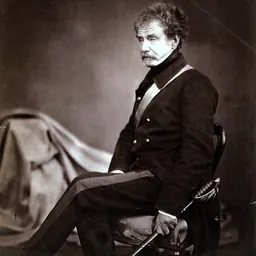
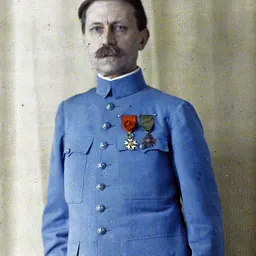
Contemporaries
People whose lives overlapped George H. Cooper's



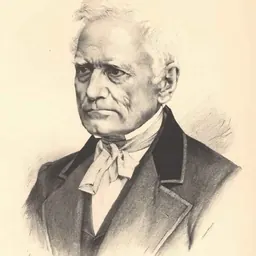
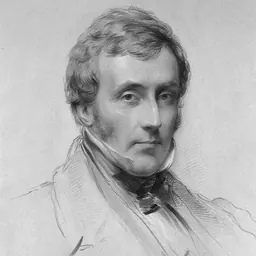
Frequently asked questions
Who was George H. Cooper?
United States admiral
When was George H. Cooper born?
George H. Cooper was born on 27 July 1821 in New York City, Fort Lafayette.
When did George H. Cooper die?
George H. Cooper died on 17 November 1891 in Brooklyn.
What was George H. Cooper's occupation?
George H. Cooper was a military officer.
What nationality was George H. Cooper?
George H. Cooper was American.
Sources & further reading
Cite this page
APA: Biography.guide. (2026). George H. Cooper. https://biography.guide/george-h-cooper/
MLA: "George H. Cooper." Biography.guide, https://biography.guide/george-h-cooper/.
Chicago: "George H. Cooper." Biography.guide. https://biography.guide/george-h-cooper/.
Data last updated: 2026-09-20 · Spot an error? Report a correction.
Page generated 2026-09-27 05:26 UTC