
George Grossmith Jr.
Theatrical producer, actor, singer, manager, and author
About George Grossmith Jr.
Lived 1874 – 1935 (aged 61). George Grossmith Jr. was a British actor, film actor, singer, stage actor, screenwriter and dramaturge.
George Grossmith (11 May 1874 – 6 June 1935), known until 1912 as George Grossmith Jr., was an English actor, theatre producer and manager, director, playwright and songwriter, remembered for his work in and with Edwardian musical comedies and 1920s musicals. He was also an important innovator in bringing cabaret and revue to the London stage. Born in London, he took his first role on the musical stage at the age of 18 in Haste to the Wedding, a West End collaboration between his songwriter and actor father and W. S. Gilbert.
Grossmith soon became an audience favourite playing "dude" roles – fashionable but unserious characters. Early appearances in musicals included George Edwardes's hit A Gaiety Girl in 1893, and Go-Bang and The Shop Girl in 1894. In 1895, Grossmith left the musical stage, instead appearing in straight comedies, but after a few years he returned to performing in musicals and Victorian burlesques. Early in the new century, he had a string of successes in musicals for Edwardes, including The Toreador (1901), The School Girl (1903), The Orchid (1903), The Spring Chicken (1905), The New Aladdin (1906), The Girls of Gottenberg (1907), Our Miss Gibbs (1909), Peggy (1911), The Sunshine Girl (1912) and The Girl on the Film (1913). The lanky Grossmith was often paired with the diminutive Edmund Payne. At the same time, he developed a reputation as a co-writer of musicals and revues, often adding jokes into others' librettos.
Grossmith established himself as a major producer, together with Edward Laurillard, of such hits as To-Night's the Night (1914), Theodore & Co (1916) and Yes, Uncle! (1917). He wrote the long-running revue series that began with The Bing Boys Are Here (1916), scheduling these projects around his naval service in the First World War. He produced, co-wrote, directed and sometimes starred in, Kissing Time (1919), A Night Out (1920), Sally (1921), The Cabaret Girl (1922), The Beauty Prize (1923) and Primrose (1924). He also continued to appear in other producers' shows, including The Naughty Princess (1920) and No, No, Nanette (1925).
Later he performed in such pieces as Princess Charming (1926) and began a film career in 1930, both as an actor and, from 1932, chairman of London Film Productions Ltd.
Life and career Early years
George Grossmith was born in Chalk Farm, London, on 11 May 1874, the eldest child and elder son of the future Gilbert and Sullivan star George Grossmith and his wife, Emmeline Rosa, née Noyce. His brother Lawrence was an actor. Grossmith studied at University College School in London. His parents discouraged his interest in the theatre and he was intended for an army career. He twice failed the entry examination to the Royal Military College, Sandhurst because of his poor command of French; when he was seventeen his father took him to Paris, established him at the and left him to learn the language. He became so fluent that he was later able to perform in French to Parisian audiences.
Despite his parents' misgivings, at the age of eighteen Grossmith accepted W. S. Gilbert's invitation to play a small part in Haste to the Wedding, an operatic adaptation by Gilbert of an old French comedy, The Italian Straw Hat, with new music by Grossmith's father. At the Shaftesbury Theatre in April 1893 he played Lord Percy Pimpleton in Morocco Bound, described as "a musical farcical comedy". In this piece he gave his first performance in what has variously been termed a "silly ass", "dude", or "knut" role, with which he was much associated during his subsequent stage career. a "masher" as "A fashionable young man of the late Victorian or Edwardian era, esp. one fond of the company of women"; and a "knut" as "a fashionable or showy young man" |group=n The show was a success, running for 295 performances; the biographer Kurt Gänzl records that Grossmith polished and augmented his small part during the run "with extra sight and word gags until his performance became one of the most prominent and popular features of the entertainment". Forty years later Grossmith recalled, "I introduced impromptu idiotic stories and conundrums every time I came on the stage [with] an assurance that made me 'gag' and invent things on the stage I should never have the courage for to-day". Grossmith and his wife had three children, the eldest of whom, Ena Sylvia Victoria (1896–1944), became a stage and film actress, Morocco Bound was followed by further West End appearances in Go-Bang (1894 as Augustus Fitzpoop) and in George Edwardes's production of A Gaiety Girl (1894 as Major Barclay), which ran for 413 performances. The twenty-year-old Grossmith wrote the lyrics to his character's song "Beautiful, bountiful Bertie" (music by Lionel Monckton), which he popularised in both London and New York. It became so popular that Grossmith senior included in his solo show at St James's Hall a comic impersonation of Grossmith junior singing it. Grossmith eventually appeared in some 20 Edwardes productions, often interpolating his own songs into the shows. He played in a range of shows between then and 1901, some musical and some not. He was co-author of two of them – Great Caesar (1899), a burlesque with music by Paul Rubens; and The Gay Pretenders (1900), a comic opera with music by Claude Nugent, which failed despite a starry cast headed by Grossmith senior. Playing a bibulous peer, Grossmith appeared with Lillie Langtry in Sydney Grundy's comedy The Degenerates in London in 1899 and in the US the following year.
Grossmith returned to Edwardes's company in 1901 as leading comedian, touring in Kitty Grey, and then starring in The Toreador, which ran for 676 performances at the Gaiety Theatre. He played what The Stage described as "a vivacious booby of the 'chappie' order ... a very diverting figure, the best sketch by far of its kind he has given". In Edwardes's next show, The School Girl (1903), he took over from G. P. Huntley as Sir Ormesby St Leger, and subsequently toured the US in the piece.
By this time Grossmith was establishing himself as a writer as well as an actor. He wrote the librettos for Gulliver's Travels, (Garrick, 1902, adapted from Swift's book) and The Love Birds (Savoy, 1904), both of which had modest runs. The latter was produced by Edward Laurillard, who later became Grossmith's business partner. The Spring Chicken (Gaiety, 1905), for which Grossmith wrote the book, was the first of his many adaptations of French plays. Based on by Adolphe Jaime and Georges Duval, it had music by Ivan Caryll and Monckton and lyrics by Adrian Ross and Percy Greenbank. Grossmith took the leading role of Gustave Barbori; the piece ran for 374 performances; Grossmith, as became his frequent practice, handed his role on to another player during the run.
Over the first dozen years of the 20th century, Grossmith starred in a succession of Edwardian musical comedy hits at the Gaiety, and became one of the biggest stars of the Edwardian era. He wrote the book to another Gaiety musical, Havana (1908), and often added jokes to books in his collaborations with other writers. .
First World War Grossmith played the Hon Dudley Mitton in To-Night's the Night – a musical comedy based on the farce by Alfred Hennequin and Alfred Delacour – which he and Laurillard presented on Broadway in 1914 and in London the following year. After the initial weeks of the run Grossmith handed the role to Austin Melford, one of his many protégés, and joined the armed forces.
In 1916 Grossmith was commissioned in the Royal Naval Volunteer Reserve and later served with the Royal Naval armoured cars. A portrait of him in uniform by his uncle, Weedon Grossmith, was exhibited at the Royal Academy in 1917. The two followed this with The Bing Girls Are There, The Other Bing Boys (both 1917) and The Bing Boys on Broadway (1918), which ran for 562 performances.
In addition to their London productions, Grossmith and Laurillard sent touring companies round the British provinces. In one of them John Le Hay led the cast in Potash and Perlmuter, and Grossmith selected the young and little-known Jack Buchanan for the role of Dudley Mitton in a two-year national tour of To-Night's the Night, giving him helpful advice about performing and setting him on his way to stardom as, in many ways, Grossmith's successor. Grossmith was well known as a talent spotter: among those to whom he gave opportunities early in their careers in addition to Kern, were Novello and Noël Coward as both actors and writers. and the Shaftesbury (Arlette, 1917, 200 performances). They had a relative failure with Oh, Joy!, a version of the Broadway hit Oh, Boy! (1917), at the Kingsway Theatre in January 1919: despite a libretto by Guy Bolton and P. G. Wodehouse and a score by Kern this "musical peace piece" ran for only 167 performances in London.
Post-war
alt=two middle-aged white men sitting on upholstered chairs next to a small, circular table; one appears worried, while the other (Grossmith) points demonstratively at a small notebook on the table. The Winter Garden opened in May 1919 with the musical Kissing Time. The plot was adapted by Bolton and Wodehouse from the 1910 play, Madame et son filleul ("Madame and her Godson") by Maurice Hennequin, Pierre Véber and Henry de Gorsse. It ran for 430 performances and The Observer calculated that a million people saw the show during the thirteen months of its run. The next year, Grossmith adapted a play he has appeared in a quarter of a century earlier as the musical A Night Out, with music by Willie Redstone and some songs by Cole Porter. The partnership with Laurillard expanded, and at various times controlled not only the Winter Garden but also the Apollo, Adelphi, His Majesty's and the Shaftesbury theatres. and dedicated one of his novels to him: "We had a lot of fun ... not a reproach or nasty word from start to finish". But Wodehouse privately thought Grossmith unwise to hanker after romantic aristocratic roles and felt he should stick to being "a brilliant light comedian". For Wodehouse, Grossmith was "a priceless snob, but the looking-up kind, not the looking-down. ... George reads himself to sleep with Burke's Peerage, but he'll go pub-crawling with the stage doorman". Bolton recalled Grossmith auditioning a young chorine who, when told that she must sing as part of the audition, chose the British national anthem, thereby obliging him and all others present to rise loyally to their feet and remain at attention while she petulantly insisted on singing all the countless verses of God Save the King: "The national anthem is sacrosanct – especially if you’re an actor-manager clinging to the hope of a belated knighthood". (In Grove's Dictionary of Music and Musicians, Leon Berger writes that Grossmith was offered a knighthood but died before it could be conferred.) At the Winter Garden in September 1921 he played Otis Hooper in Sally, a musical comedy by Bolton, Kern and Clifford Grey that ran for 387 performances. In September 1922 he played Mr Gripps in The Cabaret Girl by Grossmith, Wodehouse and Kern, which ran for 361 performances. After these three musical shows he ventured into straight drama, playing the title role in a revival of Pinero's The Gay Lord Quex at His Majesty's in April and May 1923.
Returning to the Winter Garden in September 1923, Grossmith played Flutey Warboy in The Beauty Prize, of which he was co-author with Wodehouse and for which Kern again wrote the music. It was less popular than their previous show and closed after 213 performances. Grossmith revived To-Night's the Night in 1924, reprising his old role of Dudley Mitton, and later in the year he played Blond in The Royal Visitor, an adaptation of a comedy popular in France but in London, despite the presence of Oscar Asche and Yvonne Arnaud in the cast, it closed after nine performances. After this failure Grossmith had one of the biggest successes of his career, in the British premiere of No, No, Nanette (1925), in the role of Billy Early. The show ran for 665 performances; Grossmith characteristically handed the part over to his understudy during the run. According to musical theatre writer Andrew Lamb, Grossmith "played a particular part in introducing American songs and American musical shows into the British musical theatre."
Last years
From 1926 Grossmith no longer produced shows but continued to act, appearing in five more musical productions. In October 1926 he played King Christian II of Sylvania in Princess Charming, which ran for 362 performances at the Palace Theatre. The piece ran at Daly's Theatre for 181 performances and then toured. Grossmith made his last Broadway appearances in 1930, reprising his King Christian in Princess Charming and then playing the Marquis de Chatelard in Meet My Sister. The latter piece ran for 167 performances, but when Grossmith prevailed on his old partner Laurillard to stage it in London (retitled My Sister and I) it closed after eight performances at the Shaftesbury.
Grossmith appeared in two silent films before the First World War, but his film career began in earnest in 1930. He singled out for mention in his article in Who's Who Women Everywhere, Those Three French Girls, Are You There? Service for Ladies and Wedding Rehearsal. The following year Grossmith appeared in Restoration comedy, playing Horner in The Country Wife at the Ambassadors. He made his last appearance on the stage at His Majesty's during October 1934, as the tragedian Talma in a historical drama, Josephine.
Filmography As an actor A Gaiety Duet (1909) – Honourable Hugh The Argentine Tango and Other Dances (1913) Women Everywhere (1930) – Aristide Brown Those Three French Girls (1930) – Earl of Ippleton Are You There? (1930) – Duke of St. Pancras (aka Exit Laughing (USA)) Service for Ladies (1932) – Mr. Westlake (aka Reserved for Ladies (USA)) Wedding Rehearsal (1932) – Earl of Stokeshire The Man with the Hispano (1933) (as Georges Grossmith) – Lord Oswill (aka The Man in the Hispano-Suiza (USA)) L'Épervier (1933) – Erik Drakton (aka Amoureux, Les (France)) The Girl from Maxim's (1933) – The general The Lady of Lebanon (1934) – Le colonel Hobson Princess Charming (1934) – King of Aufland
As composer Women Everywhere (1930) (lyrics: "All the Family")
As screenwriter Women Everywhere (1930) (story) Wedding Rehearsal (1932) (story)
Notes, references and sources
Don’t just read it —
keep it.
Full-length biographies made to live with: read them, listen on the way to work, watch them tonight.
- E-book
- Audio
- Video
Instant download · yours to keep · every purchase keeps this site free
Important facts
Family & relationships
People in George Grossmith Jr.'s life
Named in this biography and alive at the same time


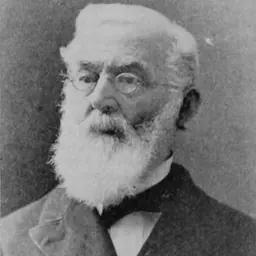



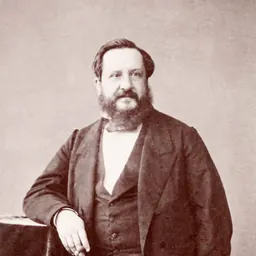
Related people
Same field, nearest in time


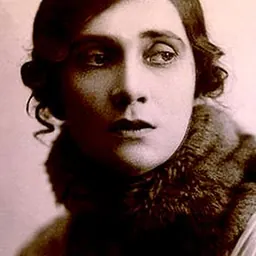
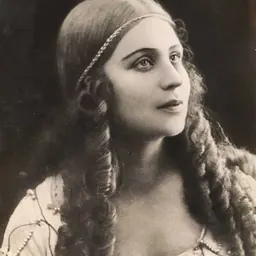
Contemporaries
People whose lives overlapped George Grossmith Jr.'s

Frequently asked questions
Who was George Grossmith Jr.?
Theatrical producer, actor, singer, manager, and author (1874-1935)
When was George Grossmith Jr. born?
George Grossmith Jr. was born on 11 May 1874 in Haverstock, London.
When did George Grossmith Jr. die?
George Grossmith Jr. died on 6 June 1935 in Haverstock, London.
What was George Grossmith Jr.'s occupation?
George Grossmith Jr. was an actor, film actor, singer, stage actor, screenwriter and dramaturge.
What nationality was George Grossmith Jr.?
George Grossmith Jr. was British.
Sources & further reading
· Wikipedia: George Grossmith Jr.
· DBpedia: George Grossmith Jr.
Cite this page
APA: Biography.guide. (2026). George Grossmith Jr.. https://biography.guide/george-grossmith-jr/
MLA: "George Grossmith Jr.." Biography.guide, https://biography.guide/george-grossmith-jr/.
Chicago: "George Grossmith Jr.." Biography.guide. https://biography.guide/george-grossmith-jr/.
Data last updated: 2026-09-20 · Spot an error? Report a correction.
Page generated 2026-09-27 05:28 UTC