
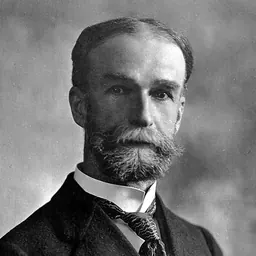
George Gilmore
Irish republican
About George Gilmore
Lived 1898 – 1985 (aged 87).
George Frederick Gilmore (5 May 1898 – 1985) was a Protestant Irish republican and communist who became an Irish Republican Army leader during the 1920s and 1930s. During his period of influence, Gilmore attempted to shift the IRA to the political left, but alongside Peadar O'Donnell and Frank Ryan he was expelled for his efforts. After leaving the IRA, Gilmore attempted to unite Irish republicanism under the banner of the Republican Congress, but ideological debates split the group apart. Afterwards, Gilmore removed himself from public life. he was the second son of Philip Gilmore, an accountant originally from County Antrim, and Fanny Angus. Despite his father primarily working for Unionist landlords, and being educated at home, George and his brothers Harry and Charlie all turned towards Irish Republicanism. By 1916 Gilmore had become a member of Fianna Éireann, the Republican boy scouts, and later a member of the South County Dublin battalion of the Irish Volunteers. as well alongside Frank Aiken. During the early 1920s Lemass, Aiken and Gilmore regularly meet with the IRA army council to represent the emerging political leadership of Irish republicanism that would coalesce as Fianna Fáil in 1926. The trio regularly sat opposite IRA leaders Frank Ryan, Peadar O'Donnell, and Seán Russell. As part of the jailbreak, Gilmore impersonated a member of Garda Siochana. None of the 19 escapees were subsequently recaptured, and their escape served as a major propaganda coup. However, the next month, Gilmore was involved in a riot that took place on Armistice Day and he was subsequently arrested and sentenced to eighteen months in prison. Gilmore resisted the entire duration; first resisting the arrest and then, once imprisoned, refused to wear a prison uniform and went on hunger strike. Early in 1928 members of the IRA attacked Mountjoy Prison where Gilmore was held and shot the warden after a story emerged that Gilmore had previously been the victim of a vicious beating by the guards. Gilmore was released in 1929 but re-arrested and re-imprisoned almost immediately, resulting in a retaliatory beating by the guards that left Gilmore unconscious.
Gilmore was arrested yet again upon his return to Ireland in April 1931, charged with having resisted arrest ten months previously. In October tried to escape with the help of his brother Charlie and almost succeeded, using a plot involving mock pistols wrapped in silver to intimidate the guards. In the aftermath of the failed escape, his treatment in Arbour Hill prison from 1931-32 was abysmal. Gilmore once again refused to wear prison clothing because of his political status and remained naked in a windowless cell from October 1931 until February 1932. In June 1931 of a cache of weapons were discovered near Gilmore's home at Killakee in the Dublin mountains, which resulted in George and his brother Charlie being placed before a military tribunal which sentenced George to five years in prison and Charlie to three (in 1932 Fianna Fail came to power and the brothers were released). Neither recognised the authority of the court, with George stating "I do not want anybody to think I excuse myself for such a charge as having arms, I am admittedly hostile to British imperialism and international capitalism". This incident that was blamed on the police by an official Tribunal of Inquiry that reported one month later.
In March 1934 Gilmore, alongside Frank Ryan and Peadar O'Donnell, refused to continue on as members of the IRA executive as part of a deepening rift over the direction of the IRA. Left-wing members of the IRA such as Gilmore, Ryan and O'Donnell insisted that the IRA needed to tie their activity to social agitation in addition to their military aims, but this was a minority viewpoint, with the majority believing the IRA should have a "strictly military" outlook. The rift would ultimately spiral into Gilmore, Ryan and O'Donnell being "court-martialled" and expelled in April. The group broke up in 1935 over internal differences; Gilmore, Ryan and O'Donnell believed that the Republican Congress should be a "United Front", an alliance of all Republican groups in Ireland. Roddy Connolly and other members of the Communist Party of Ireland believed that the Congress should be a Vanguard Party. A conference was held by the Republican Congress in Rathmines, Dublin in September 1934 to vote on the issue. Before the vote was taken, Gilmore gave a speech in which he accused Fianna Fáil of using republicanism as means to promote Irish capitalism. When the votes were taken on whether the Republican Congress should be a united front or a vanguard party, Gilmore's united front faction won. However, supporters of the vanguard party concept such as Roddy Connolly immediately resigned from the Congress in protest and walked out on the group. It proved to be a blow that the Congress would never recover from and the group was defunct by 1936. Gilmore had made a last-ditch effort to save the Congress by travelling to America to seek funds from Irish-American groups but was not successful. Both men travelled to Spain personally, during which they were involved in a plane crash in which Gilmore's leg was broken.
During the 1960s when the Republican Movement once again moved to the left Gilmore and O'Donnell were once again in demand as speakers and as writers in Republican publications. In 1966, for the 50th anniversary of the Easter Rising, Gilmore released a pamphlet entitled "Labour and the republican movement" in which he espoused the principles of James Connolly. Additionally, Gilmore appealed to young republicans not to repeat the mistake older republicans had made in being too rigid in their views and too short on policy. Gilmore believed that Hughes need to immediately depart for a sanatorium in Switzerland but Hughes' family believed she should go to Lourdes to seek a miracle. In desperation, Gilmore arranged a meeting with De Valera to ask him to convince the Hughes family to send her to Switzerland. De Valera reluctantly agreed to Gilmore's request and spoke to the family, as well as arranging for Hughes to be issued an emergency passport. However, the outbreak of World War 2 complicated matters, and unfortunately Cora died soon thereafter. Gilmore never married.
Literature
J. Bowyer Bell, The Secret Army: The IRA 1916-1979 (revised & updated edition), The Academy Press, Dublin 1979. George Gilmore, The Irish Republican Congress, The Cork Workers' Club, Cork 1978. Mike Milotte, Communism in Modern Ireland: The Pursuit of the Workers' Republic since 1916, Gill & Macmillan, Dublin 1984.
Don’t just read it —
keep it.
Full-length biographies made to live with: read them, listen on the way to work, watch them tonight.
- E-book
- Audio
- Video
Instant download · yours to keep · every purchase keeps this site free
Important facts
People in George Gilmore's life
Named in this biography and alive at the same time



Contemporaries
People whose lives overlapped George Gilmore's




Frequently asked questions
Who was George Gilmore?
Irish republican
When was George Gilmore born?
George Gilmore was born on 5 May 1898 in County Dublin.
When did George Gilmore die?
George Gilmore died on 29 June 1985.
Sources & further reading
Cite this page
APA: Biography.guide. (2026). George Gilmore. https://biography.guide/george-gilmore/
MLA: "George Gilmore." Biography.guide, https://biography.guide/george-gilmore/.
Chicago: "George Gilmore." Biography.guide. https://biography.guide/george-gilmore/.
Data last updated: 2026-09-20 · Spot an error? Report a correction.
Page generated 2026-09-27 05:33 UTC