
About George Frederick Charles Searle
Lived 1864 – 1954 (aged 89). George Frederick Charles Searle was a British physicist, known for Electromagnetic mass and Searle's bar method.
Biography Searle was born in Oakington, Cambridgeshire, England. His father was William George Searle.
As a child, he knew Clerk Maxwell, whom he considered to be a humorous individual. In 1888 he began work at the Cavendish Laboratory under J.J. Thomson, and ended up working with the lab for 55 years. After World War II, he ran the undergraduate labs. The equipment he used with Thomson to calibrate the ohm in the 1890s was still being used in the undergraduate lab.
Contributions to science Searle is known for his work on the velocity dependence of the electromagnetic mass. This was a direct predecessor of Einstein's theory of special relativity, when several people were investigating the change of mass with velocity. Following the work of Oliver Heaviside, he defined the "Heaviside ellipsoid", in which the electrostatic field is contracted in the line of motion. Those developments, when modified, were ultimately important for the development of special relativity.
Personal life
Searle was married to Alice Mary Edwards; they had no children. He contracted a disease at the beginning of World War I and was alleged to have cured himself through spiritual healing. He was a Christian and lay-reader in the Church of England. Searle was a keen cyclist and travelled about proselytizing. He was an opponent of vivisection.
Selected publications
Searle was the author of papers and books, including: Experimental Elasticity (1908) Cambridge Univ. Press Experimental Harmonic Motion: A Manual for the Laboratory, 1st edition (1915) Cambridge Univ. Press Experimental Harmonic Motion, 2nd edition (1922) Cambridge Univ. Press Experimental Optics, 1st edition (1925) Cambridge Univ. Press Experimental Optics, 2nd edition (1935) Cambridge Univ. Press Experimental Physics, (1934) Cambridge Univ. Press A Survey of the Case Against Vivisection (1936) Animal Defence and Anti-Vivisection Society Oliver Heaviside: The Man (1987) C.A.M. Publishing, England (written in 1950, published posthumously)
Don’t just read it —
keep it.
Full-length biographies made to live with: read them, listen on the way to work, watch them tonight.
- E-book
- Audio
- Video
Instant download · yours to keep · every purchase keeps this site free
Important facts
People in George Frederick Charles Searle's life
Named in this biography and alive at the same time
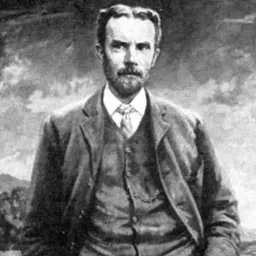
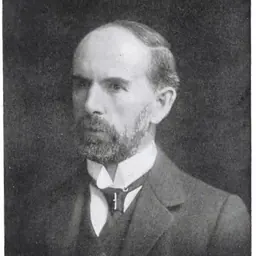

Related people
Same field, nearest in time
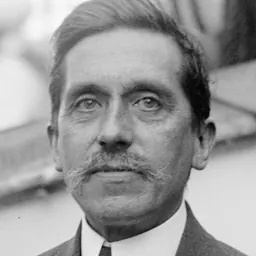

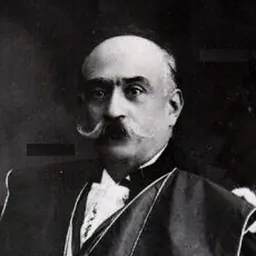

Contemporaries
People whose lives overlapped George Frederick Charles Searle's




Frequently asked questions
Who was George Frederick Charles Searle?
British physicist and teacher (1864–1954)
When was George Frederick Charles Searle born?
George Frederick Charles Searle was born on 3 December 1864 in Cambridgeshire.
When did George Frederick Charles Searle die?
George Frederick Charles Searle died on 16 November 1954.
What was George Frederick Charles Searle's occupation?
George Frederick Charles Searle was a physicist.
What was George Frederick Charles Searle known for?
George Frederick Charles Searle was known for Electromagnetic mass and Searle's bar method.
What nationality was George Frederick Charles Searle?
George Frederick Charles Searle was British.
Sources & further reading
· Wikipedia: George Frederick Charles Searle
· DBpedia: George Frederick Charles Searle
Cite this page
APA: Biography.guide. (2026). George Frederick Charles Searle. https://biography.guide/george-frederick-charles-searle/
MLA: "George Frederick Charles Searle." Biography.guide, https://biography.guide/george-frederick-charles-searle/.
Chicago: "George Frederick Charles Searle." Biography.guide. https://biography.guide/george-frederick-charles-searle/.
Data last updated: 2026-09-20 · Spot an error? Report a correction.
Page generated 2026-09-27 04:57 UTC